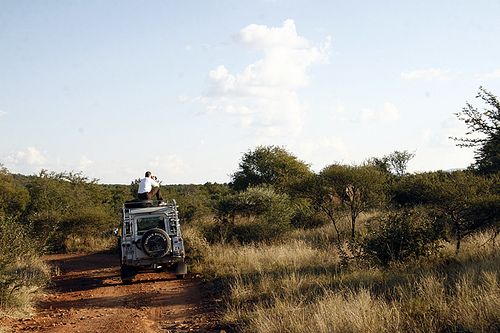
Location: Limpopo Drive, West of Gaborone
Area: 600 ha (1500 acres)
The Gaborone Game Reserve is a compact, publicly managed wildlife sanctuary located on the eastern outskirts of Gaborone, Botswana's bustling capital city. Spanning just 5 square kilometers, it serves as an accessible urban oasis for residents and visitors to experience Botswana's natural heritage without venturing far into the wilderness. Established as the country's smallest game reserve, it emphasizes education, conservation, and recreational opportunities in a semi-arid savanna environment. Unlike larger reserves, it lacks large predators, making it family-friendly and suitable for relaxed exploration. Managed by the Department of Wildlife and National Parks (DWNP), it attracts a steady stream of locals and tourists, ranking as the third-busiest reserve in Botswana despite its modest size.
Gaborone Game Reserve is a small but significant protected area
located within the city limits of Gaborone, Botswana’s capital. Spanning
approximately 600 hectares (about 5–6 km², with some early records
citing roughly 3 km²), it lies east of the city center along Limpopo
Drive, adjacent to the northeastern suburbs, near the University of
Botswana teaching hospital, the Notwane River, and the Gaborone water
treatment plant. It stands out as one of the few game reserves in the
world situated inside a major urban area, serving primarily as an
accessible site for wildlife viewing, education, recreation, picnics,
and birdwatching for city residents and visitors.
Its history is
intertwined with Botswana’s post-independence conservation efforts, the
rapid urbanization of Gaborone (established as the planned capital in
the mid-1960s), and practical challenges of balancing wildlife
protection with urban water supply and development needs. Unlike
Botswana’s vast wilderness reserves such as the Central Kalahari Game
Reserve (established 1961), Gaborone Game Reserve was conceived as an
“urban conservation” project to bring Botswana’s wildlife closer to its
growing population.
Early Proposals and Challenges (1960s–1970s)
Plans for a protected area near Gaborone date back to the late 1960s,
shortly after Botswana’s independence in 1966 and the city’s formal
development. As early as 1968, proposals emerged to establish a game
reserve around the Gaborone Dam and reservoir (completed in the
mid-1960s to supply the new capital’s water). These ideas aimed to
protect local wildlife and create a recreational space but faced strong
opposition from the Director of Water Affairs, who feared that wildlife
would contaminate the town’s drinking water supply.
Negotiations
continued into the 1970s. By 1975, a Gaborone Dam National Park was
formally declared on the western side of the reservoir. However, it was
never developed or operationalized. The discovery that the reservoir was
already contaminated with bilharzia (schistosomiasis) and that a game
fence would restrict public access helped resolve some concerns, but the
declaration was ultimately revoked in 1979. At that point, the Gaborone
Town Council agreed to support a smaller game reserve on the
northeastern edge of the city instead.
This period reflects broader
tensions in Botswana’s early conservation history: the Fauna
Conservation Proclamation (1961) and subsequent laws prioritized
wildlife protection, but conflicts arose with veterinary services,
cattle trekking routes, water infrastructure, and urban growth. Gaborone
Game Reserve was one of several smaller urban or peri-urban initiatives
(alongside places like Maun Game Reserve) designed for education rather
than large-scale tourism or hunting.
Formal Establishment and
Opening (1978–1988)
The reserve was officially declared around
1978–1980 under Botswana’s wildlife legislation, initially as a roughly
3 km² area adjacent to the suburbs. However, the practical establishment
and public opening occurred later. It was officially opened on 1 March
1988 through the efforts of the Kalahari Conservation Society
(KCS)—Botswana’s longest-serving environmental NGO, founded to promote
conservation, education, and sustainable use of natural resources.
KCS played a pivotal role in turning the declared area into a functional
public reserve. Their involvement aligned with their work on management
plans for other protected areas (such as the Central Kalahari and Khutse
Game Reserves in the same year). The primary goal was to give Gaborone
residents—many of whom lived in a rapidly expanding capital with limited
access to remote wilderness—an opportunity to experience Botswana’s
wildlife in a natural yet convenient setting. This made it a flagship
urban conservation project, emphasizing education over commercial
safari-style tourism.
The reserve was stocked with indigenous species
and developed basic infrastructure, including roads for self-drive
visits, picnic sites, observation hides, a visitors’ centre, and
facilities for guided educational tours (especially for school groups).
Post-Establishment Development and Management (1988–Present)
Since its opening, Gaborone Game Reserve has operated as a low-key,
accessible destination—often described as the third-busiest protected
area in Botswana due to its proximity to the capital. It remains popular
for weekend outings, with entry fees kept affordable (historically
around P30 per person, with reservations required on weekends/holidays).
Management has primarily fallen under the Department of Wildlife and
National Parks (DWNP) within the Ministry of Environment, Tourism and
Wildlife (formerly Ministry of Wildlife and Tourism). It is sometimes
referred to as an “educational park” in official documents, underscoring
its role in public awareness rather than as a prime tourist draw like
Chobe or Moremi. KCS continued to support conservation and advocacy
efforts around the reserve in its early years.
In terms of ecology
and wildlife, the area features tree savanna, riparian woodland, marshy
sections, and rocky outcrops. It hosts a variety of species typical of
Botswana’s drier southern regions, including impala, kudu, ostrich,
wildebeest, zebra, gemsbok, bushbuck, springbok, duiker, eland, warthog,
vervet monkeys, rock hyrax (dassies), and smaller mammals. It is also
excellent for birdwatching, with species such as snake eagles, boubou,
gallinule, kingfishers, and hornbills.
Recent developments include
discussions around privatization. In 2020, the Ministry of Tourism
indicated plans to issue tenders for private investors to manage the
reserve, aiming to improve facilities and sustainability amid growing
urban pressures. However, as of the latest available official references
(including Botswana’s 2025–2030 National Anti-Poaching Strategy), it
continues to be listed among DWNP-managed sites, suggesting any
transition has been limited or ongoing.
Significance in
Botswana’s Conservation Landscape
Gaborone Game Reserve represents a
pragmatic, people-centered approach to conservation in a country where
over 40% of land is protected but most major parks are remote. It was
created at a time when Gaborone was booming as “Africa’s fastest-growing
city,” providing an educational bridge between urban life and the
country’s iconic wildlife heritage. While modest in scale compared to
Botswana’s wilderness giants, its history highlights successful
negotiation between government departments (Water Affairs, Town Council,
Veterinary Services, and Wildlife) and civil society (KCS) to preserve
biodiversity in an urbanizing environment.
Gaborone Game Reserve is a small but ecologically significant urban
protected area located in the southeastern corner of Botswana,
immediately east of the capital city of Gaborone. Established in 1988
and covering approximately 600 hectares (about 5–6 km² or 1,500 acres),
it ranks as one of the country’s smallest game reserves yet one of the
busiest due to its accessibility within city limits.
It sits within
the municipal boundaries of Gaborone (administered by the Gaborone City
Council) in the South-East District, making it a rare example of a
national reserve embedded in an urban matrix. Its approximate central
coordinates are around 24.64°S, 25.95°E (or slightly varying reports at
24.66°S, 25.92°E), positioned along Limpopo Drive with direct access
from the city center via short dirt roads suitable for self-drive game
viewing and picnicking. No overnight facilities exist inside the
reserve; day visitors predominate, with nearby lodges just 1 km away.
Regional Context in Botswana’s Geography
Botswana occupies a vast
interior plateau (average elevation ~1,000 m / 3,300 ft) dominated by
the Kalahari Desert to the west (sandveld) and the more varied
“hardveld” region in the east and southeast. The hardveld features rocky
hill ranges, shallow sandy soils over bedrock, and gently undulating
terrain—distinct from the deep Kalahari sands. Gaborone Game Reserve
lies firmly in this hardveld zone of southeastern Botswana, about 15 km
(9.3 mi) from the South African border.
The city of Gaborone itself
nestles between Kgale Hill (1,287 m / “Sleeping Giant”) to the southwest
and Oodi Hill to the east, at the confluence of the Notwane and
Segoditshane Rivers. The reserve occupies the eastern urban fringe,
preserving a remnant patch of natural savanna amid expanding suburbs
(e.g., Broadhurst, The Village, and Tlokweng across the river). This
placement makes it a critical green lung and biodiversity corridor
within a rapidly urbanizing area.
Topography and Landforms
The
reserve exhibits classic low-relief savanna topography: low rolling
hills interspersed with flat shoreline plains and occasional rocky
outcrops. Elevations mirror the surrounding city at approximately 1,010
m (3,310 ft) above sea level. The terrain is gently undulating rather
than mountainous, shaped significantly by the proximity of the Gaborone
Dam reservoir on the Notwane River system. This creates subtle shoreline
influences, including flatter plains along water edges and low hills
that provide vantage points for wildlife viewing.
Soils are typical
of southern African savanna systems—shallow, sandy to loamy overlays on
harder substrates—supporting a mosaic of open grasslands on flatter
areas and woody vegetation on slopes. The overall landscape feels
compact yet varied, with dirt tracks winding through the hills and
plains for easy exploration.
Hydrology and Water Features
Hydrology forms a defining element of the reserve’s geography. It
directly borders the Notwane River (separated by a fence), a key
tributary in the Limpopo Basin that flows northeastward through
southeastern Botswana. The reserve also lies adjacent to the shoreline
of the Gaborone Dam reservoir (capacity ~141 million m³), which supplies
water to the capital and influences local microhabitats.
Inside the
reserve:
One permanent waterhole serves as a year-round
attraction for wildlife and waterbirds.
Small internal dams and
seasonal wetlands add diversity.
During the rainy season
(November–March), temporary lakes and ponds form across the low-lying
plains before evaporating in the dry months (April–October).
This
combination of permanent and ephemeral water creates dynamic floodplain
and marshy zones, especially along riverine edges, supporting riparian
vegetation and concentrating animals during dry periods.
Climate
The reserve shares Gaborone’s hot semi-arid climate (Köppen
classification BSh). Annual precipitation averages around 487 mm (19
in), mostly falling in erratic summer thunderstorms between October and
April. Summers are hot (daytime highs often exceeding 32°C / 90°F, with
peaks near 37°C / 99°F) but feature cooler nights; winters bring mild,
sunny days (highs ~25–28°C) and cold nights (occasional lows below 7°C /
45°F).
Solar radiation is high year-round, humidity varies seasonally
(peaking in summer), and winds are generally light to moderate. The
climate drives strong seasonal contrasts: lush green growth and flooding
in the wet season versus dry, golden grasslands and concentrated water
sources in winter—typical of Botswana’s subtropical interior but
moderated slightly by the reserve’s elevation and urban proximity.
Vegetation and Habitats
Vegetation reflects a classic dry savanna
mosaic adapted to semi-arid conditions:
Acacia and mopane
woodlands/shrublands dominate slopes and hills, providing browse for
antelopes.
Open grasslands and semi-arid grasses cover flatter
plains.
Mixed thorn scrub transitions into denser woody stands.
Riverine/riparian forest and marshland fringe watercourses and
shorelines, with taller trees, reeds, and wetland plants.
Flora and Habitats
GGR lies in the semi-arid south-eastern
hardveld region of Botswana, characterized by savanna vegetation adapted
to seasonal rainfall (typically 400–600 mm annually, mostly
October–April). The landscape includes:
Acacia shrubland and
thorn scrub (dominant habitat): Dense thickets and open savanna
dominated by thorny Acacia species (now often classified as Vachellia or
Senegalia). Key trees include Acacia tortilis (umbrella thorn /
curly-pod acacia), whose pods are a major food source for browsers like
impala; Acacia mellifera (blackthorn / wait-a-bit thorn), forming
impenetrable thickets; and Acacia karroo (sweet thorn). These provide
shade, browse, and nectar-rich flowers that attract insects and birds.
Grasslands and floodplains: Open grassy areas with species typical of
Botswana savannas (e.g., Cenchrus, Eragrostis, and other perennial
grasses). These green up dramatically after rains and support grazers.
Riverine woodland: Along seasonal watercourses and the dam
shoreline—taller trees, denser undergrowth, and moisture-loving species
that create gallery-forest-like strips.
Artificial wetland / dam and
floodplains: The small dam and associated reedbeds/marshes are
biodiversity hotspots, especially for water-dependent plants and
animals.
Kopje woodland: Rocky outcrops (small hills) with
specialized woodland vegetation, offering niches for cliff-dwellers like
rock hyrax.
In the dry season (May–September), vegetation looks
sparse and brown, with many acacias dropping leaves; animals concentrate
near the dam. After good rains, the reserve transforms—lush green
grasses, flowering acacias, and vibrant colors. Overall, the flora is
typical of southern Botswana’s acacia savanna: hardy, thorny, and
resilient, with widespread grasses, shrubs, and scattered trees. No rare
or endemic plants are highlighted, but the mosaic supports a healthy
herbivore community.
Fauna
Mammals
GGR hosts a good variety
of Botswana’s common savanna herbivores (no “Big Five” megafauna like
elephant or buffalo, and no free-roaming rhinos or predators in recent
accounts—any historical mentions appear outdated or confused with nearby
Mokolodi Nature Reserve). Common and easily spotted species include:
Antelopes (most abundant group): Impala (very common; studies show
they prefer acacia shrubland in wet season and wetlands/riverine in
dry), greater kudu, eland (common, not giant), gemsbok (oryx), red
hartebeest, blue wildebeest, steenbok, grey duiker, bushbuck, springbok,
mountain reedbuck, nyala, and klipspringer (on rocky kopjes).
Plains
game: Plains zebra (herds often seen), warthog (frequent and
approachable).
Giraffe: Occasionally sighted; their height makes them
stand out against acacia canopies.
Primates: Vervet monkeys and
baboons (often near trees or the dam).
Others: Rock hyrax (dassies)
on kopjes; ostrich (large birds treated as “fauna” in sightings).
Populations are managed and visible from vehicles; sightings are
reliable but depend on time of day and season (best early morning or
late afternoon).
Birds
The reserve is excellent for
birdwatching, especially around the dam and wetlands, with over 200–300
species possible in the broader Gaborone area (many recorded here).
Habitats support residents and migrants. Highlights include:
Waterbirds and waders (dam/reedbeds): Egyptian goose, white-faced
whistling duck, various sandpipers (common, wood), greater
painted-snipe, African crake, gallinules, herons, egrets, kingfishers,
and occasional African fish eagle.
Raptors: Black-chested snake-eagle
and other snake eagles; kestrels.
Savanna specialists: Red-crested
korhaan (characteristic call), crimson-breasted shrike (or boubou),
ostrich, various doves, hornbills, bee-eaters (including migrants),
weavers, and finches.
Others: Helmeted guineafowl, spurfowl; seasonal
migrants boost diversity.
The dam is the prime spot—early
mornings often yield the best activity.
Reptiles, Amphibians, and
Others
Reptiles: Nile monitors and water monitors are frequently seen
basking near the dam or water (recent visitor reports note many close
sightings). Snakes and lizards are present but less conspicuous.
Amphibians and fish: Supported by the dam/wetlands (not detailed in
public sources but noted in reserve overviews).
Invertebrates:
Abundant insects, butterflies, and arachnids typical of acacia savanna;
acacia flowers support bees and pollinators.
No dangerous large
animals threaten visitors, but standard precautions apply (stay in
vehicles where required, watch for snakes).
As a day-use facility, the reserve does not offer overnight accommodations or camping within its boundaries, focusing instead on short visits. Visitors typically stay in nearby Gaborone, where options range from budget hostels and guesthouses to mid-range hotels. Picnic sites with cement seating and braai (barbecue) facilities are available for daytime relaxation, but no formal lodging exists on-site to maintain low environmental impact.
The reserve promotes self-guided experiences, with visitors driving their own vehicles along looped trails to spot wildlife at a leisurely pace. Picnicking and braai sessions are popular, especially on weekends when locals gather for family outings. Birdwatching from the game hide or dam area is a key draw, with binoculars recommended for detailed observation. Well-marked hiking trails allow for walking or biking explorations (though walking may be restricted at times for safety), offering close-up encounters with smaller fauna and flora. A small visitor-education center provides interpretive displays on local ecosystems and conservation. No organized guided tours are standard, but occasional educational programs or taxi-driven game drives can be arranged. Experiences are casual and affordable, ideal for beginners or those seeking a quick nature escape, though monkeys can be cheeky around food at picnic spots.
Conservation is at the core of the reserve's mission, with the Kalahari Conservation Society's founding vision emphasizing public education to build support for broader wildlife protection in Botswana. Under DWNP oversight, efforts include habitat maintenance, animal health monitoring, and anti-poaching measures, ensuring species like elands and kudus thrive in a controlled environment. The reserve adheres to animal welfare guidelines, with animals appearing healthy and free-roaming. However, challenges such as littering and road neglect have been noted, prompting calls for increased fees to fund improvements and community involvement, including school visits for environmental education. Its urban location aids in raising awareness about human-wildlife coexistence amid Botswana's expanding cities.
The dry season from May to October is ideal, with mild temperatures (10-25°C/50-77°F days, cooler nights) and animals concentrating around water sources for better sightings. Early mornings yield the most active wildlife, while shoulder months like April or November offer fewer crowds but potential rain. Avoid heavy wet season (November-April) due to muddy roads. Access is straightforward: located 1km east of Broadhurst Mall via Limpopo Drive and Game Reserve Road, it's a 15-20 minute drive from central Gaborone. Entrance fees are low (around 10-30 pula, or ~$1-3 USD), with reservations required on weekends and holidays. Public transport like minibuses (combis) or taxis drops visitors nearby for a short walk; 2WD vehicles suffice, but 4WD is better after rain. Open daily from 6:30 AM to 6:30 PM.
As an "urban wilderness," Gaborone Game Reserve stands out for blending accessibility with authentic nature experiences, allowing city dwellers a quick immersion in Botswana's savanna without the intensity of remote safaris. Its predator-free environment enables safe picnics and walks, while the artificial dam creates a birdwatching haven rare in such proximity to a capital. Despite occasional urban encroachments, it symbolizes Botswana's commitment to inclusive conservation, offering affordable, educational outings that contrast with the country's larger, more remote parks.