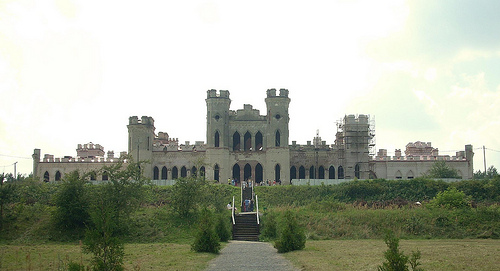
Location: Kosava, Ivatsevichy Raion, Brest Province Map
Kosava is a historic Belarusian town in the Ivatsevichy Raion, Brest Province of Belarus. A nearby town called Mereczowszczyzna is the birthplace of Tadeusz Kościuszko. Kosava is the birthplace of Rabbi Avrohom Yeshaya Karelitz. Nearby is the ruined castle of Kosava, built by the Pusłowski family in 1830, and a replica of the house of Tadeusz Kościuszko in Mereczowszczyzna.
The first settlements on the territory of Kossovo arose in the X-XI centuries. The ancient settlement of the X-XII centuries, which was explored by historians Yuri Kukharenko, Leonid Pobal, Pyotr Lysenko and Pavel Rapaport. In written sources Kosava for the first time is mentioned in 1494 in the charter of the Grand Duke Alexander, who gave it to Marshal Khrapitovich. In 1510 the Grand Duke Zhigimond old issued a letter of commendation and holding fairs in the city. At this time, Kossov or Kosava became the center of the district, but according to the administrative territorial reform of 1565-1566 the city joined the Novgorod province.
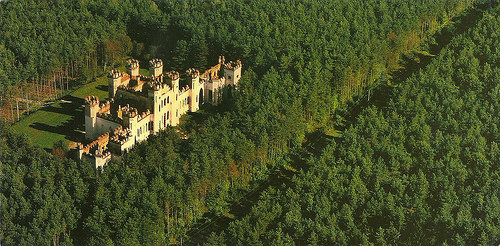
Kosava Castle also known as Puslowski Palace is a ruined and abandoned neo- Gothic residence in Kosava Belarus. Puslowski Palace is occasionally referred as a Kosava Castle due to its location and stylized pseudo- Gothic Medieval appearance. Puslowski Palace was constructed in 1830 by the orders of graf Wandalin Puslowski and under design of architect Frantisek Yascholda with help of V. Marcone. It contains 132 rooms and 12 towers. Each tower represents a month of a year. Central four towers represent four bread months of the year: May, June, July and August. These towers are arranged in a way that every year sun illuminates all the rooms inside one particular tower for two and a half days. Internal passages, layout of the halls and windows allows sun rays to penetrate all corners of the building. Residents of the Kosava Castle celebrated these days by decorating the interior and holding various events on these particular days.
Eccentricities of the Puslowski noble family didn't end here. One of the legends claim that the ceremonial Central Hall of the Kosava Castle had a glass floor in the center with an aquarium installed underneath. Various fishes lived here and were the center of the lavish balls that once were held here. Another legend claims that Puslowski bought a lion who was allowed off his chain by night. All the private rooms were locked for the night and a lonely lion would prowl the area attacking all the intruders and killing them on the spot.
However the most popular legend that surrounds Kosava Castle is that it had an underground tunnel constructed between Puslowski estate and the residence of another noble Sapieha family in Ruzhany. This myth claims it was 25 km long and was wide enough for a carriage to pass through. It is said that both families visited each other regularly using this passage. However no physical evidence were ever recorded proving this theory.
Unfortunately Puslowski family lost their claims to the Kosava Castle. It happened in a classic Puslowski manner. Builder's grandson lost his possessions playing cards.
After Polish uprising against Russian rule known as January Uprising (1863) have failed Kosava Castle was turned to a family of Russian aristocratic Trubetskoy family. During World War I and World War II the residence was badly damaged during fighting and finally abandoned. Some blamed the damage on careless German soldiers, while other believe it was partisans burned it in an attempt to kill Germans sleeping inside.
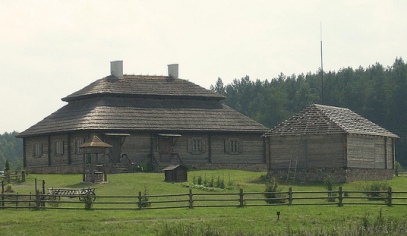
Tadeusz Kosciuszko's house is a replica of the original residence where Tadeusz Kościuszko was born. He became famous as a Polish hero who lead failed attempt to gain independence for Poland from the Russian Empire. Original Tadeusz Kosciuszko's house was made of wood and over course of decades of neglect and elements it fell apart. Nevertheless its drawings were preserved. It gave modern historians an idea of its appearance. Reconstructed Tadeusz Kosciuszko's house was opened on September 23, 2004. It was on this location Tadeusz Kosciuszko was born on February 4, 1746. It was also the residence where he grew up. He led a Polish national rebellion against the Russian Empire. Uprising failed and he was forced to move to the United States where he served with distinction during the Revolutionary War for American independence. His home however stayed intact despite history of Kosava's most famous trouble maker. Unfortunately it changed with the start of World War II. Tadeusz Kosciuszko's house was burned down during hostilities. Museum of Tadeusz Kosciuszko's house is roughly divided into two sections. One portion is dedicated to historic period with recreated interior of rooms as they existed back in the 18th century. Another part of the museum is dedicated to the archeological finds that were discovered on an original site of the Tadeusz Kosciuszko's house. Today the museum is also a popular location for weddings that are held on weekends.
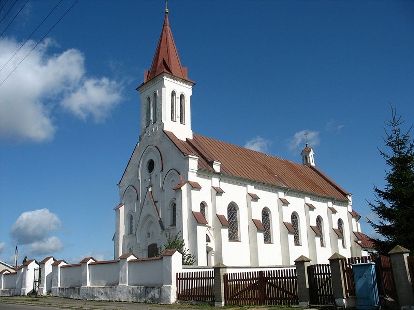
Catholic Church of Holy Trinity is a Roman Catholic church in Kosava. It is a simple, yet elegant building that is open to the public. Church of Holy Trinity belongs to the Pruzhany deanery of Diocese of Pinsk. Today it is protected by the government and listed on a list of Cultural Properties of Belarus. This neo- Gothic cathedral is the largest religious building in the town. Original wooden Catholic Church was constructed in 1626. Most famous son of Kosava, Tadeusz Kościuszko, was baptized here on 12 February 1746. Unfortunately the original structure was not preserved. In 1877- 78 wooden Church of Holy Trinity was demolished and a new stone structure of Catholic Church of Holy Trinity was constructed in its present appearance. Money for the reconstruction was donated by the local noble family of Puslovsky or Puslowski clan (Count Vandalin Puslovsky). Church is a simple rectangular in layout with a single nave. The main facade is dominated by a tetrahedral bell tower. The interior of Holy Trinity is fairly simple on the inside. The main altar has several icons including an icon of "Mother of God of Mercy", the most venerated icon in the church.
Important Travel Considerations Before Going
Belarus has
significant geopolitical and practical challenges for international
visitors, especially from the US (your likely starting point in
Chicago). The US State Department currently advises Level 4: Do Not
Travel to Belarus due to unrest, arbitrary enforcement of laws, and
other risks. US citizens face heightened scrutiny, potential
difficulties with consular support (the US Embassy in Minsk has
suspended many operations), and insurance complications. Many Western
booking platforms (Booking.com, Airbnb) are unavailable or restricted
due to sanctions, and credit/debit cards from some banks may not
work—bring cash in USD or EUR and exchange locally as needed.
Visa and Entry: US citizens generally need a visa. An electronic visa
(e-visa) is available for up to 30 days for tourism, but confirm current
rules on the official Belarus MFA site, as they can change. Some
nationalities get 30-day visa-free entry via Minsk National Airport, but
land borders or non-airport entry often require a full visa obtained in
advance from a Belarusian embassy (a process involving paperwork,
photos, proof of accommodation, and sometimes mandatory local health
insurance). Registration with authorities is usually handled by your
hotel. Always check the latest requirements well in advance, as
political situations evolve.
Safety: Petty crime is low, but avoid
political discussions or gatherings. Dress modestly at religious sites.
Winters bring icy conditions and potential travel disruptions.
Health: No specific vaccinations are mandatory beyond standard ones, but
travel insurance covering Belarus (with high medical minimums) is often
required for entry. Pharmacies are available in towns, but bring any
personal medications.
Currency and Costs: Belarusian ruble (BYN).
Cash is king; ATMs exist but cards can be unreliable. Kosava is very
affordable—meals, transport, and entry fees are budget-friendly compared
to Western Europe.
Language: Russian is dominant; Belarusian is
official but less used in daily life. English is limited outside major
tourist spots—bring a translation app (Google Translate works offline
for Russian). Basic phrases in Russian help.
Best Time to Visit
Kosava has a continental climate with cold, snowy winters and
mild-to-warm summers. The best period is May to September, when
temperatures are comfortable (daytime averages 15–22°C / 59–72°F), days
are long (up to 16+ hours of daylight in midsummer), and outdoor sites
like the palace park are at their best. Avoid deep winter
(November–March) unless you enjoy snow and short days, as roads can be
icy and some facilities have reduced hours.
Spring (April–May):
Blooming nature, fewer crowds, mild but possibly rainy.
Summer
(June–August): Warmest and most popular; good for park strolls, but can
be humid.
Autumn (September–October): Beautiful foliage, crisp air,
and shoulder-season pricing.
Shoulder seasons often offer the best
balance of weather and tranquility.
Rain is possible year-round, so
pack layers and a light rain jacket.
Getting There
Kosava is
not on major international routes, so you'll combine it with a trip to
Minsk (capital, ~3–4 hours away) or Brest (~1.5–2 hours away).
By
Air: Fly into Minsk National Airport (MSQ), the main hub. From there,
take a bus, train, or private transfer to Kosava (total ~3–4 hours).
Direct international flights are limited due to sanctions and airspace
issues.
From Minsk: Bus or train to Ivatsevichy (nearby town), then
local transport or taxi to Kosava. Driving takes about 2.5 hours via
decent roads.
From Brest: Easier access—drive (~1.5–2 hours) or
bus/train connections. Brest has better rail links and is closer to the
Polish border (if entering that way).
Public Transport: Buses and
trains are cheap and reliable within Belarus, but schedules can be
infrequent to small towns like Kosava. Check ticketbus.by or rw.by for
times.
Car Rental/Taxi: Renting a car in Minsk or Brest gives
flexibility (roads are generally good). Taxis or ride apps (like Yandex
Go) work for shorter legs. Parking at the palace is plentiful and
free/cheap.
Once in town, everything is compact and walkable.
Practical Visiting Tips
Duration: 4–8 hours is plenty for Kosava
itself. Combine with Brest Fortress or Minsk for a fuller trip.
Guided Tours: Book one for the palace—local guides share engaging
anecdotes that self-guided visits miss.
Facilities: Limited
restaurants/cafes; the palace has dining options. Bring snacks/water if
exploring independently. Toilets are available at main sites.
Photography: Great light on the palace facade and park in
morning/afternoon. No external lighting, so daytime visits are best.
Etiquette: Be respectful at churches (cover shoulders/knees). Locals are
generally hospitable but reserved—smiles and basic greetings go far.
Accommodation: Options are scarce in tiny Kosava (the on-site palace
hotel is convenient). Stay in nearby Ivatsevichy, Brest, or even Minsk
and day-trip. Book directly or via remaining platforms like Hotels.com;
confirm in advance due to limited inventory.
Money and Connectivity:
ATMs in larger towns; Wi-Fi is spotty in rural areas—download maps
offline (Google Maps or local apps).
What to Pack: Comfortable
walking shoes (uneven paths/parks), layers for variable weather, cash,
power bank, and a phrasebook/app. Modest clothing for sites.
Sustainability: The area is low-impact; stick to paths in the park and
support local businesses.
Early Settlements and Kievan Rus' Era (Prehistory to 11th Century)
Archaeological evidence shows human activity in the area dating back to
the Iron Age (3rd/2nd century BC to 2nd century AD), including a
Zarubintsy culture settlement excavated in the Mereczowszczyzna tract
about 2 km from the modern town. The first more permanent Slavic
settlements appeared in the 10th and 11th centuries as part of Kievan
Rus'.
Grand Duchy of Lithuania and Polish–Lithuanian Commonwealth
(1494–1795)
The first written mention of Kosava dates to 1494, when
Grand Duke Alexander Jagiellon of Lithuania granted the lands to
nobleman Ian (Yan) Chreptowicz (Khreptovich). It became a private town
(miasteczko) owned successively by prominent szlachta (noble) families:
Chreptowicz, Sanguszko (Sangushki-Kashirsky), Leszczyński, Sapieha,
Fleming (Flemmingi), Czartoryski (Chartorisky), and eventually the
Pusłowski family.
Administratively, it lay in Slonim County within
the Nowogródek Voivodeship of the Polish–Lithuanian Commonwealth. The
town developed as a typical noble estate center with trade, crafts, and
agriculture. Jews began settling in the 16th century, engaging in petty
commerce, small farms, and crafts; they would later form a major part of
the population.
A pivotal moment came in 1746: National hero Tadeusz
Kościuszko (Andrzej Tadeusz Bonawentura Kościuszko) was born on February
4 in the nearby Mereczowszczyzna (Myerachowshchyna) manor house on the
Kosava estate. He was baptized on February 12 in the local (then wooden)
Holy Trinity Church by priest Raimund Korsak. Kościuszko, descended from
Belarusian gentry, later fought in the American Revolutionary War and
led the 1794 Kościuszko Uprising against Russian and Prussian
partitions.
Russian Empire Period (1795–1915/1918)
After the
Third Partition of Poland in 1795, Kosava was incorporated into the
Russian Empire and placed in the western Pale of Settlement. The
Pusłowski family purchased the estate in 1821 (Count Wojciech
Pusłowski). His son, Count Wandalin (Vandalin) Pusłowski, inherited it
and undertook major development.
In 1838–1850, Wandalin commissioned
the Pusłowski Palace (Kosava Castle), a romantic neo-Gothic “castellated
palace” designed by Polish architect Franciszek Jaszczołd, with later
interiors and reconstruction by Władysław Marconi. It was never a
defensive fortress but a grand residence styled like a medieval knight’s
castle—the first neo-Gothic palace in what is now Belarus. The family
also industrialized the area (including a carpet factory), restored
churches, and built new ones (e.g., the stone Holy Trinity Church in
1877 on the site of the earlier wooden one where Kościuszko was
baptized).
The Jewish community grew significantly: in 1830, 408 of
578 residents were Jewish; by 1897 (Russian census), the town had 3,092
people, of whom 2,028 (~66%) were Jews. Jews ran shops, trades, and
small farms. The town was also the birthplace (in 1878) of Rabbi Avraham
Yeshayahu Karelitz (the “Chazon Ish”), a major 20th-century Orthodox
Jewish scholar.
World War I and Interwar Poland (1915–1939)
During World War I (1915–1918), Kosava was under German occupation; the
palace was looted and damaged as Russian forces retreated. After the
Polish–Soviet War and the 1921 Treaty of Riga, it became part of the
Second Polish Republic as Kosów Poleski in the Polesie Voivodeship. It
briefly served as a county seat (powiat) until 1935, when the seat moved
to Iwacewicze.
Population in 1921 was 2,433 (1,473 Jews). Jewish life
flourished with Zionist organizations, a Tarbut Hebrew school, orphan
aid committees, and four synagogues. However, economic hardship and the
1924 U.S. Immigration Act spurred emigration to Argentina and Palestine.
A notable 1927 event—the “Kosava shooting”—saw Polish police fire on a
peasant demonstration, killing several and highlighting tensions in the
region.
World War II and the Holocaust (1939–1944)
The 1939
Soviet invasion of Poland brought initial Soviet occupation (1939–1941).
Nazi Germany invaded in June 1941; Kosava was occupied on July 1. The
Jewish population swelled to over 2,000–2,250 with refugees from western
and central Poland.
The Germans established a Judenrat, forced Jews
to wear yellow stars, and created ghettos in 1942 (one for skilled
workers, one for the infirm, etc.). On July 25, 1942, the ghettos were
liquidated in a mass shooting; most Jews (~2,000–3,000 total from Kosava
and surroundings) were murdered and buried in pits near the Pusłowski
Palace and Mereczowszczyzna. A small number of skilled tradesmen were
initially spared for labor camps (only one survived); about 200 who hid
in the Tarbut school attic were later killed. Soviet partisans briefly
intervened, but overall, only about 26 Jews from the town survived until
liberation.
The palace served as a German command post. In 1944,
during the German retreat, it was burned (likely by partisans). The
original Kościuszko manor house also burned. Total civilian deaths in
the town and district exceeded 3,000. The Red Army liberated Kosava in
July 1944.
Post-War Soviet Era and Independent Belarus
(1944–Present)
After the war, Kosava was annexed into the
Byelorussian Soviet Socialist Republic (BSSR). The Jewish community was
effectively gone—no synagogues or functioning Jewish institutions
remained, and cemeteries were largely destroyed or built over. The
town’s population declined sharply due to war losses and later
Soviet-era migration.
The Pusłowski Palace stood ruined for decades.
The Kościuszko manor site was excavated in 2003; a replica house opened
as the Memorial Estate Museum of Tadeusz Kościuszko in 2004. Palace
restoration began in the 2000s; it now houses cultural exhibitions and
is a major tourist site (sometimes called a “castle” in popular usage).
Belarus gained independence in 1991. Today, Kosava has a population of
about 1,837–1,862 (2024–2025), down from pre-war peaks. It remains a
quiet town whose economy and identity center on tourism tied to its
noble heritage, Kościuszko legacy, and restored palace-park complex.
Other landmarks include the 19th-century churches and a chapel using
medieval tombstones.
Location and Coordinates
Geographic coordinates: 52°45′N 25°09′E
(approximately 52.758°N, 25.155°E).
Elevation: Roughly 167–177 meters
(550–580 feet) above sea level, consistent with the flat lowland terrain
of the region.
Regional context: About 15 km northwest of the
district center Ivatsevichy, 13 km from the Kosava-Paleskaye railway
station (on the Brest–Baranovichi line), 145 km east of Brest, and
around 226 km southwest of Minsk. It lies in the western part of
Belarus, near the historical-cultural transition zone between the
forested north and the marshy south.
The town occupies a modest
site along the Grivda River (Гривда), a left-bank tributary of the
Shchara River (which flows into the Neman River and ultimately drains to
the Baltic Sea). The Grivda itself is a relatively short river (about 85
km long) with a low gradient, typical of Polesian waterways.
Topography and Physical Landscape
Kosava exemplifies the Polesian
Lowland — a nearly flat to gently undulating plain formed during the
Pleistocene by glacial outwash, fluvial action, and eolian
(wind-deposited) sands. Key features include:
Flat to gently rolling
terrain — Local relief rarely exceeds a few tens of meters; sandy
elevations (dunes or “kames”) alternate with broad, poorly drained
depressions.
Extensive wetlands and peat bogs — Low river gradients
and high groundwater tables create marshes, fens, and peatlands. These
are characteristic of Polesia, historically called the “lungs of Europe”
for their carbon storage and biodiversity.
Mixed forests and meadows
— Patches of pine, spruce, birch, oak, and alder forests intersperse
with wet meadows and agricultural clearings. Sandy soils support
coniferous stands, while heavier, waterlogged areas favor alder and
willow thickets.
Hydrology — The area belongs to the Neman River
basin (Baltic Sea watershed). Nearby divides separate it from the
Pripyat–Dnieper system (Black Sea watershed), highlighting Polesia’s
position as a major European watershed transition zone. Rivers here
meander slowly, often flooding in spring due to snowmelt.
No
significant hills or mountains exist locally — the landscape is defined
by subtle micro-relief, peat accumulations (sometimes several meters
thick), and a network of small streams, ditches, and artificial drainage
channels created over centuries for agriculture and forestry.
Climate
Kosava has a humid continental climate (Köppen Dfb), with
cold, snowy winters and mild-to-warm summers. The flat, open lowland and
proximity to wetlands moderate extremes slightly but contribute to high
humidity and frequent fog.
Average monthly conditions (approximate,
based on regional data):
January (coldest month): Highs around
−3.5°C to −1°C, lows −9.4°C to −6°C. Snow cover lasts 80–100 days.
July (warmest month): Highs around 23°C, lows 12–13°C.
Annual
temperature range: Significant seasonal contrast, with about 30°C
difference between January and July averages.
Precipitation: Roughly
700–717 mm per year, fairly evenly distributed but with a summer
maximum. Rain or drizzle occurs on many days; thunderstorms are common
in summer. Spring snowmelt and summer rains frequently cause localized
flooding in the low-gradient river valleys.
Other factors: High
humidity (especially in wetlands), moderate winds, and long daylight
variation (summer days >17 hours, winter <8 hours). Cloud cover is often
high year-round.
The climate supports agriculture (potatoes,
grains, flax) in drained areas, but wetlands remain vulnerable to
hydrological extremes.
Soils, Vegetation, and Environment
Soils: Predominantly podzolic (acidic, sandy in uplands) and peat-gley
(waterlogged, organic-rich) in lowlands. Drainage improvements over the
last century have converted some peatlands to farmland, though many
remain intact.
Natural vegetation: Boreal-temperate mixed forests
(pine-birch-oak) with wetland specialists like sphagnum moss, reeds, and
sedges. Polesia hosts rare species and serves as a migratory bird
corridor.
Land use and changes: Historically forested and marshy;
Soviet-era drainage and collectivization expanded arable land.
Post-1991, some fields have reverted to forest or scrub. Logging and
land conversion continue, but the broader Brest Region retains
significant wetland cover.
Kosava itself is compact, with the
historic center near the Grivda River and the ruined 19th-century
Pusłowski Palace (Kosava Castle) on the outskirts. Nearby
Mereczowszczyzna village adds to the cultural landscape.