Location: South- East Iceland Map
Area: 8,100 km² (3,125 sq mi)
Thickness: 3,300 ft (1 km)
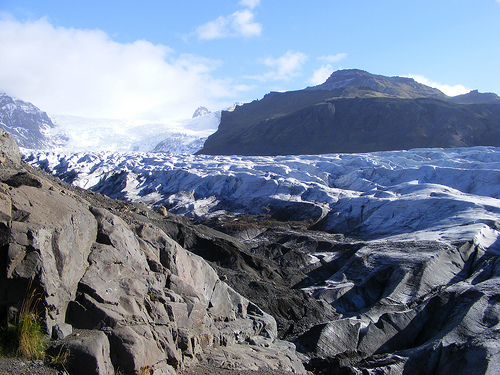
Vatnajökull National Park, located in Iceland, is one of the country's three national parks and stands as its largest, encompassing approximately 14,000 square kilometers—roughly 13-14% of Iceland's total land area. Established in 2008, it integrates the vast Vatnajökull glacier, Europe's largest ice cap outside the Arctic, with surrounding volcanic and geothermal landscapes, creating a dynamic interplay of fire and ice. Recognized as a UNESCO World Heritage site since 2019, the park showcases unique geological features shaped by glacial, volcanic, and tectonic forces, making it a prime destination for adventurers and nature enthusiasts.
To reach Vatnajökull National Park in Iceland, which spans a vast
area across the southeast, east, north, and Highlands regions (covering
about 14% of the country), you'll typically start by flying into the
country and then using ground transportation. The most popular and
accessible sections are in the southeast, such as Skaftafell and
Jökulsárlón Glacier Lagoon, which are reachable via the Ring Road (Route
1). The northern areas like Jökulsárgljúfur (home to Dettifoss
waterfall) are more isolated and often approached from the north. Note
that the park is open year-round, but Highland areas are only accessible
in summer (typically mid-June to September) due to snow and road
closures.
Flying to Iceland
International flights arrive at
Keflavík International Airport (KEF), about 45 minutes southwest of
Reykjavík. From there, you can rent a car, take a bus to Reykjavík, or
arrange transfers. Domestic flights from Reykjavík Airport (RKV) can get
you closer to certain park areas, such as to Höfn (for southeast access)
or Akureyri (for northern access), but these are limited and often
seasonal.
From Reykjavík to the Park
Most visitors base their
trip from Reykjavík and head east along the Ring Road. Distances and
times vary by section:
To Skaftafell (southeast entry point with
hiking trails and a visitor center): About 200 miles (320 km), 4–5 hours
drive.
To Jökulsárlón Glacier Lagoon: About 235 miles (380 km), 5–6
hours drive.
To northern areas like Ásbyrgi or Dettifoss: About
310–370 miles (500–600 km), 6–8 hours drive via the Ring Road, or
shorter with a domestic flight to Akureyri followed by a 1–2 hour drive.
By Car (Recommended for Flexibility)
Renting a car is the easiest
and most popular option, allowing stops at attractions along the way
(like Seljalandsfoss waterfall or black sand beaches).
Head east
on Route 1 (Ring Road) from Reykjavík.
For southeast areas: Stay on
Route 1 south/east past Vík and Kirkjubæjarklaustur until you reach
signs for Skaftafell (turn onto Route 998 for the visitor center) or
continue to Jökulsárlón.
For Highlands (e.g., remote volcanic areas
north of the glacier): You'll need a 4x4 vehicle to handle F-roads
(unpaved mountain tracks) and river crossings—regular cars are illegal
and unsafe here. These roads open seasonally around June/July; check
road conditions on road.is before going, and stock up on fuel, food, and
water as there are no services.
Tip: In winter, opt for a 4x4 with
studded tires due to ice and snow. Driving times can double with bad
weather.
By Bus
Public buses (operated by Strætó or Reykjavík
Excursions) are budget-friendly but less flexible, with limited
schedules (especially off-season). From Reykjavík's BSÍ Bus Terminal:
Take bus 72 to Selfoss (45 minutes).
Switch to bus 51 to Vík (1
hour 45 minutes).
Continue on bus 51 toward Höfn, getting off at
Skaftafell (another 2 hours). Total time: 4–5 hours one-way to
Skaftafell.
For northern areas: Take a bus or fly to Akureyri, then
local buses or hikes (e.g., a shuttle bus runs between Ásbyrgi and
Dettifoss in summer).
Buses don't reach remote Highland spots
reliably—hitchhiking or tours are alternatives there.
By Guided
Tour
If you prefer not to drive, join a day or multi-day tour from
Reykjavík. These often include transport in a bus or super jeep, plus
activities like glacier hiking or ice cave visits (guided tours are
mandatory for glacier activities due to safety). Options range from
budget group tours to private ones; book via sites like Guide to Iceland
or directly with operators. Tours to Skaftafell or Jökulsárlón run
year-round, but check for winter limitations.
Practical Tips
Entry and Fees: The park is free to enter, but parking costs 1,000 ISK
(about $7 USD) per day at popular spots like Skaftafell and Jökulsárlón.
No reservations needed for entry.
Seasons and Weather: Summer
(June–August) is best for access and activities; winter offers ice caves
but shorter days and potential road closures. Always check vedur.is for
weather and safetravel.is for alerts.
Accommodations: Options include
camping at Skaftafell (with facilities), nearby hotels in Höfn or
Kirkjubæjarklaustur, or mountain huts in the Highlands (book ahead).
Safety: Stick to marked paths, especially near glaciers. Bring layers,
waterproof gear, and sturdy shoes. For emergencies, call 112.
Visitor
Centers: Stop at Skaftafell for maps, exhibits, and ranger talks; others
are at Ásbyrgi and Höfn.
The park spans eastern and southeastern Iceland, stretching from the coastal town of Höfn in the southeast, along the coast past Skaftafell, and up to the area around Kirkjubæjarklaustur. At its core is the Vatnajökull glacier itself, covering over 8,000 square kilometers with an average ice thickness of 400 meters and peaks reaching up to 2,000 meters in elevation. This massive ice cap feeds numerous outlet glaciers, such as Svínafellsjökull and Breiðamerkurjökull, which carve through volcanic plateaus and create stunning features like ice caves, crevasses, and glacial lagoons. The landscape is a mosaic of contrasts: vast ice fields give way to black sand deserts, steaming hot springs, active volcanoes like Grímsvötn and Bárðarbunga (which lie beneath the ice), and river canyons eroded by meltwater. Tectonic activity in the region, part of the Mid-Atlantic Ridge, contributes to frequent earthquakes and eruptions, continually reshaping the terrain. The park's diverse topography includes highland plateaus, coastal plains, and fjords, influenced by both subarctic and maritime climates, with temperatures ranging from mild summers to harsh winters.
Human interaction with the Vatnajökull area dates back to Iceland's settlement in the 9th century, with evidence of early farming, travel routes, and habitation in the surrounding regions. The park's lands hold stories of outlaws who sought refuge in its remote highlands, as well as abandoned farms and ancient paths that highlight the challenges of living in this harsh environment. Geologically, the glacier and its volcanic underbelly have been active for millennia; subglacial eruptions, known as jökulhlaups, have caused catastrophic floods throughout history, such as the 1996 Grímsvötn event that damaged infrastructure. The national park was formally created in 2008 by merging three existing protected areas: Skaftafell National Park (established 1967), Jökulsárgljúfur (1973), and the Vatnajökull glacier itself, to better preserve this expansive wilderness. Its UNESCO designation emphasizes not only natural value but also cultural heritage, including folklore tied to the land's "fire and ice" duality.
Vatnajökull offers a wealth of attractions that draw visitors year-round. Key highlights include Jökulsárlón, a mesmerizing glacier lagoon filled with floating icebergs that calve from Breiðamerkurjökull, often visited for boat tours or seal watching. Nearby Diamond Beach features black sands strewn with sparkling ice chunks. Skaftafell, in the park's southern section, is renowned for hiking trails leading to Svartifoss waterfall, framed by basalt columns, and panoramic viewpoints over glaciers. Ice caving expeditions into natural blue-ice caverns, accessible mainly in winter, provide an otherworldly experience, while glacier hiking and snowmobiling on the ice cap offer adrenaline-fueled adventures. In the northern reaches, Ásbyrgi canyon and Dettifoss—the most powerful waterfall in Europe—impress with their scale, formed by glacial floods. Volcanic sites like the Lakagígar craters from the 1783-84 Laki eruption, which caused global climate disruptions, add historical depth. Activities also extend to kayaking on lagoons, birdwatching, and geothermal bathing in remote hot springs.
The park's ecosystems support a surprising array of life despite its icy dominance. Endemic groundwater fauna, including species that survived the Ice Age, thrive in subglacial aquifers, while single-celled organisms adapt to extreme volcanic conditions. Terrestrial wildlife includes Arctic foxes, reindeer herds in the highlands, and small mammals like mice. Birdlife is abundant, with species such as ptarmigans, golden plovers, and seabirds nesting in coastal areas; the lagoons host seals and occasional orcas. Vegetation is sparse but resilient, featuring mosses, lichens, and hardy plants like Arctic willow in sheltered valleys, contributing to fragile tundra habitats. Conservation efforts focus on mitigating climate change impacts, as the glacier is retreating rapidly, losing about 1% of its mass per decade.
Access is primarily via Iceland's Ring Road, with visitor centers at Skaftafell, Ásbyrgi, and other points providing maps, guided tours, and educational exhibits. The park is open year-round, though winter visits require preparation for severe weather and limited access. Sustainable tourism is emphasized to protect this fragile environment, with rules against off-trail hiking and drone use in sensitive areas. Vatnajökull embodies Iceland's raw natural power, offering profound insights into planetary processes amid a changing climate.
Hótel Jökulsárlón - Glacier Lagoon Hotel
Located just 6.7 miles
from the iconic Jökulsárlón Glacier Lagoon, this hotel provides a prime
base for exploring the park's southeastern edges. It features modern
rooms with fitness center access, free private parking, a restaurant
serving local cuisine, and a bar for evening relaxation. Guests praise
its exceptional proximity to glacial attractions, making it ideal for
iceberg viewing or boat tours. Rated 9.5/10 (Exceptional) based on over
1,800 reviews, with prices starting around $550 per night.
Fosshotel Glacier Lagoon
Situated in Hnappavellir, this luxurious
property offers stunning views of the surrounding landscapes and is
conveniently near the Glacier Lagoon area. Amenities include a
restaurant with Icelandic dishes, a bar, and comfortable rooms designed
for tranquility. It's perfect for those seeking upscale comfort after
glacier hikes or ice cave explorations. Rated 9.0/10 (Wonderful) from
over 4,600 reviews, starting at about $361 per night.
Hotel
Skaftafell
Nestled right in Skaftafell, one of the park's main entry
points, this hotel boasts breathtaking views of Vatnajökull glacier and
Hvannadalshnjúkur mountain—Iceland's highest peak. Rooms are
straightforward yet comfortable, with amenities like free Wi-Fi and
access to nearby trails for hiking or Northern Lights spotting. It's a
favorite for its direct park access and aurora-friendly location. Rated
8.1/10 (Very Good) from nearly 2,800 reviews, with rates from around
$271 per night.
Hotel Smyrlabjörg
This family-run farm hotel
in Skálafell sits along the Ring Road, about 16 miles from Hoffell Hot
Springs and convenient for park explorations. Brightly decorated rooms
come with TVs and private bathrooms, emphasizing a cozy, homey vibe with
local charm. It's great for travelers wanting a rural Icelandic
experience near glacial sites. Rated 8.2/10 (Very Good) based on 1,570
reviews, starting at approximately $252 per night.
Fosshotel
Vatnajökull
In the Lindabakki area near Höfn, this hotel provides 66
sleek rooms with hardwood floors, TVs, fridges, private bathrooms, and
free Wi-Fi, many overlooking the vast Vatnajökull glacier or mountains.
The on-site restaurant offers fresh seafood like mackerel, paired with a
bar featuring creative cocktails and breakfast from 7-10 AM. Unique
highlights include 180-degree glacial views, proximity to Crystal Cave
and Svínafellsjökull hiking, and the nearby Jökulsárlón lagoon with its
diamond beach. It's ideal for serene stays with direct ties to the
park's wonders. Rated 8.2/10 from 959 reviews, with prices around $357
per night.
Hotel Klaustur
Positioned en route from Reykjavík
to Jökulsárlón, near Eldhraun Lava fields and Fjaðrárgljúfur canyon,
this hotel serves as a gateway to the park's southern reaches. It
includes a quality restaurant and bar with modern Icelandic cuisine,
focusing on comfort for tour-based stays. Part of National Park Hotels,
it offers packages combining accommodation with guided adventures.
Specific ratings not detailed, but it's praised for its scenic location
and convenience.
Hotel Jökull
A family-run spot 8 km from Höfn
and along Ring Road 1, this hotel features rooms with mountain views and
easy access to Vatnajökull's eastern areas. It's about 453 km from
Reykjavík, making it suitable for road trippers. Amenities emphasize
simplicity amid spectacular scenery, with packages for tours. Rated
8.1/10 from over 2,000 reviews, starting at $187 per night.
For more
options, consider guesthouses like Ekra Glacier Lagoon or Hali Country
Hotel, which offer budget-friendly stays with similar access to the
park. Always check current availability and weather conditions, as
winter access can vary.