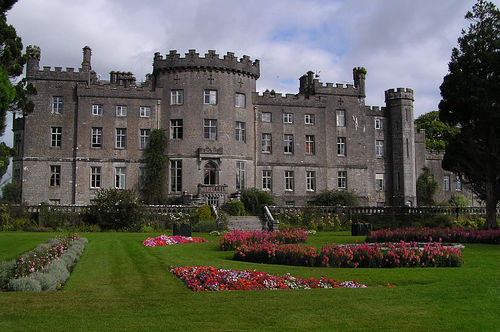
Location: Collooney Map
Constructed: 14th century
Markree Castle, located in Collooney, County Sligo, Ireland, is a historic gem that blends centuries of rich history, architectural grandeur, and modern luxury. Nestled in a romantic landscape that inspired the poet W.B. Yeats, the castle is set on a 500-acre estate partially moated by the River Unshin, surrounded by lush gardens, rolling hills, and the rugged beauty of Ireland’s northwest along the Wild Atlantic Way.
Early Origins (14th Century to 1663)
The site’s history begins in
the 14th century as a fortified outpost of the Irish McDonagh Clan (with
possible ties to the O’Brien Clan), guarding a strategic ford across the
River Unshin. It was not originally a grand castle but a functional
defensive structure.
In 1663, following Oliver Cromwell’s campaigns
in Ireland, Cornet Edward Cooper (c. 1616–1676), who served in Lord
Collooney’s regiment of dragoons, received the Markree estate and lands
under the 1662 Act of Settlement of King Charles II. This was granted in
lieu of payment for military service after the defeat of the O’Brien
Clan at the Battle of Limerick (or related engagements). Edward married
Máire Rua (“Red Mary”), the widow of Conor O’Brien (who died in battle).
Their family resided briefly at Dromoland Castle before settling at
Markree; one son inherited Dromoland (remaining with the O’Briens),
while the other took Markree and adopted the Cooper name for protection.
Edward’s descendants established the Cooper line at Markree. His son
Arthur Cooper (1667–1693) inherited after Edward’s death in 1680. In
1686, King James II officially granted Markree the status of a manor,
allowing Arthur to maintain a prison, enclose 500 acres, and hold fairs.
Times remained unstable. During James II’s attempt to reclaim the
throne, Catholic forces occupied the castle, forcing the Protestant
Coopers to flee. They returned after the Protestant victory at the
Battle of the Boyne in 1690 and have resided there continuously since
(with one brief exception during the Irish Civil War).
18th
Century: Land Expansion and Manor Transformation
By the late 17th
century, Markree had evolved from a fort into a more comfortable manor
house, and the Coopers became major landowners in County Sligo.
The
pivotal moment came in 1727 when Arthur Cooper’s eldest son, Joshua
Cooper (c. 1696–1757), purchased Lord Collooney’s estate. This expanded
the family holdings to about 40,000 acres, making Markree the center of
one of the largest estates in the region. Joshua and his successors
(including Joshua II) focused on progressive farming and further
improvements to the manor.
Joshua II (who married into wealth via
Alicia Synge) and Joshua III continued estate management. By 1800, the
annual rental income reached around £10,000, providing ample resources
for grander ambitions.
19th Century: Golden Age of Architecture,
Astronomy, and Gothic Revival
The castle as seen today largely dates
from the early 19th century. In 1802, Joshua III (1762–1837)
commissioned the renowned Irish architect Francis Johnston (designer of
Dublin’s General Post Office, parts of Dublin Castle, and Charleville
Castle) to transform the existing manor into a castellated mansion.
Johnston removed the southeast corner, extended the south front eastward
(creating an 11-bay façade with five interconnecting reception rooms,
including a large library), relocated the entrance to the west side with
a new hall and staircase under a glazed cupola, and added Gothic
crenellations for a “castle” aesthetic. Italian craftsmen executed much
of the ornate interior work. This remodel forms the core of the present
structure.
Historical 1863 sketch of Markree Castle
(post-Johnston remodel).
Further enlargements occurred under later
owners. In 1866, Lt-Col Edward Henry Cooper (1827–1902) added a massive
battlemented tower (expanding the dining room), a Gothic Revival
porte-cochère, and a chapel designed by architect Joseph Gwilt.
Interiors were updated in the 1890s (by James Wardrop and James Munro)
with features like ornate Louis Philippe-style plasterwork, a billiard
room, and Gothic elements. A monumental stone staircase leads to the
main floor; beyond lies a grand oak double-staircase lit by a heraldic
stained-glass window depicting the Cooper family tree (tracing back to
King John).
The most famous 19th-century addition was the Markree
Observatory, established in 1834 by Col. Edward Joshua Cooper
(1798–1863, nephew and successor to Joshua III). A passionate astronomer
who inherited his mother’s interest, he built what was described as “the
most richly furnished private observatory known,” featuring the world’s
largest refracting telescope at the time (13.5-inch lens in a cast-iron
tube). His assistant, Andrew Graham, discovered the asteroid 9 Metis on
25 April 1848—the first (and, until 2008, only) asteroid found in
Ireland. They produced the celebrated Markree Catalogue of ~60,000
stars. The observatory operated actively until Edward Henry Cooper’s
death in 1902.
Cecil Frances Alexander reportedly wrote the hymn All
Things Bright and Beautiful (1848) while a guest at Markree, inspired by
the estate’s views. In 1881, Ireland’s lowest officially recorded
temperature (−19.1 °C) was measured on the grounds.
20th Century:
Decline, Turmoil, and Revival
By the early 20th century, landholdings
had shrunk dramatically (from 40,000 acres to around 5,000). Bryan
Cooper (1884–1930), a soldier, politician, and TD, inherited in 1902 and
lived there with his family (except during World War I).
The Irish
Civil War (1921–1922) brought damage when the Irish Free State army
occupied the castle. Post-World War II, the property fell into derelict
condition; it stood empty from 1982–1992 (except for use as a filming
location for the 1988 TV miniseries Troubles) and appeared on the cover
of The Vanishing Country Houses of Ireland.
In the late 1980s,
Charles Cooper (younger son of Edward Francis Patrick Cooper, and the
10th generation of the family to live at Markree) and his wife
Mary—drawing on Charles’s hotel management background—purchased the
near-ruin from his brother and undertook a heroic restoration. They
opened it as a hotel in 1990/1992. Notable guests included Johnny Cash
and June Carter (who stayed in what is now the “Johnny Cash Room”).
Modern Era (2015–Present)
In 2015, after more than 350 years of
continuous Cooper ownership, Charles and Mary retired and sold Markree
Castle to the Corscadden family (renowned hoteliers behind Cabra Castle,
Ballyseede Castle, and Bellingham Castle). They invested millions in
extensive renovations, preserving historic features while adding modern
luxury. The castle reopened in March 2017 as part of the “Romantic
Castles of Ireland” collection.
Today, it offers 30+ guest rooms,
fine dining, weddings, events, and exclusive hire. The 300+ acre estate
remains a conservation area with red squirrels, otters, kingfishers, and
manicured gardens.
The castle evolved in distinct phases:
Pre-1802: Early defensive
origins as a fort guarding a ford on the Unshin River. By the late
17th/18th century, it had become a more comfortable manor house under
the Coopers, who expanded their estate dramatically. Elements of these
earlier structures (especially the raised basement) were incorporated
into later builds.
c. 1802 (Francis Johnston phase): Prominent
architect Francis Johnston (known for works like the GPO in Dublin and
Charleville Castle) was commissioned by Joshua Cooper to enlarge and
remodel the house into a castellated mansion. Johnston removed the
southeast corner, extended the south front eastward with a shallow bow
plus four additional bays (creating an approximately 11–12-bay façade
with five interconnecting reception rooms, the central one a large
library). He relocated the entrance from the south to the west side,
adding a new principal-floor entrance hall reached by broad steps under
a single-storey porch. A central main staircase was introduced, lit from
above by a large glazed cupola. The first and top floors were remodelled
for 14 bedrooms and dressing rooms each. The entire house was lightly
Gothicised with crenellations to evoke a “castle” feel.
c. 1866–1870
(Gothic Revival enhancements): Under Lt-Col Edward Henry Cooper MP, the
castle was further enlarged (likely with input from architects like
James Wardrop). Key additions included a massive battlemented and
machicolated square tower (enlarging the dining room), a Gothic Revival
porte-cochère, a chapel on the north front, and a two-storey canted bay
window on the west front.
1896: Additions to the south (garden) front
included a central crenellated projecting bow and an ornamental doorway.
20th–21st century: Damage during the Irish Civil War (1921–1922),
periods of disuse, and major hotel conversions (1980s onward, with
extensive sensitive restoration by Niall Smith Architect and others
completed in 2017). The building preserves its historic fabric while
incorporating modern comforts.
Exterior Architecture
Markree
Castle is a detached, roughly 12-bay, three-storey-over-raised-basement
stone mansion of monumental scale, presenting a harmonious yet imposing
silhouette. The main roof is hidden behind a battlemented parapet wall,
with dressed limestone diagonally-set corbelled chimney stacks,
octagonal turrets, and cast-iron downpipes contributing to its fortified
appearance. Materials include uncoursed rubble limestone in earlier
sections and squared limestone for later north/west elevations, with
ashlar surrounds on many features. Sill and string courses run
throughout.
North (entrance) front: Dominated by the Gothic
Revival porte-cochère (with pointed-arch openings and vaulted ceiling)
and the adjacent battlemented/machicolated square tower featuring
pointed-arch windows and a prominent two-storey square-profile oriel
window. The chapel wing (with pitched slate roof and Gothic pointed-arch
stained-glass windows) extends here.
West front: Features the
two-storey canted bay window added c. 1870.
South (garden) front:
More symmetrical and balanced, with square-headed windows (timber
casements in ashlar limestone surrounds with chamfered reveals). The
central crenellated projecting bow and ornamental pointed-arched doorway
(with battlemented canopy, carved sandstone spandrels, pink granite
colonettes, and semi-circular double perron steps) create a grand garden
approach.
The overall effect is Romantic and castellated—evoking
medieval permanence—while underlying Georgian proportions remain evident
in the balanced bays and window rhythms. Ancillary structures (e.g.,
neo-classical farmyard, Gothic gate lodge, icehouse ruins) complement
the main building.
Interior Architecture
The interiors provide
a rich contrast: opulent florid classical decoration (with some Gothic
elements) against the exterior’s Gothic Revival shell. Many original
19th-century features survive, including elaborate plasterwork, timber
joinery, and stained glass.
Entrance and staircases: A straight
flight of stone stairs leads under the porte-cochère to a vaulted
entrance hall on the principal floor. This opens into a grand hall
featuring a vast Victorian double (or cantilevered carved) oak
staircase. The landing is illuminated by a huge heraldic stained-glass
window tracing the Cooper family tree back centuries (to King John,
Henry VIII, and early ancestors). The space includes Gothic detailing,
cornicing, and period lighting.
Public/reception rooms: Five
interlinked spaces on the principal floor (including a long library
behind the south bow, drawing room, and enlarged dining room). These
feature high ceilings, Corinthian columns, and ornate Louis
Philippe-style (or Louis Quatorze) plasterwork with abundant gilding,
high-relief putti supporting cartouches, trailing swags of
fruit/flowers, and gold-leaf latticework. One striking room has a domed
ceiling and multi-faceted bay windows. Fireplaces, panelling, and
mirrors enhance the opulent atmosphere.
Chapel: A rare on-site
private chapel (added c. 1866–1870, attributed to Joseph Gwilt or
similar) with dark wood panelling, ornate Gothic woodwork, pointed-arch
stained-glass windows, an antique church organ, and a dramatic
chandelier. It features a red-carpeted aisle and vaulted timber
ceiling—ideal for ceremonies.
Upper floors and other spaces:
Remodelled bedrooms (many with turret or bay features) and service
areas. A former billiard room over the porte-cochère has Gothic Revival
panelling and roof lighting. The raised basement retains some of the
oldest fabric (kitchens, stores, servant quarters).
The interiors
emphasize grandeur for entertaining, with interconnected rooms flowing
naturally and natural light highlighting craftsmanship throughout.
Today, Markree Castle operates as a four-star luxury hotel, part
of the Romantic Castles of Ireland Collection and Original Irish
Hotels. It is renowned for its relaxed yet elegant atmosphere,
making it a premier destination for romantic getaways, weddings, and
events. Key offerings include:
Accommodation: The 31 en-suite
rooms range from double and twin bedrooms to family rooms and
suites, all finished to high standards with Egyptian cotton sheets,
premium bedding, and modern conveniences like free WiFi. Guests
describe the rooms as spacious, comfortable, and steeped in historic
charm.
Dining: The castle’s restaurant serves Irish and
international cuisine, with vegetarian, vegan, gluten-free, and
dairy-free options. Guests rave about the outstanding food, from
delicious dinners to complimentary breakfasts, often enjoyed in the
elegant dining rooms or outdoor seating areas.
Events and
Weddings: Markree is a sought-after venue for weddings, with its
Grand Hall and 500-acre grounds providing a fairy-tale backdrop. The
castle offers exclusive-use options for events, ensuring privacy for
conferences, team-building retreats, or celebrations.
Activities:
The estate offers horse riding, and nearby attractions include six
golf courses, the 30-mile Lough Gill trail, and historic sites like
Creevelea Abbey, Parke’s Castle, and the prehistoric tombs of
Carrowmore. Guests can explore Sligo’s beaches, Benbulben, or
cultural sites tied to W.B. Yeats.
Service: The staff is
consistently praised for their friendliness, efficiency, and
dedication to guest satisfaction. Reviews highlight the warm,
down-to-earth service that enhances the castle’s home-like feel.
Markree Castle is a vital part of Ireland’s architectural and
cultural heritage. Its 350-year association with the Cooper family
reflects the nation’s complex history, from Cromwellian conquest to the
Great Famine and beyond. The castle’s observatory and the Coopers’
philanthropy underscore its role as a center of intellectual and social
progress.
The castle’s connection to W.B. Yeats, whose poetry was
inspired by Sligo’s landscapes, adds literary significance. Some sources
suggest that Cecil Frances Alexander wrote the hymn All Things Bright
and Beautiful while a guest at Markree in 1848, though this is
unconfirmed. The estate’s natural beauty and historical features, like
the stained-glass family tree, make it a living museum of Irish
heritage.
Haunted Reputation: Markree is said to be haunted by a friendly
child ghost named “Pippa,” who playfully locks doors or causes minor
mischief. Guests and staff embrace her presence, and some suggest
bringing a gift to avoid her tricks. A 2014 guest reported hearing a
little girl singing at night, adding to the castle’s mystique.
Record-Breaking Cold: On January 16, 1881, Markree recorded
Ireland’s lowest official temperature, -19.1°C (-2.4°F), a testament
to its exposed location.
Resident Mascot: Roisin, an Irish
Wolfhound, is a beloved presence, delighting guests, especially dog
lovers.
Faded Glory Charm: Unlike polished five-star hotels,
Markree’s slightly worn edges and quirky character appeal to those
seeking an authentic, unpretentious castle experience. Guests
describe it as a “step back in time” with a magical, fairy-tale
ambiance.
Reviews from platforms like Tripadvisor, Booking.com, and Expedia highlight Markree’s appeal. Guests call it “spectacular,” praising the stunning interiors, immaculate grounds, and exceptional service. Many describe their stay as a “once-in-a-lifetime” experience, particularly for weddings, which benefit from the castle’s romantic setting. Some note that rooms in the tower can be smaller, and solo diners may find the formal dining experience less engaging, but overall, the castle exceeds expectations.
Location: Markree Castle is in Collooney, 10 km south of Sligo City,
accessible via the N4 and R200. It’s 27 miles from Ireland West Knock
Airport.
Seasonality: The castle is open spring through fall, with
winter bookings primarily for weddings. August is both high and low
season, offering a balance of availability and vibrant atmosphere.
Pricing: Rates start at around $239 per night, though prices vary by
season and booking platform. For SuperGrok subscription details, visit
https://x.ai/grok.
Contact: Phone: +353 (0)71 916 7800; Website:
www.markreecastle.ie. Reservations can be made via Booking.com or
Expedia.