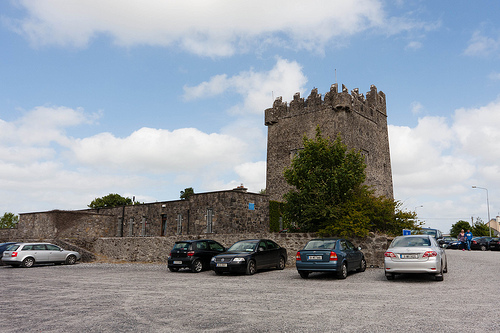
Location: Tyrrellspass, County Westmeath Map
Constructed: 1411
Open: 9am- 8:30pm
Official site
Tyrrellspass Castle (Irish: Caisleán Bhealach an Tirialaigh) is a 15th-century tower house located in the village of Tyrrellspass, County Westmeath, Ireland, along the R446 road (formerly the N6), approximately 81 km from Dublin. As the last remaining stronghold of the Tyrrell family, a Norman dynasty that arrived in Ireland during the 12th-century invasion, the castle is a significant historical and architectural landmark. Built around 1411, it has witnessed centuries of conflict, including the Nine Years’ War and the Cromwellian invasion, before its restoration in the 1970s and transformation into a modern restaurant and event venue. Today, Tyrrellspass Castle blends medieval heritage with contemporary hospitality, offering medieval banquets, dining, and a unique glimpse into Ireland’s past.
Tyrrellspass Castle’s history is deeply intertwined with the Tyrrell
family’s rise and fall, reflecting Ireland’s turbulent medieval and
early modern periods.
Origins (12th–15th Century): The Tyrrells,
reputed cousins of William the Conqueror, arrived in Ireland around 1169
during the Norman invasion. Granted the Barony of Fartullagh (modern
Tyrrellspass) by Hugh de Lacy, a powerful Norman knight, they
established control over the region, initially building temporary
motte-and-bailey fortifications. By the early 15th century, they
constructed the stone tower house now known as Tyrrellspass Castle,
around 1411, to guard a strategic pass through surrounding bogs and
collect tolls, which enriched the family. An oak beam in the castle,
carbon-dated to c. 1411, confirms this timeline, though the tree was 200
years old at the time, suggesting construction in the early 1400s.
Nine Years’ War (1594–1603): The castle’s most famous historical moment
came in 1597 during the Battle of Tyrrellspass, a pivotal event in the
Nine Years’ War (Tyrone’s Rebellion). Captain Richard Tyrrell, a skilled
commander and ally of Aodh Mór Ó Néill (Hugh O’Neill), led 300–400 Irish
forces to a decisive victory against an English army of approximately
1,000. Only one English soldier reportedly survived. This victory
cemented Richard Tyrrell’s reputation as a formidable leader, with
contemporary records describing him as “the most dangerous” rebel after
O’Neill. The castle served as a defensive base during this period,
leveraging its strategic location.
Cromwellian Invasion (1649–1653):
During the Cromwellian conquest of Ireland, the Tyrrell family sided
with the Catholic Confederacy, opposing English Parliamentarian forces.
This allegiance proved costly; many family members were executed, and
the castle fell into ruin as the Tyrrells lost control during the
subsequent plantation of confiscated lands. The castle’s occupants
suffered greatly, marking a low point in its history.
Decline and
Restoration (18th–20th Century): By the 18th century, the castle was
abandoned and deteriorated, its stone walls and chambers exposed to the
elements. The surrounding village of Tyrrellspass, however, flourished
as a planned Georgian estate under the patronage of Jane MacKey,
Countess of Belvedere, in the late 18th century. In the 1970s, Phillip
Ginnell undertook extensive restoration, preserving original features
like the spiral staircase and a 1280 roof beam (likely reused from an
earlier structure). In the early 1990s, the castle was converted into a
restaurant, breathing new life into the site.
Modern Era: Today,
Tyrrellspass Castle operates as Tyrrellspass Castle Restaurant, hosting
medieval-style banquets, weddings, and events. Its restoration has made
it a focal point of the village, which won the Irish Tidy Towns
Competition in 1969. The castle’s historical significance endures, with
its story celebrated in local lore and art, such as the work of Galway
artist Bernice Cooke.
Tyrrellspass Castle is a classic Irish tower house, a fortified
residence typical of the 14th–17th centuries, designed for defense
and status. Rising approximately 20 meters high, it exemplifies the
stone-built, vertical layout of such structures, with superimposed
chambers and defensive features.
Structure:
Four-Story
Tower House: The castle consists of four main floors, with a narrow
fifth-story turret at the east end, extending the full width of the
building. The walls, constructed from local stone, are thick and
robust, designed to withstand attack.
Irish Crenellations: The
roof is topped with stepped battlements (Irish crenellations),
providing defensive positions for archers or gunners.
Bartizans:
Small, overhanging turrets (bartizans) on the western angles enhance
defense, allowing defenders to cover the walls. A southwest bartizan
is visible above a pointed doorway.
Bawn Wall: A surviving wall
fragment, possibly part of the original bawn (defensive courtyard),
connects to a smaller tower, hinting at a larger fortified complex
now lost.
Defensive Features:
Murder-Hole: Above the
entrance, a murder-hole allowed defenders to drop projectiles or
boiling liquids on intruders, a common feature in tower houses.
Spiral Staircase: The original stone spiral staircase, accessed via
the turret, remains intact, winding through the floors to the roof.
Its narrow, clockwise design favored right-handed defenders.
Gunloops and Slits: Narrow windows and gunloops provided defensive
firing positions while minimizing exposure.
Interior:
Ground Floor: Likely used for storage or defense, it features a
pointed doorway and a single-light window. An exposed oak beam,
dated to 1280 (possibly reused), is visible in the modern
restaurant’s “lounge” area, adding historical charm.
Upper
Floors: The upper chambers, originally living quarters and reception
areas, now house dining spaces, including the Kirby Room, lounge,
and a refurbished function room on the second floor. The layout is
practical, with fireplaces and small windows typical of tower
houses.
Banquet Hall: A modern addition, the banquet hall offers
a “homely and quaint” atmosphere for medieval-style feasts, blending
historical ambiance with contemporary comfort.
Exterior: The
castle’s rugged stone facade, softened by its village setting,
contrasts with the Georgian elegance of Tyrrellspass’s crescent of
houses. Its proximity to the R446 and surrounding bogland enhances
its historical role as a guardian of the pass.
The castle’s
architecture, while defensive, reflects the Tyrrells’ wealth and
status, with its toll-collecting location ensuring economic power.
The restoration preserved key medieval elements, though modern
additions prioritize functionality.
Tyrrellspass Castle is a tangible link to Ireland’s Norman heritage
and its turbulent history of rebellion and conquest.
Tyrrell
Dynasty: The Tyrrells’ Norman lineage, tied to William the Conqueror,
underscores their role as colonial elites. Their control of Fartullagh,
secured through motte-and-bailey castles (e.g., Castlelost,
Rochfortbridge), evolved into the permanent stone structure of
Tyrrellspass, symbolizing their dominance. The family’s fall during the
Cromwellian era reflects the broader dispossession of Catholic
landowners.
Battle of Tyrrellspass (1597): Captain Richard Tyrrell’s
victory is a celebrated moment in Irish resistance, highlighting the
castle’s strategic importance. The battle’s legacy endures in local
pride and historical narratives, with Tyrrell lauded as a military
genius.
Cromwellian Legacy: The execution of Tyrrells during the
1650s invasion marks the castle as a site of tragedy, reflecting the
broader suffering of Catholic families under Cromwell’s policies.
Modern Revival: The castle’s restoration and conversion into a
restaurant preserve its heritage while adapting it for modern use. Its
medieval banquets, modeled on the famous Bunratty Castle experience,
celebrate Irish culture through food and music, making it a unique
midlands attraction.
Village Context: Tyrrellspass, a planned
Georgian village, complements the castle’s medieval aura with its
elegant green, crescent houses, and historical sites like the Church of
St. Stephen (Catholic) and St. Sinian’s (Church of Ireland). The
castle’s prominence enhances the village’s appeal as a historical
destination.
The castle also has a niche cultural presence, featured
in art (e.g., Bernice Cooke’s prints) and local lore, including
unverified claims of Michael Collins staying nearby during the 1916
Easter Rising.
Since its conversion in the 1990s, Tyrrellspass Castle has operated
as Tyrrellspass Castle Restaurant, a multifaceted venue offering dining,
events, and a taste of medieval Ireland. Located just 2 minutes from the
M6 motorway (Junction 4), it is easily accessible from Dublin (81 km)
and Galway.
Dining and Events:
Restaurant and Coffee Shop: The
castle features five dining areas (coffee shop, main restaurant, Kirby
Room, lounge, and function room) with a capacity for 200 people. It
serves a range of meals, from cappuccinos and sandwiches to five-course
dinners, with a focus on “simple, fresh, and superb” Irish cuisine
(e.g., roast beef, bacon and cabbage, lasagne, steak, desserts like
pavlova). Reviewers praise the generous portions, reasonable prices, and
homey atmosphere, though some note inconsistent service or minor upkeep
issues.
Medieval Banquets: Modeled on Bunratty Castle’s famous
banquets, these intimate events feature a five-course menu, traditional
Irish music, and vocal performances by the “Fear An Tigh” (man of the
house). Popular with locals and tourists, the banquets offer a immersive
historical experience.
Events and Weddings: The castle is a
HSE-approved wedding venue, ideal for small, intimate gatherings,
birthdays, communions, confirmations, and tour groups. The refurbished
function room and medieval ambiance make it a unique setting for private
functions.
Museum and Gift Shop: A small museum showcases the
castle’s history, and a gift shop sells souvenirs, enhancing the visitor
experience.
Visitor Experience:
Location and Access: At Main
Street, Tyrrellspass, Co. Westmeath (N91 XY75), the castle is a
convenient stop for travelers on the Dublin-Galway route. Ample parking
is available, and the village’s proximity to Mullingar (20 km) and
Athlone adds to its appeal. Public transport is limited, but buses to
Mullingar connect via the M6.
Tours and Exploration: While the
restaurant is the main attraction, visitors can view historical features
like the spiral staircase, murder-hole, and 1280 roof beam during dining
or events. The museum offers insights into the Tyrrells and the castle’s
past, though some visitors express disappointment at limited access to
non-dining areas.
Atmosphere: Guests describe the castle as
“charming” and “unique,” with a blend of medieval stonework and cozy
dining spaces. The banquet hall’s homely feel contrasts with the
defensive exterior, creating a welcoming vibe. Friendly staff are
frequently praised, though occasional reviews cite slow service or minor
mishaps (e.g., dropped food).
Nearby Attractions: Visitors can
explore Tyrrellspass’s Georgian village, the Cloncrow Bog & Village
Trail, or nearby sites like Belvedere House and Gardens, Tullynally
Castle, or the Old Rail Trail Greenway. The New Forest Golf Resort, 1
mile away, offers recreation.
Tips for Visitors:
Book banquets
or large group dining in advance via tyrrellspasscastle.com or by
calling.
Visit on weekdays for fewer crowds, and check for local
events or festivals that may coincide with your trip.
Bring a camera
for the castle’s exterior and village scenery, especially in evening
light.
Be prepared for limited historical access if dining casually,
as the focus is on the restaurant experience.
Note mixed reviews:
while most praise the food and ambiance, some report service
inconsistencies or outdated decor (e.g., “needs a tidy up”).
Challenges: The castle’s dual role as a restaurant and historical site
can disappoint visitors expecting extensive tours. Upkeep issues, such
as worn interiors or loud background music, occasionally detract from
the experience. Its location near modern amenities (e.g., the M6) may
reduce the medieval ambiance for some.
Spiral Staircase: The original stone staircase, a rare surviving
feature, connects the castle’s floors and reflects medieval design.
Murder-Hole: A chilling defensive feature above the entrance, showcasing
the castle’s martial past.
1280 Roof Beam: Exposed in the lounge,
this ancient beam (possibly reused) adds historical depth.
Banquet
Hall: A modern addition with a medieval vibe, perfect for immersive
dining experiences.
Village Setting: The castle’s integration with
Tyrrellspass’s Georgian architecture creates a unique historical
juxtaposition.
Tyrrellspass Castle is one of many Irish tower houses (e.g., Bunratty, Doe, Leamaneh), but its association with the Tyrrells and the 1597 battle sets it apart. Its Norman origins link it to Ireland’s colonial past, while its role in rebellions reflects native resistance. The Cromwellian executions highlight the Catholic-Protestant tensions of the 17th century. The castle’s modern use aligns with Ireland’s trend of repurposing historic sites for tourism, balancing preservation with accessibility. Its proximity to other Westmeath attractions, like Kilbeggan Distillery or Mollie Moo’s Pet Farm, makes it part of a broader heritage trail.
Maintaining a 600-year-old castle is challenging, particularly with
its active use as a restaurant. Key issues include:
Wear and
Tear: Heavy foot traffic and dining operations strain the interior, with
some visitors noting the need for refurbishment.
Balancing History
and Commerce: The focus on dining limits historical access, potentially
alienating heritage enthusiasts.
Environmental Factors: The
surrounding bogland, while historically strategic, may pose long-term
structural risks due to moisture, though no specific damage is
documented.
Funding: As a privately restored site, ongoing
maintenance relies on restaurant revenue, unlike state-managed sites
like Newgrange.
The 1970s restoration by Phillip Ginnell was a
significant achievement, but future preservation will require careful
management to retain medieval features while meeting modern safety and
hospitality standards.