Location: San Francisco
Tel. 96 642 06 56
Open: daily
Closed: 1 Jan, 25 Dec
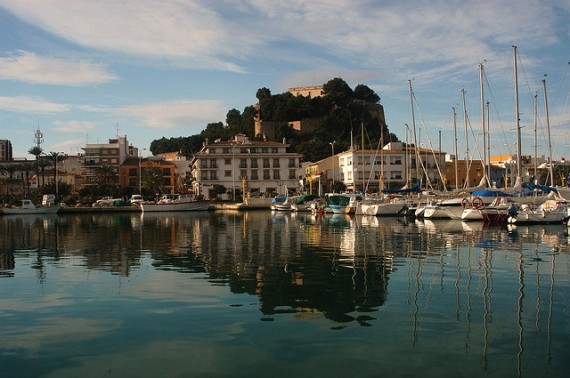
Dénia Castle, perched on a 60-meter-high rocky crag overlooking the Mediterranean Sea and the city of Dénia in Alicante province, Spain, is a multifaceted fortress with over 2,000 years of layered history. Originally constructed during the Islamic period in the 11th and 12th centuries, it has served as a citadel, palace, military stronghold, and now a cultural landmark housing an archaeological museum. Its architecture reflects influences from Roman, Muslim, Christian, Renaissance, and modern eras, making it a symbol of the region's turbulent past. The castle's strategic location made it a key defensive point, evolving from a Muslim governor's residence to a Christian fiefdom and later a site of wartime destruction and restoration.
Prehistoric and Ancient Foundations (Pre-11th Century)
Human
presence in the area dates back to prehistoric times, with Iberian ruins
found on nearby hillsides from around the 4th century BC. During this
period, Dénia (then possibly known as Hēmeroskopeion, meaning
"watchtower") was a Greek colony allied with Massalia or Emporion. By
the Roman era, it became Dianium, named after the goddess Diana, and
served as an ally during the Punic Wars. In the 1st century BC, Roman
general Quintus Sertorius established a naval base here. Archaeological
evidence on the castle's slopes includes remnants of Roman
constructions, such as fortifications and urban structures from the
ancient city of Diannium. From 636 to 696 AD, under Visigothic rule,
Dénia was a bishopric seat dependent on Toledo. Following the Muslim
conquest of Iberia in 711, the site transitioned into Islamic control,
setting the stage for the castle's primary construction.
The
Muslim Era: Foundation and Splendor (11th–13th Centuries)
The
castle's core structure emerged during the Andalusian Muslim period in
the 10th and 11th centuries, built as a fortification of Almohad origin.
It functioned as the citadel (alcazaba) and residence for the governor
of Daniya (the Arabic name for Dénia, meaning "lowland"). By the
mid-11th century, it achieved its defining form with a double enclosure:
the upper citadel for elite residences and the lower albacar, a walled
refuge for inhabitants and livestock during sieges. This era marked
Dénia's height as the capital of the Taifa of Dénia, an independent
Muslim kingdom under Slavic Muslim slaves (saqālibah) led by Mujahid ibn
Yusuf ibn Ali. The taifa extended influence to the Balearic Islands,
including Majorca and Ibiza, and thrived culturally and economically,
minting its own currency amid the Caliphate of Córdoba's decline.
Architectural highlights from this time include the Torre del Mig
(Middle Tower), featuring double horseshoe arches and an alfiz frame;
the Portal de la Vila, the main entrance with pointed horseshoe arches
and a split key; the Torre del Cos de Guardia (Guard Corps Tower); and
the Portal del Baluard with three arches, including a horseshoe one. A
mosque, baths, and suburbs were also built nearby. The taifa lost
independence in 1076 to Ahmad al-Muqtadir of Zaragoza and fell under
Almoravid control in 1091, but the castle remained a bustling hub until
the Christian reconquest.
Christian Reconquest and Medieval
Transformations (13th–15th Centuries)
In 1254 (sources vary slightly
between 1244 and 1254), King Jaume I of Aragon conquered Dénia,
expelling much of the Muslim population and repurposing the castle. The
upper enclosure became the Palau (palace), incorporating landmarks like
the Castell and Villa, while the lower albacar evolved into the Vila de
Dénia (Old Town) by 1308, serving as the main urban center. The site was
created a fief in 1298 and passed through noble hands, including the de
Sandoval family from 1431, before returning to the Aragonese crown in
1455. In 1487, it became a marquisate under the Marquises of Dénia.
Key additions included the Torre Roja (Red Tower), built in the 15th
century with red sandstone for defense; the Torre del Consell (Council
Tower) with a Gothic hall; and remnants of medieval houses in the Vila
Vella. A 14th-century stone path led to the palace. The castle's role
shifted from Muslim palace to Christian stronghold, reflecting the
Reconquista's cultural overhaul.
Renaissance and Early Modern
Defenses (16th–17th Centuries)
Threats from Berber pirates in the
16th century prompted Renaissance military enhancements, including
bastions like the Punta del Diamant (Diamond Point) and the eastern
Verger Alt (a mid-16th-century structure later renovated in 2020).
Around 1600, a Renaissance palace was integrated into the Governor's
Palace, serving as the seasonal residence of the Duke of Lerma, favorite
of Philip III. The Baluard bastion from the 18th century and the eastern
Portal dels Reis (leading to the port) were added. However, the
Expulsion of the Moriscos in 1609 led to economic decline, with 25,000
people leaving the marquisate.
Wars and Decline (18th–19th
Centuries)
The War of the Spanish Succession (1701–1714) devastated
the castle: besieged by 9,000 French troops in June 1707, the town
repelled assaults but fell in November. Much of the Vila Vella and
palace were destroyed. The Treaty of Utrecht in 1713 returned it to
Spanish rule under Philip V. During the Peninsular War (1808–1814),
French forces occupied Dénia for four years, rebuilding parts of the
fortress in the early 19th century but damaging the southern fronts.
By the mid-19th century, military use ceased; it became a private
agricultural estate for vine cultivation and raisin production (pansa),
with terraces and retaining walls added. In the early 1940s, the north
slope was quarried for stone.
Modern Restoration and Cultural
Significance (20th Century–Present)
Expropriated in 1947, the castle
became municipal property, sparking restorations: tree planting, access
improvements, and repairs to towers like the Torre del Consell and
Portal de la Vila. The 1960s–1970s saw tourism-driven changes, including
a road to the upper enclosure, though this demolished walls and
archaeological sites. In the 1980s, the Governor's Palace was restored
to house the Archaeological Museum, showcasing artifacts from Iberian,
Roman, Muslim, and Christian periods, including Islamic bronze and
Andalusian ceramics. The Galliner Tower, Red Tower, bastions, and walls
were also refurbished.
The Spanish Civil War (1936–1939) saw the
addition of bomb shelters, like tunnels under the castle for civilian
protection. In the 21st century, additions include La Sala for
conferences, a Visitor Center, and a restored palace staircase.
Recognized for its heritage value, the castle now attracts visitors for
its panoramic views, museum exhibits, and events, standing as a
testament to Dénia's multicultural evolution.
Overall Structure and Defensive Walls
The castle spans
approximately 1.5 hectares on a 60-meter-high hill, with a citadel at
its core featuring a double wall system—a hallmark of Moorish military
architecture designed for layered defense. The outer walls, constructed
from large reddish sandstone blocks, are thick and imposing, reaching
heights of up to 10-15 meters in places, with battlements and embrasures
for archers. These walls encircle the entire complex, incorporating
natural rock formations for added strength, and include a deep, dry moat
that originally deterred sieges. The layout follows a polygonal plan,
adapting to the terrain's irregularities, which enhances its defensive
posture by creating natural vantage points. Post-Moorish modifications
added bastions and ramparts, particularly in the 16th century, to
accommodate artillery.
Key Towers and Defensive Elements
Towers are among the most striking features, each representing different
eras:
Torre del Mig (Middle Tower): Located at the main entrance
to the citadel, this 11th-century structure exemplifies Almohad
architecture with its double horseshoe arches framed by an alfiz (a
rectangular panel enclosing the arch). Built from stone and mortar, it
features a vaulted interior and served as a gateway tower, combining
aesthetic elegance with defensive utility through its elevated position
and narrow access points.
Torre Roja (Red Tower): A 15th-century
Renaissance addition, this cylindrical tower stands out for its red
brick construction and conical roof. It was designed for artillery
defense, with wide embrasures allowing cannon fire, and its smooth,
curved form contrasts with the angular Moorish elements nearby.
Torre
del Consell (Council Tower): Part of the defensive complex, this
square-based tower dates to the Christian era and features Gothic
influences, including pointed arches and merlons. It housed local
government meetings in medieval times and is integrated into the Baluard
(bastion), a reinforced platform with sloping walls to deflect
projectiles. The tower's robust stone build and elevated platform
provided oversight of the harbor below.
These towers are
interconnected by walkways and parapets, allowing for rapid movement of
defenders.
Entrances and Portals
Access to the castle is
controlled through architecturally significant gateways:
Portal
de la Vila: The primary entrance, dating to the Almohad period (12th
century), consists of pointed horseshoe arches with a split key (a
decorative keystone). Flanked by defensive walls, it features intricate
stonework and leads into the lower enclosure, blending Islamic
ornamental motifs with functional fortification.
Additional minor
portals and posterns (small side gates) punctuate the walls, often
hidden or reinforced with drawbridges in earlier designs.
Interior Structures: Palace and Museum
Within the citadel lies the
Governor's Palace, constructed in the 16th-17th centuries during the
Christian period. This rectangular building features Renaissance-style
windows, arcaded courtyards, and tiled roofs, shifting from pure defense
to residential use. The palace's interior includes vaulted ceilings and
stone floors, now part of the archaeological museum displaying Islamic
pottery, Roman artifacts, and medieval weaponry. Adjacent open areas
like the Explanada del Governador provide terraced spaces with stone
paving, offering views and serving as event venues.
Modern
Adaptations and Preservation
In the 19th century, French engineers
rebuilt parts of the castle, adding neoclassical symmetry to ramps and
walls. Restoration efforts in the 20th and 21st centuries have preserved
these elements, using compatible materials to maintain authenticity. The
architecture's adaptability is evident in how natural elements like the
hill's slope are integrated, creating terraced levels that enhance both
defense and aesthetics.