Location: Off A591 & A590, Sizergh, Cumbria Map
Tel. 015395 60951
Open: Apr- Oct: Sun- Th
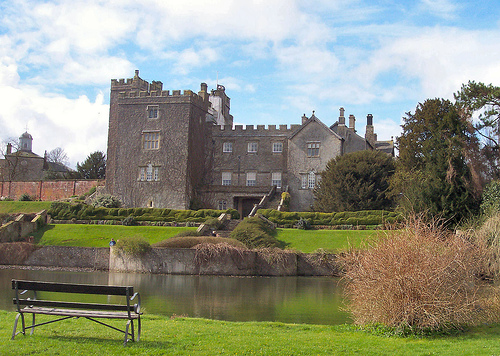
Sizergh Castle (pronounced "SIGH-zer"), near Kendal in Cumbria
(historic Westmorland), England, is one of Britain’s most remarkable
family homes. It has been the principal residence of the Strickland
(later Hornyold-Strickland) family for more than 785 years—since
1239—making it one of the longest continuously occupied estates by a
single family in the country.
The castle sits about 4 miles south
of Kendal at the gateway to the Lake District and remains a lived-in
home even while the house, gardens, and 1,600-acre estate are cared
for by the National Trust (gifted in 1950). It is Grade I listed and
blends medieval defensive architecture with some of the finest
Elizabethan carved oak interiors in northern England.
Early Origins (Late 12th–Early 14th Century)
The land was granted
by Henry II around 1170–1180 to Gervase Deincourt, a member of a
powerful baronial family. The Deincourts held it until 1239, when their
heiress Elizabeth Deincourt married Sir William de Stirkeland (the name
later became Strickland). This marriage brought Sizergh into Strickland
ownership, where it has remained ever since.
The Stricklands were a
rising gentry family with roots possibly linked to earlier Norman
settlers (some early records refer to them as “de Castlecarrock”). By
the early 14th century they were significant landowners in the turbulent
Anglo-Scottish border region. In 1332 Sir Walter Strickland obtained a
royal licence to enclose the land as a private park; a further licence
to impark woods followed in 1361. The estate remained a deer park until
the 18th century.
Medieval Fortress: The Pele (Solar) Tower
(Mid-14th Century)
The oldest visible part of the present building is
the massive four-storey pele (or solar) tower, built around the middle
of the 14th century (c. 1350) on the site of an earlier structure. In
the lawless border country, such towers were essential for defence
against Scottish raiders. The tower is roughly 60 ft (18 m) high, with
thick stone walls, original fireplaces, floors, and windows (including
distinctive 15th-century trefoil lights on the upper floors). Some
historians now prefer the term “solar tower” because it served as a
private living space for the lord and family rather than purely military
use.
A great hall of c. 1450 was added alongside the tower, forming
the medieval core. The family’s status continued to rise: a Strickland
famously carried the English banner at the Battle of Agincourt (1415).
Tudor Transformation: From Fortified House to Elizabethan Manor
(16th Century)
The major rebuilding that gave Sizergh its present
character took place in the mid-to-late 16th century under Walter
Strickland (d. 1569) and his widow Alice (née Tempest). Between about
1555 and 1585 they transformed the medieval house into a fashionable
U-shaped Elizabethan residence by adding two grand wings to the west,
creating a courtyard (now closed by gates and Grade II listed piers).
The interiors are among the finest in the north of England:
Exquisitely carved oak panelling, overmantels, and furniture (some
pieces still in the house date from Walter’s time).
The Inlaid
Chamber (created in the 1570s by Alice Strickland) is the showpiece: its
oak panelling is inlaid with pale poplar and dark bog-oak in floral and
geometric Renaissance patterns. The room also has a spectacular plaster
ceiling with pendant drops and fragments of medieval stained glass.
17th–18th Centuries: Jacobite Loyalty, Financial Decline, and
Georgian Refinements
The Stricklands were staunch Royalists and
Catholics. During the Civil War and later the Glorious Revolution of
1688, their support for the Stuart cause proved costly. Sir Thomas
Strickland (a Cavalier) accompanied the exiled James II to France and
died in the Jacobite court at Saint-Germain-en-Laye. Lady Strickland
served as governess to James Francis Edward Stuart (“The Old
Pretender”). The family’s portraits of the Stuart royal family
(including works by Alexis Simon Belle) and Jacobite relics are still
displayed in the house.
Financial hardship prevented the family from
modernising Sizergh to later fashions. This “poverty preserved” the
Elizabethan character—much like nearby Levens Hall—leaving it remarkably
unaltered.
In the 18th century the great hall range was expanded and
given a Georgian façade and staircase (c. 1770). The scholar and author
Thomas West (famous for his Guide to the Lakes) lived at Sizergh in this
period and painstakingly transcribed and preserved the family archives,
many of which are still displayed or referenced today.
19th–20th
Centuries: Sales, Victorian Touches, and the National Trust Era
In
the 19th century the family fortunes reached a low point. In the 1890s
the entire Inlaid Chamber panelling was sold to the Victoria and Albert
Museum in London for £1,000 and displayed there as a period room. A
Victorian porch was also added to the entrance so carriages could drive
underneath for sheltered arrivals.
In 1950, Lieutenant Commander
Thomas Hornyold-Strickland (7th Count della Catena, grandson of the 1st
Baron Strickland) and his family formally gifted the castle, gardens,
and estate to the National Trust. The family retained the right to live
in part of the house, an arrangement that continues today under the
current head of the family, Henry Hornyold-Strickland. In 1999 the
Inlaid Chamber panelling was returned on long-term loan; ownership was
formally transferred to the Trust in 2017.
The estate was
incorporated into the extended Lake District National Park in 2016.
Gardens and Estate Today
The gardens—largely 20th-century
creations on earlier layouts—include a celebrated limestone rock garden
(one of the largest in Britain), formal terraces, a lake, orchard, and
woodland walks. They complement the house beautifully and are open to
visitors.
Sizergh stands as a living monument to 800 years of one
family’s history: from border defenders to Elizabethan magnates,
Jacobite exiles, and modern custodians. Its architecture, furnishings,
and archives tell the story of England’s turbulent past while remaining
a warm, family home. Visitors can explore the tower rooms, Elizabethan
chambers, family portraits, and the surrounding parkland that the
Stricklands have called home since the reign of Henry III.
The building’s core dates to the early-to-mid 14th century (c.
1310–1350), when the Stricklands constructed a four-storey pele (or
solar) tower as a defensive stronghold against Scottish border
raids. This massive 60-foot-high stone tower formed the heart of an
earlier medieval house that already included a great hall and
service block.
A major transformation occurred in the mid-16th
century (Elizabethan period) under Walter Strickland (d. 1569). In
the mid-1550s he raised the medieval hall to first-floor level,
added two substantial wings, and created the present U-shaped
courtyard plan (open to the west, enclosed by gates and gate piers).
A kitchen was added to the central range in 1558, and the North Wing
was extended in 1562 with domestic offices and servants’ rooms.
Between 1558 and 1585 the interiors received some of the finest
carved and inlaid oak decoration surviving in northern England.
Walter’s widow, Alice (née Tempest), commissioned the showpiece
Inlaid Chamber in the 1570s.
18th-century (Georgian) alterations
included partial refenestration of the east front, expansion of the
great hall range c. 1770, and the addition of a flight of external
steps from the first-floor east front down to the garden.
Victorian modifications were more modest but included extending the
porch to accommodate carriages; some original features were
unfortunately lost during 19th-century “improvements.”
The result
is a compact, organic complex of local grey limestone with slate
roofs: the tall pele tower dominates the south-east corner, the
Tudor wings extend north and west to enclose the courtyard, and the
east front presents a more domestic, stepped façade with later
classical touches. Bargeboards on the gables are thought to date
from the 17th century.
Exterior Architecture
Pele Tower:
The most striking defensive remnant. Four storeys of thick rubble
stone walls, originally designed for security rather than comfort.
It retains original fireplaces, floors, and windows in several
rooms.
Tudor Wings and Courtyard: Symmetrical ranges of two to
three storeys with mullioned windows, stone dressings, and gabled
roofs. The west courtyard is enclosed by low walls and ornate gate
piers.
East Front: More domestic in character, with later sash
windows inserted during Georgian refenestration and the dramatic
external stone steps descending to the gardens.
Materials: Local
limestone, oak roof timbers and floorboards (many still showing adze
marks), and leaded windows (some retaining 15th- and 16th-century
heraldic glass).
Interior Architecture and Key Rooms
The
interiors are renowned for their exceptional Elizabethan oak
joinery, which ranks among the finest in England. A remarkable
series of panelled rooms survives, featuring intricate carving,
inlay work, and richly moulded overmantels.
The Inlaid Chamber
(second floor of the pele tower, originally a solar/bedchamber) is
the undisputed architectural highlight. Commissioned c. 1570s, its
walls are divided into bays by Ionic pilasters with applied
mouldings, creating a coffered effect. The panelling is inlaid with
floral, geometric, and arabesque strapwork patterns using pale
poplar and dark bog oak—Italian Renaissance motifs that glitter
under light. Friezes of interlaced lozenges, fleur-de-lis, and
crescents top the panels; an upper register of round-headed arches
sits beneath a further inlaid frieze. The surbase features mitred
mouldings forming overlapping panels. The room also boasts ornate
plasterwork with drooping pendants, heraldic stained-glass windows,
and a ceiling that enhances the sense of opulent display. Period
furniture remains in situ, including a magnificent 1568 walnut
four-poster bed carved with the Strickland, Deincourt, Neville, and
Ward arms.
Great Hall / Dining Room (central range,
originally medieval Great Chamber): Raised to first-floor level in
the 1550s and given a Georgian facelift c. 1770. It features richly
carved oak overmantels (some of the finest surviving in England),
full-height panelling, and a grand fireplace. The room now displays
Jacobite relics and family portraits.
Tower Rooms and
Ancillary Spaces:
The second-floor tower room retains
15th-century trefoil windows and roof-hewn floorboards still bearing
adze marks.
Other panelled rooms throughout the house contain
Elizabethan carved oak furniture (including rare pieces from Walter
Strickland’s time) and 18th-century Gillows furniture from
Lancaster.
The Library holds restored Flemish tapestries
depicting The Meeting of Antony and Cleopatra.
Staircases and
Circulation: Stone-flagged entrances lead to timber staircases (some
with original newel posts) that connect the tower to the wings. The
basement of the tower now houses a small exhibition on family
history.
Summary of Architectural Significance
Sizergh is
a rare, almost unaltered example of how a 14th-century border pele
tower was seamlessly absorbed into a fashionable Elizabethan
courtyard house. Its oak interiors represent the pinnacle of
northern English Renaissance craftsmanship, while the later Georgian
and Victorian layers show the Stricklands’ continuing adaptation to
changing social and aesthetic tastes. The building’s survival is
largely due to the family’s long tenure and relatively modest
fortunes in the 19th century, which spared it from drastic Victorian
“restoration.” Today it stands as a living testament to over 800
years of continuous occupation and architectural layering.
Getting There and Practical Details
Sizergh sits off the
A590/A591, just 4 miles south of Kendal and easily reached from the
M6 (Junction 36). Brown signs guide you clearly from the motorway or
main roads. There’s ample parking (tarmac with disabled bays near
the Visitor Centre; overflow grass in dry weather), though it can
fill on peak weekends—arrive early or use the drop-off outside the
centre.
Public transport works well: frequent buses from Kendal
(15 mins, X6 or others to Heaves/Brettagh stop), Windermere, or
Lancaster, followed by a pleasant 20-minute walk down Nannypie Lane
past the Strickland Arms pub. Trains to Kendal or Oxenholme connect
easily.
Opening times (as of 2026/27):
Gardens, café,
shop, estate, and car park: daily 10am–5pm (high season
March–November); shorter in winter (10am–4pm).
House: typically
Tuesday–Sunday from around mid-March to early November (check exact
dates; often 12pm–4pm or similar).
House and garden combined or
garden-only tickets apply seasonally.
Prices (2026/27,
approximate; check NT site for Gift Aid/non-Gift Aid options):
House + garden: adult ~£16.50
Garden only: adult ~£12 (higher
season) or ~£7 (winter)
Children (5–17) and families get
discounts; under-5s free. National Trust members enter free.
Facilities include a café (using kitchen-garden produce—think fresh
lunches, cakes, breakfast), shop, toilets (accessible options), and
a Visitor Reception with maps and info. The site is generally
family-friendly with children’s trails, but note dog rules: welcome
on leads in the estate, café, shop, and wild play area; assistance
dogs only in the house and formal gardens.
Accessibility: Good
overall. Designated disabled parking, Trampers (all-terrain mobility
scooters) and manual wheelchairs available to borrow (pre-book where
possible). The garden has a level one-way route with some
slopes/gravel; the estate’s Holeslack trail is
pram/wheelchair-friendly. House access is limited upstairs (steps,
narrow corridors—no lift), but ground-floor areas like the Chapel
and Library are level. Virtual tours (subtitled/BSL/audio-described)
help plan. Buggies can be left in vehicles; hip carriers are
available.
Arriving and First Impressions
Pull in, park,
and head to the Visitor Centre for tickets, a quick orientation
video on the Strickland family’s story, and maps. The castle’s
crenellated tower rises impressively against the fells—grab a coffee
and plan your day (house first? gardens? walks?). The atmosphere is
relaxed and estate-like rather than crowded touristy, though summer
weekends get busier.
Exploring the House
The house remains
partially occupied by the Hornyold-Strickland family, giving it an
intimate, layered feel rather than a sterile museum. Start in the
lower areas (ground floor accessible), then head upstairs if able
(26 steps with handrails; some narrow passages).
Highlights
include:
The 14th-century solar tower with original fireplaces,
floors, and windows.
The 15th-century Great Hall and later rooms
filled with English/French furniture, porcelain, Jacobite relics,
and Catholic family heirlooms.
The Library with rare Flemish
tapestries.
The absolute star: the Inlaid Chamber—an
internationally acclaimed Elizabethan masterpiece of intricate oak
panelling inlaid with poplar and bog oak. Returned from the Victoria
& Albert Museum in 1999, it’s one of the finest examples of its kind
in England. Expect ornate details, period furniture, and a real
“wow” moment.
The Gardens: A Highlight for All Seasons
Sizergh’s gardens, developed over 800 years, are a joy—peaceful,
wildlife-rich, and botanically special. They’re mainly on limestone
chippings or reinforced paths (one-level route available; some
steps/slopes).
Key features:
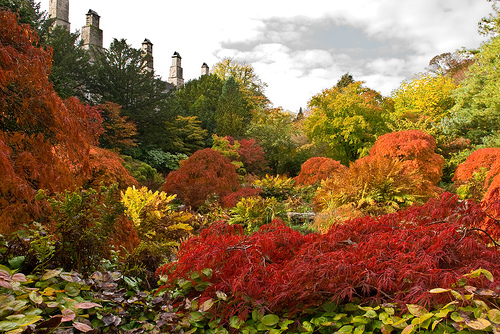
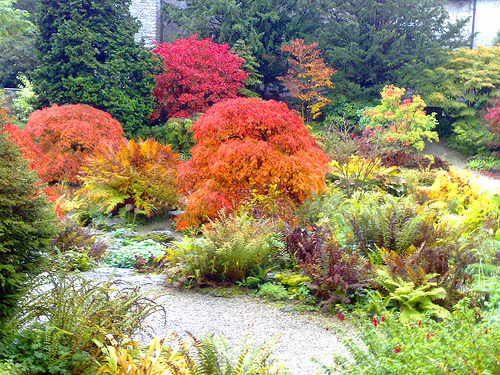
Rock Garden — One of the
largest limestone examples in the NT, with acers, conifers, and four
national collections of hardy ferns. Spring brings miniature
daffodils and blossom; autumn explodes in red/orange foliage. A
mirror-like pond reflects the castle tower perfectly.
Stumpery
(opened 2016) — Ferns and woodland plants among tree stumps.
Dutch Garden — Formal with long grass, flowers for pollinators, and
a summerhouse; April–October.
Kitchen Garden — Productive with
veg, flowers, and greenhouse; supplies the café (plants/produce
sometimes for sale/donation).
Herbaceous border (50m long) and
Fruit Wall (60m limestone with brick facing for heat).
Orchard —
Over 65 apple varieties (northern types), plus blossom in spring and
harvest August–October.
Seasonal magic: Late February
Japanese apricot blossom, April magnolias/cherries, May
hawthorn/bluebells, summer butterflies, autumn acers. Wildlife
abounds—newts in pools, bees in hives, birdsong, frogs, hedgehogs.
The Estate: Walks, Wildlife, and Adventure
Beyond the formal
areas, the estate’s ancient woodlands (bluebells in May), wetlands,
and farmland offer miles of trails. Pick up maps at reception.
Standouts:
Holeslack Access Trail — 1.5km circular,
pram/wheelchair-friendly through woodland with ancient trees,
lichens, and views back to the house.
Wild Play Trail — In the
woods for ages 3+ (climbing wall, balance beams, rope swing,
stepping stones—adults supervise smaller kids).
Sizergh Fell walk
or Park End Moss Wetland Walk — For birds (reed warblers, hawfinches
in winter) and orchids.
Longer options link to the
Kendal–Lancaster canal towpath or Low Sizergh Barn farm trail.
Guided walks (free, Mondays) and “50 things before you’re 11¾”
activities add fun. Spot fritillary butterflies, buzzards, woodcock,
or even e-bikes for hire to explore further (e.g., Damson Route).