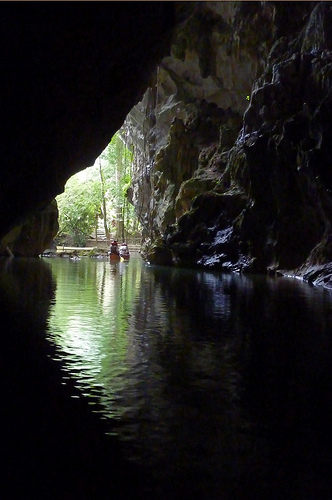
Barton Creek Cave is a natural wet cave in the Cayo District of west-central Belize, recognized as both a significant Maya archaeological site and a popular eco-tourism destination. Located near San Ignacio in the Mountain Pine Ridge area, the cave is part of a large riverine system, stretching over 4.5 miles (7.2 km) and possibly up to 5 miles, making it one of Belize’s longest subterranean sites. Used by the ancient Maya for ceremonial purposes from the Early Classic to Late Classic periods (ca. AD 250–900), the cave contains artifacts, human remains, hearths, and modified formations, reflecting its role as a sacred space. Visitors explore the cave by canoe, paddling through its tranquil waterway to view Maya relics and dramatic geological features, such as stalactites and stalagmites. Its dual identity as an archaeological treasure and a scenic attraction makes it a unique window into Maya cosmology and Belize’s natural heritage.
Location: Barton Creek Cave is situated in the Cayo District,
approximately 20 km southeast of San Ignacio, near the Barton Creek
Outpost in the Mountain Pine Ridge area. Its coordinates are roughly
17°05'N, 88°55'W, placing it in a lush, hilly region of western
Belize. The cave is accessible via a scenic dirt road through pine
forests and Mennonite farmlands, about a 30-minute drive from San
Ignacio.
Geological Features: The cave is a single-passage,
resurging stream cave formed by Barton Creek, which flows
underground for a significant distance before joining the Belize
River near Georgeville. It features giant passages with ceilings up
to 80 feet (24 meters) high and widths of 30–50 feet in some areas.
The cave is adorned with numerous large stalactites, stalagmites,
and flowstone formations, creating a cathedral-like atmosphere. The
waterway, calm and shallow, allows canoe access for about 1.5 km of
the cave’s explored length.
Climate and Environment: The
surrounding Mountain Pine Ridge is a tropical highland with pine
forests, contrasting with Belize’s lowland rainforests. The climate
is humid, with temperatures averaging 75–85°F and rainfall of 60–80
inches annually, concentrated in the rainy season (June–November).
The cave’s interior maintains a cool, stable microclimate,
preserving organic remains but making surfaces slippery. The
region’s biodiversity includes monkeys, birds, and iguanas, visible
during the approach to the cave.
Environmental Context: The
cave’s riverine system supported Maya agriculture and trade, linking
it to nearby sites like Xunantunich and Cahal Pech. However, modern
agricultural runoff and tourism-related erosion pose risks to the
cave’s ecosystem and artifacts. Seasonal flooding can also affect
access and preservation.
Barton Creek Cave’s dramatic geology and
strategic location made it a sacred space for the Maya, while its
natural beauty drives its modern tourism appeal.
Barton Creek Cave’s archaeological significance stems from its use
as a Maya ritual site:
Maya Occupation (AD 250–900): The cave
was used primarily during the Early Classic to Late Classic periods,
with evidence suggesting ceremonial activity peaked in the Late
Classic (AD 600–900). The Maya viewed caves as portals to the
underworld (Xibalba), sacred spaces for rituals, burials, and
offerings. Barton Creek Cave served as a burial site and ceremonial
venue, possibly linked to nearby centers like Xunantunich, 20 km
away.
Artifacts and Features:
Human Remains: Calcified
skeletons, including at least 28 individuals (adults and children),
are preserved on ledges above the water, likely elite burials or
sacrificial offerings. These remains, dated to the Classic period,
reflect the Maya’s use of caves for mortuary rituals.
Ceramics:
Maya ceramics, including jars, bowls, and whistling vessels, are
scattered on ledges, used for offerings or ritual storage. These
artifacts, primarily Late Classic, align with styles from Cayo
District sites.
Hearths and Modified Formations: Hearths, used
for ritual fires, and modified stalactites (e.g., carved or painted)
indicate active ceremonial use. These features suggest the cave was
a staged ritual space, with ledges serving as altars.
Other
Finds: Small jade and shell artifacts, likely offerings, have been
noted, though looting has reduced their number. The cave’s pristine
state in early explorations preserved organic remains, such as bone
and charcoal, offering rare insights into Maya ritual practices.
Archaeological Research: Initial surveys in the 1990s by the Western
Belize Regional Cave Project, led by Jaime Awe, documented the
cave’s artifacts and skeletal remains. Ongoing studies, supported by
the Belize Institute of Archaeology, focus on non-invasive mapping
to preserve the site’s fragile interior. The cave’s inaccessibility
by foot (canoe-only) has limited looting compared to open sites like
Nohmul, but early artifact removal remains a concern.
The cave’s
ritual use underscores its sacred role in Maya cosmology,
complementing the ceremonial functions of surface sites like Nim Li
Punit or Lubaantun.
Barton Creek Cave holds profound cultural value for both Maya
heritage and modern Belizean identity:
Maya Cosmology: As a
subterranean space, the cave was a portal to Xibalba, where the Maya
conducted rituals to communicate with deities, ancestors, or
supernatural forces. The presence of child skeletons suggests
possible sacrificial practices, common in Maya cave contexts, while
elite burials reflect social hierarchy. The cave’s artifacts and
hearths align with practices at other Belizean caves, like Actun
Tunichil Muknal (ATM Cave), reinforcing its role in Maya spiritual
life.
Local Communities: The Cayo District’s Mestizo, Yucatec
Maya, and Mopan Maya communities view Barton Creek Cave as part of
their ancestral heritage. Local guides, often from nearby villages,
share Maya history during tours, fostering cultural pride. Community
involvement in tourism, supported by operators like Pacz Tours,
ensures economic benefits reach residents.
Global Appeal: The
cave’s blend of archaeology and adventure attracts international
visitors, with outlets like Lonely Planet and TravelBelize.org
promoting it as a must-see. Its serene canoe tours and preserved
artifacts distinguish it from more tourist-heavy sites like
Xunantunich, offering an intimate glimpse into Maya ritual life.
Barton Creek Cave bridges ancient Maya spirituality with modern
cultural tourism, enhancing Belize’s reputation as a hub for
archaeological exploration.
Barton Creek Cave is a premier eco-tourism destination, balancing
archaeological preservation with visitor access:
Canoe Tours:
The primary way to explore the cave is by guided canoe tours,
typically lasting 3–4 hours. Visitors paddle 1.5 km through the
cave’s main passage, using headlamps to view artifacts, skeletons,
and geological formations. Tours, offered by operators like Belize
Inland Expeditions and Cahal Pech Village Resort, require minimal
physical effort, making them accessible to most ages. Guides
highlight Maya history and ensure artifacts remain undisturbed.
Tourism Infrastructure: A small visitor center near the cave
entrance provides basic amenities and educational displays. The
scenic drive through Mountain Pine Ridge, with views of pine forests
and wildlife, enhances the experience. Tours often combine Barton
Creek with visits to Xunantunich or zip-lining, creating full-day
itineraries.
Conservation Measures: The Belize Institute of
Archaeology regulates access, limiting tours to small groups (6–8
people) to minimize environmental impact. Canoes prevent foot
traffic on fragile ledges, and touching artifacts is prohibited.
These measures contrast with the looting at sites like Pusilhá or
Nohmul, ensuring better preservation.
Recent Developments: Posts
on X from 2017 and web articles through 2025 highlight growing
tourist interest, with operators like MyBelize.net promoting the
cave’s “mysteries.” Investments in road improvements and community
training have enhanced access and guide quality, positioning Barton
Creek as a model for sustainable tourism.
The cave’s tourism
success reflects its appeal as both an adventure and a cultural
experience, though careful management is key to its longevity.
Archaeological and Historical Context
To understand the legends
and strange happenings, it's essential to grasp the cave's role in
ancient Mayan society. The Maya civilization, which flourished in
Mesoamerica from around 2000 BCE to the Spanish conquest in the 16th
century, viewed caves as sacred spaces. Barton Creek Cave was
actively used during the Classic Period (roughly 200–900 CE), as
evidenced by pottery sherds, tools, and human skeletal remains found
on high ledges along the cave walls. These ledges, some 10–20 meters
(30–65 feet) above the water level, were accessed by the Maya using
vines or ladders, suggesting deliberate and ritualistic placement.
Key discoveries include:
Human Remains: The bones of at least
28 individuals, including adults, children, and infants, have been
documented. Some show signs of ritual modification, such as cranial
shaping or evidence of violent death, though looting in the 1970s
and 1980s has obscured details. The remains are often positioned in
ceremonial poses, surrounded by artifacts.
Artifacts: Broken
pottery, ceremonial vessels, and stone tools indicate the cave was
used for offerings. Some pots contain traces of food or incense,
pointing to agricultural or fertility rites.
Ritual Evidence: The
site shows signs of bloodletting ceremonies (where Maya elites
pierced their bodies to offer blood to gods) and possible human
sacrifices. Nearby caves in the region contain similar features,
like artificial altars or rock piles mixed with offerings.
The cave's remote location and the effort required to place items on
high ledges underscore its spiritual importance. Unfortunately,
extensive looting after initial reports in the 1970s depleted many
artifacts, but conservation efforts now protect what's left, with
tours emphasizing "leave no trace" principles.
Mayan Legends
and Myths Associated with the Cave
While Barton Creek Cave
doesn't have a singular, well-documented legend unique to it (unlike
more famous sites like Actun Tunichil Muknal, or ATM Cave, with its
"Crystal Maiden" skeleton), it is steeped in broader Mayan mythology
that locals and guides often apply to it. The Maya believed caves
were liminal spaces—thresholds between the earthly realm, the
heavens, and the underworld. This cosmology is detailed in the Popol
Vuh, the sacred Mayan text that describes creation, gods, and the
afterlife.
Xibalba, the Underworld: Caves like Barton Creek
were seen as entrances to Xibalba (pronounced "shee-BAHL-bah"), a
dark, watery realm ruled by death gods such as Hun Came ("One
Death") and Vucub Came ("Seven Death"). Xibalba was a place of
trials, trickery, and terror, inhabited by demonic beings like
bloodthirsty bats, jaguars, and scorpions. Heroes like the Maya Hero
Twins (Hunahpu and Xbalanque) ventured into Xibalba to defeat its
lords, symbolizing cycles of life, death, and rebirth. Guides at
Barton Creek often recount how the Maya performed rituals here to
appease these gods, believing the creek's waters connected directly
to this underworld. Dripping water and echoing sounds were
interpreted as communications from Xibalba's inhabitants.
Ritual
and Sacrifice Myths: Legends emphasize caves as sites for
communicating with ancestors and deities. The Maya performed
auto-sacrifice (bloodletting from tongues, ears, or genitals) to
nourish the gods, ensuring rain, fertile crops, and community
prosperity. In folklore, failure to perform these rites could summon
vengeful spirits or cause droughts. Human sacrifices, especially of
children or captives, were tied to myths of cosmic balance—offering
life to sustain the world. At Barton Creek, the presence of child
remains fuels stories that these were "payments" to underworld lords
to prevent calamities like floods or famines.
Local Folklore
Influences: In modern Belizean culture, influenced by Maya, Creole,
and Garifuna traditions, caves are associated with supernatural
beings like duendes (mischievous dwarf-like spirits) or xtabai
(seductive female entities that lure men to their doom). While not
directly linked to Barton Creek in historical records, tour guides
sometimes weave these in, describing the cave as a place where
spirits guard ancient treasures. One anecdotal legend passed among
locals is that the cave's high ledges hold "cursed"
artifacts—touching them could invoke the wrath of ancestral spirits,
leading to misfortune or illness.
These myths aren't just
stories; they reflect the Maya's animistic worldview, where natural
features like caves were alive with spiritual energy. The cave's
perpetual darkness and isolation amplified these beliefs, making it
a ideal setting for visionary experiences induced by rituals or
hallucinogens like tobacco or balché (a fermented drink).
Strange Occurrences and Paranormal Reports
Barton Creek Cave's
eerie atmosphere—dark, echoing chambers filled with bats, the
constant drip of water, and visible human skulls—has led to numerous
reports of strange happenings. While no major scientific paranormal
investigations have been conducted (unlike sites like the Bell Witch
Cave in the U.S.), anecdotal accounts from tourists, guides, and
explorers paint a picture of subtle unease and occasional
unexplained phenomena. These are often attributed to the cave's
history of death and ritual, creating a psychological "haunting"
effect.
Eerie Sensations and Atmospherics: Many visitors
describe an overwhelming sense of being watched or a heavy,
oppressive energy upon entering the cave. The narrow passages and
low ceilings can induce claustrophobia, but some report it as more
than that—a "presence" lingering from the Maya era. Guides note that
the cave's acoustics amplify whispers or bat wings into ghostly
sounds, leading to misinterpretations as voices calling names or
chanting.
Visual Anomalies: Reports include seeing shadowy
figures on the ledges where remains are located, or fleeting orbs of
light (possibly dust or bioluminescent fungi, but interpreted as
spirits). In one recounted story from a 2010s travel forum, a group
saw a "glowing mist" near a skull, which dissipated when approached.
Strange reflections on the water surface have been mistaken for
submerged faces or hands.
Auditory Phenomena: Unexplained echoes,
drips that sound like footsteps, or low hums are common. Some
tourists claim to hear faint drumming or cries, echoing the Maya's
ritual practices. A guide in a Belize tourism documentary mentioned
hearing "whispers in Maya" during solo explorations, though this
could be auditory pareidolia (the brain interpreting random noise as
patterns).
Physical Incidents: Rare but notable are accounts of
equipment malfunctions—flashlights flickering without reason or
canoes drifting against the current. In folklore-inspired tales,
visitors who disrespect the site (e.g., by shouting or touching
artifacts) experience bad luck afterward, like illnesses or
accidents. One unverified story from a Reddit thread involves a
tourist feeling an invisible "push" in the water, nearly tipping
their canoe near a ritual ledge.
Modern Interpretations:
Paranormal enthusiasts link these to "residual hauntings"—energy
imprints from traumatic rituals replaying like recordings. Skeptics
attribute them to the power of suggestion: Knowing about the
sacrifices heightens sensitivity to normal cave features like
temperature drops (from water evaporation) or bat activity. Belize's
tourism industry subtly promotes this mystique, with night tours
amplifying the spookiness.
Barton Creek Cave faces several challenges that impact its
preservation and study:
Environmental Fragility: The cave’s
humid interior and active waterway make artifacts and formations
vulnerable to erosion and microbial growth. Tourism-related
disturbances, such as canoe wakes or light exposure, could degrade
organic remains.
Limited Research: While less looted than
Ka’Kabish or Pusilhá, the cave’s inaccessibility restricts
large-scale excavations. Non-invasive methods, like 3D mapping, are
needed but underfunded, limiting new discoveries compared to surface
sites like Nim Li Punit.
Tourism Pressure: Growing visitor
numbers, noted in 2024–2025 sources, strain the cave’s capacity.
Overcrowding or untrained guides could harm artifacts, despite
regulations. The balance between tourism revenue and preservation
remains delicate.
Cultural Sensitivity: Displaying human remains,
particularly child skeletons, raises ethical questions about
respecting Maya descendants. Unlike Lubaantun’s Crystal Skull
controversy, Barton Creek’s artifacts are authentic, but their
presentation requires sensitivity to avoid sensationalism.
External Threats: Agricultural runoff from nearby farms, noted in
Cayo’s expanding Mennonite communities, could pollute the cave’s
waterway, affecting its ecosystem and artifacts. Climate change may
also increase flooding, complicating access.
These challenges
underscore the need for sustainable tourism, robust conservation,
and community-led stewardship to protect Barton Creek Cave.