Location: Limon province Map
Area: 78,000 acres (31,198 hectares)
Parque Nacional Marino Las Baulas, also known as Las Baulas Marine National Park or Turtle National Park, is a protected area in Guanacaste Province, Costa Rica, dedicated primarily to the conservation of the endangered leatherback sea turtle (Dermochelys coriacea). Located along the Pacific coast near the towns of Playa Grande and Tamarindo, the park encompasses pristine beaches, mangrove estuaries, and offshore marine zones, making it a critical habitat for marine life and a popular ecotourism destination. Established as part of Costa Rica's commitment to biodiversity preservation, it covers approximately 7.7 km² of terrestrial area and 171-220 km² of marine territory, extending 12 nautical miles from the shore. The park's name, "Las Baulas," refers to the leatherback turtles, which are its flagship species, and it represents one of the most important nesting sites for these ancient reptiles in the eastern Pacific.
Historical Background
The establishment of Las Baulas Marine National Park traces back to the late 20th century, amid growing concerns over the rapid decline of leatherback turtle populations due to egg poaching, habitat destruction, and coastal development. In the 1970s, Costa Rica began prohibiting turtle hunting and egg collection nationwide, building on earlier protections like the creation of Tortuguero National Park. By 1990, the area was declared a national park by presidential decree, with full legislative protection enacted in 1995 to safeguard the nesting beaches of Playa Grande, Ventanas, Langosta, and Carbón. This move was spearheaded by local communities, biologists, and environmental organizations, including efforts by the Ministry of Environment and Energy (MINAE) and international groups like the Leatherback Trust. Poaching was largely eradicated in the early 1990s following the park's creation, shifting the focus to ecotourism as a sustainable alternative. Today, the park stands as a symbol of Costa Rica's proactive conservation policies, which have helped stabilize local turtle populations despite ongoing global threats.
Situated in the Tempisque Conservation Area (ACT) under the National System of Conservation Areas (SINAC), the park features a diverse landscape of golden-sand beaches, mangrove swamps, estuaries, and coral reefs. Key terrestrial components include the 4 km-long Playa Grande, known for its surf breaks and turtle nesting sites, as well as the Tamarindo estuary at the mouth of the Matapalo River, which supports extensive mangrove forests. The marine sector protects underwater ecosystems, including rocky reefs and seagrass beds, with an average annual rainfall of about 1,811 mm contributing to the lush, tropical environment. The park's location on the Nicoya Peninsula provides a mix of dry and wet tropical forest influences, creating a transitional habitat that supports unique ecological interactions.
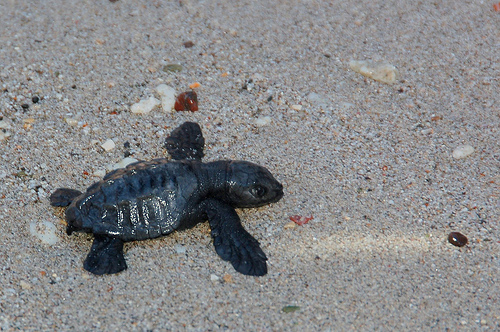
Las Baulas is renowned for its role in sea turtle conservation, hosting one of the largest remaining nesting colonies of leatherback turtles in the Pacific. These massive turtles, which can weigh up to 700 kg and measure over 2 meters in length, arrive to nest primarily from October to March, with peak activity between November and January. The park also supports nesting by green turtles (Chelonia mydas) and olive ridley turtles (Lepidochelys olivacea), though in smaller numbers. Beyond turtles, the mangroves and estuaries teem with life, including howler monkeys, iguanas, crocodiles, and over 100 bird species such as herons, kingfishers, and ospreys. Marine biodiversity includes colorful fish, rays, sharks, and invertebrates around the coral reefs, while the forests harbor amphibians, reptiles, and insects adapted to the coastal environment. This rich ecosystem underscores the park's importance as a biodiversity hotspot, protecting species vulnerable to climate change and human impacts.
Since its inception, the park has focused on turtle protection through patrolling, research, and community involvement, with organizations like Earthwatch conducting long-term monitoring. Challenges include light pollution from nearby developments, climate-induced beach erosion, and plastic pollution affecting marine life. Conservation strategies involve habitat restoration, anti-poaching measures, and sustainable tourism guidelines to minimize disturbances. As of 2025, ongoing efforts emphasize climate resilience, with international collaborations aiding in population recovery—though leatherbacks remain critically endangered globally.
The park is accessible year-round, with entrance fees around $10-15 for foreigners, and operates from 8 a.m. to 4 p.m. daily, though turtle nesting tours extend into the evening. Key activities include guided night tours to observe turtle nesting (October 20 to February 15, with groups limited to 15 people and no flash photography allowed), kayaking through mangroves to spot wildlife, and boat tours in the Tamarindo estuary for birdwatching, crocodiles, and monkeys. Other options encompass surfing at Playa Grande, hiking coastal trails, zip-lining, white-water rafting nearby, and visiting the on-site turtle museum. Visitors should book tours in advance, wear dark clothing for night excursions, and follow park regulations to avoid disturbing wildlife. The park is about a 1-hour drive from Liberia International Airport, with accommodations in Tamarindo ranging from eco-lodges to resorts. For a comprehensive experience, plan 1-2 days, prioritizing the nesting season for the iconic turtle sightings.