Location: British Columbia Map
Found: 1862
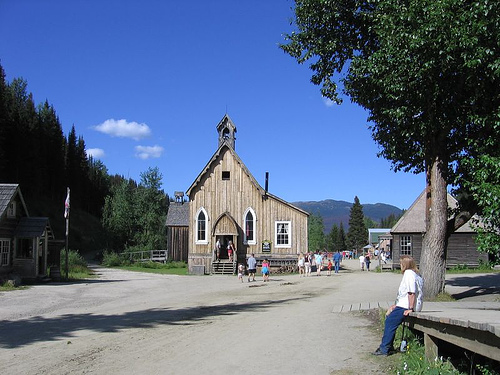
Barkerville Historic Town & Park is a preserved historic site in British Columbia, Canada, renowned as the epicenter of the 19th-century Cariboo Gold Rush. While sometimes colloquially called a "ghost town" due to its origins as a boom-and-bust mining settlement, it is far from abandoned—today, it functions as a living history museum and provincial heritage property, attracting visitors with its immersive recreation of gold rush-era life. Situated on the north slope of the Cariboo Plateau near the Cariboo Mountains, at an elevation of about 1,230 meters (4,035 feet), Barkerville lies approximately 80 kilometers (50 miles) east of Quesnel along BC Highway 26, which follows the route of the historic Cariboo Wagon Road. The site overlooks Williams Creek, surrounded by forested hills, remnants of old mining pits, and ditches from hydraulic gold extraction. Its subarctic climate brings long, harsh winters with heavy snowfall and short, cool summers, making it a seasonal destination—typically open from late spring to early fall, though as of January 2026, access may be limited due to winter conditions like slippery paths, with the walk-in gate often closed for safety.
Early Indigenous Presence and Pre-Gold Rush Context
The land
surrounding Barkerville has been inhabited by Indigenous peoples for
millennia. Archaeological evidence indicates settlement by the Dakelh
(Carrier) and Secwepemc (Shuswap) First Nations dating back more than
10,000 years. These groups utilized the region's rich natural resources,
including forests, rivers, and wildlife, long before European contact.
The area was part of traditional territories where hunting, fishing, and
trade networks thrived. European exploration in the early 19th century,
driven by the fur trade through companies like the Hudson's Bay Company,
began to encroach on these lands, setting the stage for the gold rush
that would dramatically alter the landscape.
The broader context of
British Columbia's gold rushes began in the 1850s with the Fraser Canyon
Gold Rush, drawing prospectors from around the world, including many
from the California Gold Rush of 1849. By the late 1850s, miners pushed
northward into the Cariboo region, seeking untapped deposits. This
migration was fueled by economic desperation, adventure, and the promise
of quick wealth, amid a global era of colonial expansion and resource
extraction.
Discovery of Gold and Founding (1861–1862)
The
spark that ignited Barkerville's rapid rise was the discovery of gold on
Williams Creek in 1862. William "Billy" Barker, a working-class
prospector from Cambridgeshire, England, had previously tried his luck
in California's gold fields before sailing to British Columbia. Barker,
who had jumped ship in Victoria, BC, to pursue mining, formed a company
with other prospectors and began digging shafts along the creek.
On
August 13, 1862, Barker struck one of the richest gold claims in history
at a depth of about 40 feet (12 meters). His haul included an estimated
37,500 ounces (over 1,065 kilograms) of nearly pure gold, valued at
billions in today's dollars when adjusted for inflation. This strike
triggered an immediate influx of miners, and the town was named
"Barkerville" in his honor almost overnight. Word spread via "growth via
word of mouth," leading to a classic boomtown scenario where tents and
makeshift cabins sprouted along the creek.
Barker's personal story is
emblematic of the era's highs and lows: He became immensely wealthy but
squandered his fortune on poor investments and lavish living, dying in
poverty in 1894. His legacy, however, endured as the town became the
epicenter of the Cariboo Gold Rush, which extracted billions in gold and
helped finance British Columbia's infrastructure and eventual entry into
Canadian Confederation in 1871.
Growth and Peak Prosperity
(1863–1868)
By the mid-1860s, Barkerville had exploded into a
bustling metropolis, boasting a population of around 5,000 to 5,600 at
its peak—making it the largest city north of San Francisco and west of
Chicago. The town's growth was fueled by diverse immigrants: Europeans,
Americans, Chinese, and others drawn by the gold. Notably, Chinese
residents, many migrating from California or directly from China,
comprised up to half the population and played a crucial role in the
town's economy. They established one of the earliest Chinatowns in
western North America, operating laundries, stores, restaurants, and
herbal medicine shops, while also working claims abandoned by others.
Infrastructure developed rapidly to support the miners. The town
featured wooden boardwalks, over 100 buildings, including saloons,
boarding houses, a barbershop, restaurants, a church (St. Saviour's
Anglican Church, built in 1869 but with earlier services), a school, a
drugstore, general stores, and even a theatre (the Theatre Royal) for
entertainment. The Cariboo Wagon Road, completed in 1865, connected
Barkerville to the outside world, facilitating the transport of supplies
and gold. Mining techniques evolved from simple panning to deep-shaft
operations and hydraulic methods, extracting vast quantities of gold.
Socially, Barkerville was a microcosm of frontier life: rowdy with
gambling, drinking, and occasional violence, but also community-oriented
with fraternal societies, libraries, and cultural events. The Chinese
community faced discrimination, including head taxes and segregation,
yet contributed significantly to the town's resilience and diversity.
Women were present, running businesses or working in hospitality, though
the population was predominantly male.
The Great Fire and
Rebuilding (1868–1870s)
On September 16, 1868, disaster struck when a
fire, sparked by a miner's attempt to kiss a woman in a saloon (leading
to an overturned stove), razed most of the town in just 90 minutes.
Remarkably, the resilient residents rebuilt Barkerville in a mere six
weeks, using more durable materials and wider streets to prevent future
fires. This reconstruction phase saw the addition of fire-resistant
buildings and improved planning, solidifying the town's layout that
persists today.
Post-fire, Barkerville continued to thrive into the
1870s, with ongoing gold production. However, as easily accessible
deposits diminished, larger companies took over individual claims,
shifting to more industrialized mining.
Decline and Abandonment
(1880s–Early 20th Century)
By the 1880s, the gold rush waned as veins
ran dry and miners departed for new strikes, such as the Klondike in
1897. Population dwindled to a few hundred by the early 1900s, and
economic depression hit hard during the Great Depression. The last major
mining operations ceased around the 1930s, though sporadic activity
continued. By the mid-20th century, Barkerville had become a true ghost
town, with buildings falling into disrepair amid the harsh mountain
climate.
Folklore emerged during this period, with reports of
hauntings: apparitions, footsteps on empty stages, and doors slamming in
historic buildings like the Theatre Royal and hotels. Sites like
DogBrindle.com and local accounts describe multiple ghosts, attributing
them to the town's violent past of mining accidents, duels, and
hardships. While these stories add a layer of intrigue, they reflect the
romanticized mystique of abandoned frontier towns.
Preservation,
Restoration, and Modern Legacy (1924–Present)
Recognizing its
historical value, Barkerville was designated a National Historic Site of
Canada in 1924, one of the earliest such recognitions. In 1958, the
British Columbia government acquired the site, declaring it a Provincial
Heritage Property and initiating restoration efforts. Unlike many ghost
towns that were demolished or left to decay, Barkerville was
meticulously restored to its 1860s–1870s appearance, preserving original
structures and artifacts.
Opened as Barkerville Historic Town & Park
in 1958, it now operates as an interactive museum with costumed
interpreters, daily demonstrations (e.g., gold panning, blacksmithing),
seasonal events, and exhibits on Indigenous history, Chinese
contributions, and women's roles. The site includes satellite museums
and emphasizes inclusive storytelling, highlighting underrepresented
groups.
Barkerville's cultural significance is profound: It
symbolizes the gold rush's role in British Columbia's economic
foundation, population growth, and path to Confederation. The rush
generated revenue that built roads, railways, and institutions,
influencing Canada's national identity. As of 2026, it remains a
thriving tourist destination, drawing over 50,000 visitors annually for
its blend of education, entertainment, and natural beauty in the Cariboo
Mountains.
Spanning a unique streetscape of more than 125 meticulously restored
heritage buildings, Barkerville offers an authentic glimpse into gold
rush life through living history interpretations. Costumed interpreters
portray 1860s residents, demonstrating daily activities like
blacksmithing, baking, and gold panning. Key highlights include:
Main Street and Buildings: Wander the boardwalk-lined street with period
shops, saloons, and homes. Standouts are the Theatre Royal (hosting live
shows), St. Saviour's Anglican Church (with historic services), the
Wendle House (a preserved Victorian home), and the Cornish Waterwheel (a
functional mining relic).
Museums and Exhibits: Satellite museums
cover mining history, Chinese contributions, and First Nations
influences. The Barkerville Cemetery, north of town, holds graves of
notable figures like Billy Barker.
Interactive Activities:
Participate in gold panning, stagecoach rides, guided tours (including
ghost tours at night), live theatre performances, and demonstrations of
19th-century crafts. Special events like the Dominion Day celebrations
(July 1) feature parades and Victorian games.
Chinatown Area: Explore
restored Chinese businesses, temples, and living quarters, highlighting
the community's role in the town's economy and culture.
Mining Sites:
View original pits, flumes, and equipment from hydraulic mining
operations.
The site emphasizes education and immersion, with
programs for families, schools, and history enthusiasts. It has also
served as a filming location, including the 1980 western Harry Tracy,
Desperado and the 2022 film Chhalla Mud Ke Nahi Aaya.
As a provincially managed heritage property and National Historic
Site, Barkerville is one of Western North America's largest living
museums, drawing over 60,000 visitors annually in peak seasons. It's
open daily from mid-May to late September, typically 9 AM to 5 PM, with
extended hours for events; winter access is limited to self-guided walks
when conditions allow, but many facilities close. Admission fees (as of
recent data) are around CAD $16–$20 for adults, $12–$15 for
youth/seniors, and free for children under 6, with multi-day passes
available—check the official site for 2026 updates. On-site amenities
include restaurants (serving period-inspired meals), gift shops, and
restrooms.
Accommodations enhance the experience: Three nearby
campgrounds—Lowhee (49 acres with RV/tent sites), Forest Rose (79
acres), and Government Hill (7 acres)—offer basic facilities like fire
pits and washrooms, open May to September. For immersive stays, book
historic cottages or B&Bs within the townsite. Nearby Wells (8 km away)
provides modern hotels. Visitor tips include wearing comfortable shoes
for uneven terrain, bringing layers for variable weather, and allocating
at least a full day—ideally two—to explore fully. Pets are allowed on
leashes, and accessibility features like wheelchairs are available,
though some paths are gravel. In 2026, look for ongoing restoration
projects and potential events tied to gold rush anniversaries.