Waverly Hills Sanatorium, located in Louisville, Kentucky, stands as an immense and historically significant structure. At its peak, the main building—constructed in the mid-1920s—was a sprawling five-story facility spanning approximately 180,000 square feet and designed to house over 400 tuberculosis patients. It was widely regarded as one of the most advanced and largest tuberculosis treatment centers in the United States during its era. Over the decades, however, many of the original auxiliary buildings and structures on the property were demolished due to deterioration, changing needs after the advent of effective antibiotics like streptomycin in the 1940s, and subsequent abandonment. As a result, much of the original campus layout has been lost, leaving the iconic main building as the primary remnant.
Surgery Room
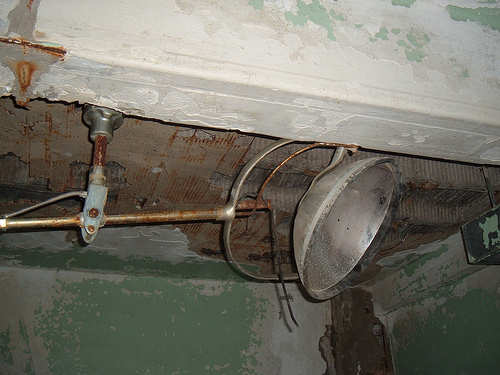
The operating room, situated on the fourth floor of the main building, represented cutting-edge medical technology for its time in the pre-antibiotic era. Doctors here employed every available method to combat tuberculosis, a deadly respiratory disease that ravaged patients. Among the more aggressive interventions were procedures like artificial pneumothorax (collapsing a lung section with injected air or gas to promote healing) and especially thoracoplasty. This brutal surgery involved surgically opening the chest cavity and removing multiple ribs—often 7 to 8 in total, though surgeons typically removed only 2–3 at a time across several operations—to permanently collapse the affected lung and starve the infection of oxygen. In some cases, surgeons even performed lobectomies, excising diseased portions of the lung. These operations were undertaken only as desperate, last-resort measures for critically ill patients when all other treatments failed. By today's standards, such invasive and painful procedures appear barbaric and high-risk; historical accounts indicate that fewer than 5% of those who underwent full thoracoplasty survived, with many succumbing to complications, infection, or the underlying disease itself.
Body chute
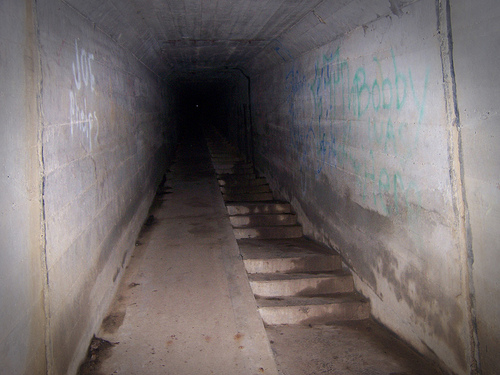
One of the most infamous features of Waverly Hills is the Body
Chute, an approximately 500-foot (about 150-meter) underground
tunnel connecting the lower levels of the main building to the
base of the hill near the road (often cited as around 525 feet
in some sources). Originally constructed during the building's
development, the tunnel served a practical purpose: it housed a
rail track and motorized cable car system that allowed staff to
efficiently transport essential supplies—such as coal, food,
medications, and other necessities—up the steep slope from the
bottom in a weather-protected manner.
As tuberculosis
mortality rates soared during the 1920s through the 1940s, with
dozens dying weekly at the facility's height, the administration
repurposed the tunnel for a grim secondary role. Bodies of the
deceased were discreetly transported down the chute on
stretchers or carts to waiting hearses or ambulances below,
hidden from the view of living patients. This secrecy aimed to
preserve morale among the remaining patients, as constant
exposure to death was thought to worsen their condition and
hinder recovery. The tunnel's cable system, now largely decayed
and rusted, still bears traces of its original mechanical
function.
The Body Chute is frequently cited as one of the
most paranormally active spots on the property, with numerous
reports of apparitions, shadowy figures, cold spots, unexplained
sounds, and feelings of unease. However, some alleged ghost
sightings may have rational explanations: air vents installed
roughly every 100 feet along the tunnel allow faint light and
ventilation, which can create eerie optical illusions, shifting
shadows, or drafts that mimic supernatural activity—especially
in the dim, enclosed space.
Local legends have exaggerated
the tunnel's capabilities, with some claims suggesting it was
spacious and sturdy enough to shelter all patients and staff
during aerial bombings in World Wars I and II, or even large
enough to hold the entire population of the sanatorium. These
stories appear overstated, as the hospital's location and
non-military purpose made it an unlikely strategic target. In
reality, the chute was a pragmatic—if macabre—engineering
solution to a tragic humanitarian crisis.
Death rate claims
The exaggerated claim that 60,000 (or sometimes even higher
numbers like 63,000) patients died at Waverly Hills Sanatorium is a
common urban legend tied to its haunted reputation. In reality, this
figure appears to reflect the total tuberculosis-related deaths
recorded across the entire state of Kentucky during the sanatorium's
main period of operation as a TB facility (roughly 1910–1961), not
just at Waverly Hills itself.
Reliable historical records and
estimates from former staff, death certificate compilations, and
site historians place the number of documented deaths at the
sanatorium much lower—typically around 6,000 to 8,500 tuberculosis
patients over its decades as a dedicated treatment center. One
detailed compilation of surviving death certificates specifically
lists approximately 8,212 confirmed TB deaths on the property,
aligning closely with other researched figures that range from about
6,000 (based on filed certificates and annual peaks of 152 deaths in
the worst years) to around 8,000–9,000 when accounting for
incomplete records.
Waverly Hills Morgue
/228744168_783bc8c8c8[1].jpg)
The morgue at Waverly Hills Sanatorium is a compact, dimly lit
room located near the main entrance of the sprawling building.
It served as the grim final stop for countless TB victims before
their bodies were removed from the premises—often discreetly, to
avoid distressing other patients or visitors. The space features
a cold autopsy table equipped with a sloped surface and
surrounding grooves designed to channel blood, bodily fluids,
and other materials away during post-mortem examinations.
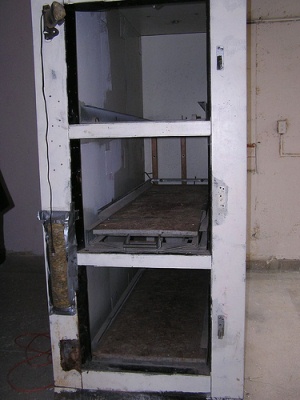
Adjacent to it stands a large, outdated body storage box
(sometimes called a cadaver cooler or "body box") capable of
holding up to three corpses at once on sliding trays.
Given
the limited capacity and the high volume of deaths during peak
TB outbreak years, staff had to process and release bodies
quickly—often within hours or a day—to prevent backlog and
maintain sanitary conditions in the overcrowded hospital.
Paranormal Investigations in the Morgue
The morgue,
particularly its chilling body box, has become a focal point for
ghost hunters and paranormal enthusiasts during tours and
overnight lockdowns at the now-abandoned site (which operates as
a historic and haunted attraction). Investigators frequently
climb inside the metal cooler—despite its eerie, claustrophobic
confines—and attempt to communicate with lingering spirits
believed to be former patients or staff who perished there.
Participants report a range of unsettling subjective
experiences: disembodied whispers or voices, sudden drops in
temperature (cold spots or breezes in an otherwise still
environment), unexplained noises like knocks or footsteps,
feelings of being watched or touched, and in some cases,
mysterious scratches, bruises, or marks appearing on their skin
afterward. Shows like Ghost Adventures have featured dramatic
moments in this exact spot, with investigators describing sudden
lethargy, oppressive energy, or EVP (electronic voice phenomena)
captures.
While these accounts fuel Waverly Hills' status as
one of America's most haunted locations, they remain inherently
personal and unverifiable—relying on individual perception
rather than objective proof. Skeptics attribute many sensations
to the power of suggestion, the morgue's inherently creepy
atmosphere, environmental factors (like drafts or temperature
variations in an old building), or even minor physical reactions
to stress and adrenaline. Nonetheless, the sheer volume of
consistent reports over the years keeps drawing thrill-seekers
to test their courage in this macabre setting.
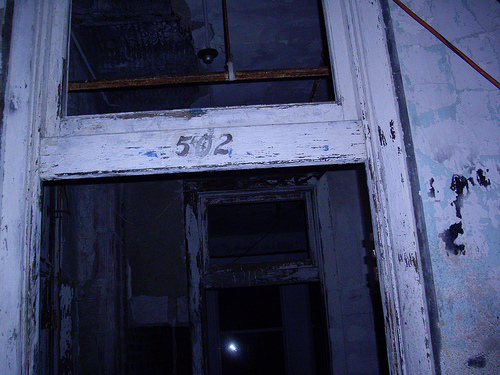
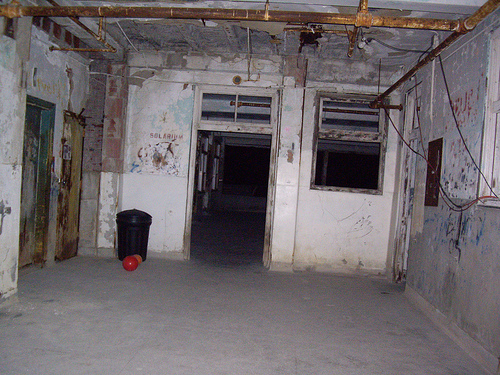
Room 502, perched within a small central tower that marks the
highest point of the sprawling Waverly Hills Sanatorium in
Louisville, Kentucky, stands out as one of the most chilling and
frequently discussed spots in this infamous abandoned
tuberculosis hospital. Situated on the fifth and top floor, the
room is part of a relatively isolated area that once included
two nurses' stations, a linen storage closet, a small pantry, a
medication room lined with cabinets, and a pair of modestly
sized chambers. These latter rooms were repurposed at times to
isolate mentally ill patients, keeping them separated from
others for safety amid the facility's grim daily realities.
From the moment the sanatorium opened in the 1920s as a
specialized treatment center for tuberculosis (often called "the
white death"), dark rumors swirled about patient mistreatment,
along with allegations of physical and even sexual abuse by
staff. These whispers persisted throughout the hospital's
decades-long operation, fueling its haunting reputation.
Local folklore, backed by some archived documents and
passed-down accounts, centers on a tragic suicide in Room 502.
In 1928, a 29-year-old head nurse—often named in stories as Mary
Hillenburg—reportedly took her own life by hanging herself,
possibly from a ceiling light fixture or exposed pipe in the
room or nearby hallway. She had discovered she was pregnant out
of wedlock, with the father believed to be a doctor at the
sanatorium who refused any responsibility for the child or her
situation. Compounding her despair, some versions of the tale
claim she also learned she had contracted tuberculosis herself.
Devastated at the thought of leaving her unborn baby abandoned
or facing the stigma and suffering of the era, she chose death
over continuing. (Note: Some modern retellings speculate foul
play, such as a botched abortion or even murder staged as
suicide to cover up the scandal, though these remain unproven
theories.)
A separate but equally eerie incident occurred in
1932, when another nurse associated with the same fifth-floor
area plummeted to her death from the rooftop patio or a window
near Room 502. Her exact motives remain shrouded in mystery.
Former colleagues described the relentless, soul-crushing
conditions of working in a tuberculosis hospital—constant
exposure to illness, high mortality rates, and emotional
exhaustion—as driving her to despair and suicide. Others insist
she had shown no prior signs of distress and suggested a darker
possibility: that a fellow nurse pushed her over the edge in a
moment of conflict or malice. No definitive evidence has ever
surfaced to resolve the debate.
Today, visitors exploring the
decaying halls of Waverly Hills often encounter small balls
scattered across the floors, especially on the fifth level.
These are deliberately left behind by paranormal investigators
and tour participants as offerings for the spirits of children
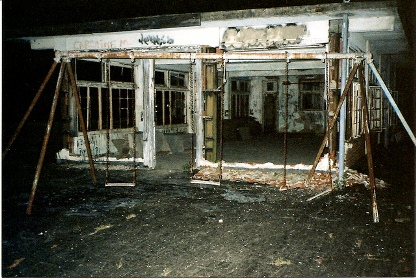
believed to linger there. During the sanatorium's active years,
the flat rooftop area above the fifth floor doubled as an
open-air playground for young patients, providing them rare
moments of fresh air and play amid their isolation and
treatment. Ghostly sightings include shadowy child figures
glimpsed at night, darting along corridors or peering from
windows, and some claim to hear faint laughter or the sound of
bouncing balls echoing through the empty building after dark.
/cbfe399944aa982d295a26c00a5813710a9277[1].jpg)