Location: Alpine, Brewster County, Texas Map
Area: 801,163 acres (324,219 ha)
Official site
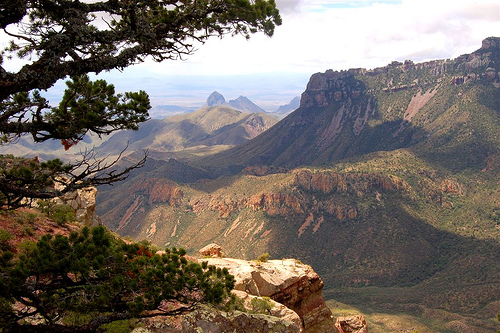
Big Bend National Park sprawls across a massive, untamed expanse
of 801,163 acres (about 1,252 square miles, roughly the size of
Rhode Island), making it one of the largest national parks in the
contiguous United States. Despite its impressive scale, it remains
one of the least crowded in the lower 48, drawing around 550,000 to
561,000 visitors annually in recent years (with 561,459 recorded in
2024, marking a notable high).
This remote gem in far West Texas
features three strikingly different ecosystems: the arid Chihuahuan
Desert lowlands, the forested Chisos Mountains rising to over 7,800
feet, and the lush riparian corridor along the Rio Grande. The park
delivers breathtaking panoramic vistas, dramatic canyons, rugged
peaks, and vast desert expanses that often feel otherworldly, giving
visitors the sense they've discovered a true hidden treasure far
from the crowds of more famous parks.
The park takes its name
from the dramatic "big bend"—a sharp, horseshoe-shaped curve—the Rio
Grande makes here as it forms the international border with Mexico
for over 118 miles. This iconic river bend shapes the southern
boundary and gives Texas its distinctive southern outline.
Most
of the park consists of wild backcountry wilderness, with visitor
activity largely concentrated in a handful of developed areas like
the Chisos Basin, Rio Grande Village, and the Castolon historic
district. Even during peak periods, stepping onto a desert trail,
unpaved backroad, or remote overlook is usually enough to escape
into profound solitude. Outside of high season, the park can feel
almost entirely your own, with miles of empty trails and silent
landscapes.
The busiest times typically fall from mid-November
through early January (with spikes around Thanksgiving, Christmas,
and New Year's weekends) and during spring break season (generally
mid-March to early April, when Texas college students flock here for
a week off). These periods see the most campers, full lodgings, and
busier trails.
Big Bend isn't suited for quick visits—its sheer
remoteness (hours from major cities) makes it impractical as a day
trip unless you're already nearby. For a meaningful experience, plan
for at least one full day, though most visitors find 3–5 days ideal
to explore the diverse regions, hike iconic trails like Lost Mine or
Emory Peak, paddle the river, stargaze under one of the darkest
skies in the U.S., or simply soak in the epic scenery.
A
practical note for pet owners: pets are not permitted on trails, off
paved roads, or on the river itself due to extreme heat, rugged
terrain, wildlife risks (like snakes and mountain lions), and
potential hazards to other visitors. No on-site kennels exist, so
it's safest and most enjoyable for everyone to leave your furry
companion at home or with a trusted sitter.
Big Bend National Park features typical desert climate: mostly hot
and dry days with very low humidity, but noticeably cooler nights. The
rainy season runs from July to October, bringing sudden, intense
downpours that can cause flash floods. These storms are usually brief,
and water drains away rapidly. Thunderstorms create dramatic displays
and can produce uncommon sights like flowing Pine Canyon Falls.
Weather in the park often differs markedly from surrounding areas—for
example, it might be cloudy and wet in nearby Alpine while remaining
clear and sunny inside the park—so don't let nearby conditions
discourage you. For the latest updates, call the park's weather hotline
at +1 432-477-1183.
Seasonal overview
Spring and fall — Milder
temperatures attract more visitors. Spring tends to be quite windy,
while fall may see rainfall continuing into September or October.
Winter — A popular time to visit, with generally cool conditions,
occasional warm sunny days, and rare cold snaps. Snow and frost can
occur, and nights often turn very cold.
Summer — The quietest season
due to extreme heat, frequently exceeding 100°F (38°C). May and June are
typically the hottest; the arrival of the rainy season in July provides
some relief from the peak temperatures.
The park's visitor centers are excellent starting points, offering
maps, permits, current park information, ranger advice, and educational
exhibits on topics like history, geology, and wildlife (some include
films). Each also has a bookstore.
All centers provide restrooms,
drinking water, and pay phones for public use.
Castolon Visitor Center
Open November–April, 10AM–4PM daily; closed
May–October.
Features exhibits about the historic buildings and the
Castolon district.
The adjacent store remains open year-round even
when the visitor center is closed.
Chisos Basin Visitor Center
(located in the developed Chisos Mountains Basin area)
Open
year-round, 8:30AM–4PM daily.
Offers in-depth exhibits on mountain
wildlife you might spot in the Chisos area.
Conveniently near many
trailheads and other amenities.
Panther Junction Visitor Center
(at Panther Junction, intersection of TX-118 and US-385)
☏ +1
432-477-2251, fax: +1 432-477-1175
Open year-round, 8:30AM–5PM daily.
Shows a park orientation film every 30 minutes from 9:30AM–4PM.
Considered the main visitor center (park headquarters are nearby).
Highlights include impressive exhibits, such as a 33-foot (10m) replica
of the first complete Quetzalcoatlus fossil (a giant pterosaur
discovered in the park in 1971).
Nearby facilities include a
bookstore, post office, and the short Panther Path trail.
Persimmon Gap Visitor Center (at the north entrance on US-385)
Open
daily 9AM–4:30PM.
Displays exhibits on park activities and safety
tips.
Often the first stop with restrooms after a long drive.
Rio Grande Village Visitor Center (in the Rio Grande Village developed
area)
Open November–April, 9:30AM–4PM daily; closed May–October.
Contains exhibits on riparian (river-edge) wildlife, plus an attractive
outdoor desert garden.
The nearby store stays open year-round even
during seasonal closures.
Big Bend National Park stands out as one of the most isolated and
remote national parks in the entire United States. Its extreme
remoteness—far from major cities, airports, or major highways—is
actually part of what makes visiting it such a unique and adventurous
experience, though it demands careful preparation.
Driving to the
Park
The park is incredibly remote, with vast distances between towns
and very limited (or nonexistent) services like gas stations, food, or
water along many stretches. Always fill up your tank, stock up on plenty
of water, snacks, and other essentials before heading out, and top off
whenever you pass through small communities. Texas highways in this
region are generally well-maintained and clearly marked with points of
interest, but the roads can feel eerily empty. Don't be tempted to speed
just because there's no traffic—law enforcement patrols these areas
regularly. Plus, the routes offer stunning scenery, with winding, curvy
sections through dramatic desert landscapes, so driving slowly allows
you to enjoy the views safely and spot wildlife or photo opportunities.
All major access roads into the park feature U.S. Border Patrol
checkpoints (a standard feature in this border region). These aren't
always staffed, but if a flashing light is visible outside the booth,
you'll need to stop. Agents may ask basic questions about your
citizenship, travel plans, or vehicle contents, and occasional vehicle
inspections can occur. U.S. citizens typically pass through quickly, but
non-U.S. citizens should carry valid documentation (passport, visa,
etc.) and be ready for standard questioning, similar to entering the
country.
The park has two main entrances:
North Entrance at
Persimmon Gap (via US-385).
West Entrance at Maverick Junction (via
TX-118).
Three primary routes lead to these entrances:
US-385
south from Marathon
This is usually the fastest option when coming
from the east (e.g., via I-10 or San Antonio). From Marathon, it's about
40 miles (64 km) south to the Persimmon Gap north entrance, followed by
another roughly 30 miles (48 km) to park headquarters at Panther
Junction. The drive passes through open desert with sweeping views of
distant mountains.
TX-118 south from Alpine
The most direct
route from the west. This stretch has slightly more small developments
and communities than the Marathon route, but the scenery remains equally
breathtaking, with desert vistas and the dramatic Chisos Mountains
drawing closer. You'll pass through the adjacent towns of Study Butte
and Terlingua (known for their quirky, laid-back vibe and proximity to
ghost towns). The west entrance at Maverick Junction is reached after
about 75 miles (121 km) from Alpine, then it's another 25 miles (40 km)
east to park headquarters.
Ranch Road 170 (FM 170) east from
Presidio (also known as El Camino del Rio or River Road)
This is the
quickest and most spectacular route if you're coming from Presidio,
nearby Mexico border areas, or heading along the Rio Grande. From
farther away, it's often the slowest overall. The road hugs the Rio
Grande River closely, squeezed between towering, rugged mountains, with
steep drops, sharp curves, and roller-coaster-like sections that make it
thrilling but demanding. It's not recommended for large RVs, trailers,
or anyone uncomfortable with steep grades and narrow stretches. You'll
pass through Lajitas (a small resort community) before joining TX-118
near Study Butte-Terlingua after about 65 miles (105 km), then continue
another 30 miles (48 km) or so to park headquarters. Many consider this
one of the most beautiful drives in Texas.
By Air
No airstrips
or airports exist inside the park itself, so flying gets you only
partway—you'll need to rent a car and drive the remaining distance. The
nearest commercial airports include:
Midland/Odessa International
Airport (MAF) — Often considered the most convenient gateway to the Big
Bend region, about 230 miles (370 km) away. From Midland, take I-20 west
to TX-18 south toward Fort Stockton, then US-385 south to Marathon and
into the park.
El Paso International Airport (ELP) — The largest
nearby, roughly 330 miles (530 km) away. Drive I-10 east to Van Horn,
then US-90 southeast through Marfa and Alpine (becoming US-67 in parts)
toward the park.
Del Rio International Airport (DRT) — About 240
miles (390 km). Head west on US-90 to Marathon.
San Angelo Regional
Airport (SJT) — Around 300 miles (480 km). Take US-67 south to I-10,
then west to Fort Stockton and US-385 south.
There's also a small
private-planeairport at Lajitas, useful for those with general aviation
access.
Public Transportation
There is no public bus, train,
or shuttle service directly to or into the park. You'll need your own
vehicle or a rental car to reach and explore Big Bend.
From Major
Texas Cities (Farther Out)
From San Antonio: About 440 miles (708 km)
via the fastest route—I-10 west to Fort Stockton, then US-385 south to
Marathon. An alternative scenic (but slower and with lower speed limits)
option is US-90 west through Del Rio to Marathon (~397 miles / 639 km).
Note: On this route, services vanish after Del Rio until tiny Sanderson,
a ~120-mile (193 km) stretch—plan accordingly.
From Austin: Around
465 miles (748 km). Follow US-290 west to I-10, then continue as above
to Fort Stockton and south.
From Dallas/Fort Worth: Approximately 570
miles (917 km). Take I-20 west to Midland-Odessa, then TX-18 south to
Fort Stockton, followed by US-385 south.
Big Bend National Park requires an entrance fee for all visitors,
which grants a 7-day pass. You'll receive a paper slip to display on
your vehicle's windshield. The park entrances remain open 24/7
year-round. If you arrive after staffed hours, you can purchase or pick
up your pass the next morning at the Panther Junction Visitor Center (or
other visitor centers during their operating hours).
Current entrance
fees (payable by credit/debit card only—no cash accepted; no refunds for
weather issues):
Private vehicle (non-commercial, up to 15
passengers): $30 (covers the driver and all passengers in the vehicle).
Motorcycle (non-commercial, up to 2 passengers): $25.
Individual
(pedestrians, bicyclists age 16+, or per person in larger groups): $15
(children 15 and under enter free).
Big Bend Annual Pass
(park-specific): $55 (valid for one year, covers entrance for a private
vehicle or up to a certain number of individuals).
Special
arrangements apply for educational/school groups (which may qualify for
free entry) and commercial tours/operators—contact the park directly for
details, as they often require advance coordination or commercial use
authorizations.
The America the Beautiful – The National Parks and
Federal Recreational Lands Pass (also known as the Interagency Pass) is
widely accepted here. It covers entrance fees at Big Bend and most other
national parks, plus many national monuments, wildlife refuges, and
forests. For a private non-commercial vehicle, one pass covers the
entire group traveling together. For those entering on foot or bike, it
covers up to four adults.
Main types of America the Beautiful
Passes (prices and eligibility as of 2026):
Resident Annual Pass —
$80 (valid for 12 months from purchase; open to U.S. citizens and
residents).
Non-Resident Annual Pass — $250 (for non-U.S. residents).
Senior Annual Pass — $20 (U.S. citizens/residents age 62+).
Senior
Lifetime Pass — $80 (U.S. citizens/residents age 62+; provides a 50%
discount on some expanded amenity fees like camping).
Access Pass —
Free (lifetime; for U.S. citizens/residents with permanent disabilities;
requires documentation of citizenship and disability; includes 50%
discount on certain amenities).
Military Annual Pass — Free (for
current U.S. military members and dependents; show Common Access Card or
Military ID).
Military Lifetime Pass — Free (for veterans and Gold
Star families; requires eligibility documentation).
Volunteer Pass —
Free (for those who've volunteered 250+ hours with participating federal
agencies).
Every Kid Outdoors 4th Grade Pass — Free (annual pass
valid September through August of the student's 4th-grade year; covers
the 4th grader plus passengers in a private non-commercial vehicle;
requires online registration at the Every Kid Outdoors website).
Passes are available online (digital versions via Recreation.gov for
immediate use, or physical via USGS Store) or in person at many federal
sites.
The National Park Service also offers free entrance days for
all national parks (including Big Bend) to U.S. citizens and residents
(other fees like camping may still apply). In 2026, these include:
Presidents Day (February 16)
Memorial Day (May 25)
Flag Day
(June 14)
Independence Day weekend (July 3–5)
National Park
Service Birthday (August 25)
Constitution Day (September 17)
Theodore Roosevelt's Birthday (October 27)
Veterans Day (November 11)
Backcountry Permits
For many activities in the park's vast
wilderness areas, a backcountry permit is required—but not for day
hiking on trails or camping at developed frontcountry sites (like Chisos
Basin, Rio Grande Village, or Cottonwood campgrounds).
When a permit
is needed:
Overnight backpacking or primitive roadside camping in
the backcountry.
River floating/trips (including day use).
Stock/horse use.
Certain other day-use activities involving rivers or
stock.
Day-use permits for rivers or stock are free, but any
overnight backcountry use requires a paid permit: $10 per night per site
($5 per night with a Senior or Access Pass). This modest fee supports
trail/road maintenance and backcountry preservation—it's a worthwhile
contribution.
Why get a permit? Beyond being mandatory, it promotes
safety: Rangers record your detailed itinerary, emergency contacts, and
even your shoe print pattern. This info greatly aids search-and-rescue
if needed. You'll also receive up-to-date advisories on trail
conditions, road accessibility, weather risks, water sources, wildlife
activity, and Leave No Trace guidelines.
Permit details and how
to obtain:
Valid for up to 14 consecutive nights (with annual limits
on total nights in the park).
Most permits can be reserved online up
to 180 days in advance via Recreation.gov (for many popular Chisos
Mountains backpacking sites and primitive roadside sites).
Others
(especially desert wilderness backpacking or certain roadside areas) are
available in person only, up to 24 hours in advance, at Panther Junction
or Chisos Basin Visitor Centers during business hours (e.g., Panther
Junction typically 8:30 AM–5:00 PM; hours vary seasonally at other
centers).
If you arrive after hours, backcountry camping is not
allowed until you obtain the permit the next day.
Permits must be
picked up in person—no advance mailing or third-party arrangements for
on-site types.
Group size limits apply (e.g., max 15 for most
backpacking groups; larger groups may need a Special Use Permit).
Big Bend National Park has no public transportation available inside
its boundaries, making a personal vehicle the most practical and popular
choice for most visitors. The park's immense size is best navigated by
car, with clear signage and well-kept paved roads throughout.
The
park features two primary paved highways that connect key areas and form
the most direct route across it:
TX-118 enters from the west near
Maverick Junction and runs east for about 23 miles (37 km) to Panther
Junction, home to the park headquarters and a gas station. From there,
it continues southeast for another 20 miles (32 km) to Rio Grande
Village, which also offers fuel.
At Panther Junction, US-385 heads
north for roughly 26 miles (42 km) to the north entrance near Persimmon
Gap.
By car
The speed limit throughout the park is 45 mph (72
km/h). Roads often include sharp curves, steep inclines, and limited
visibility, and you may share them with cyclists or wildlife—especially
deer and javelina, which are more active around dusk. Stick to the limit
for safety. Notably, the leading cause of deaths in the park is impaired
driving, so avoid alcohol entirely while behind the wheel. Many unpaved
backcountry roads are accessible to standard vehicles, though others
demand high-clearance or 4WD capabilities. All vehicles must be
street-legal; ATVs are prohibited.
By bicycle
Cycling provides
a slower, more immersive way to experience the park's landscapes.
Mountain biking off-road or on trails is not allowed, but bikes
(including e-bikes) are permitted on all roads, paved and unpaved.
Beginner-friendly routes include the Ross Maxwell Scenic Drive and the
mostly downhill stretch from Panther Junction to Rio Grande Village
(arrange a shuttle pickup at the end to avoid a tough uphill return).
For seasoned riders, backcountry options like Old Ore Road deliver true
adventure. Biking remains uncommon here, so drivers may not anticipate
you—exercise extra caution on bends and after sunset. Always carry a
repair kit, check your tires, maintain good fitness, and pack ample
water. Services like Desert Sports provide bike rentals, guided tours,
and shuttles.
By horse
No rentals are available in the park,
so you'll need to bring your own horse. A backcountry permit is
mandatory. Horses are limited to backcountry areas only—paved roads,
developed campgrounds, trails, and most of the Chisos Mountains are
off-limits. Grazing is forbidden, so plan to pack all feed. A solid
overnight spot is Government Springs (Hannold Draw), roughly 5 miles (8
km) north of Panther Junction, featuring a corral suitable for up to 8
horses.
On foot
Walking as your main means of travel (beyond
designated hiking trails) is only realistic for those who are
exceptionally fit and thoroughly prepared for the challenges of the
desert environment.
Big Bend National Park unfolds as a vast, mesmerizing expanse of
rolling Chihuahuan Desert, broken by dramatic rock formations, deep
canyons, and rugged, imposing mountains that rise abruptly from the arid
plains. Winding through this seemingly endless terrain is the constant,
vibrant green lifeline of the Rio Grande, a serene river that forms the
park's southern boundary and international border with Mexico.
Don't expect the towering, colorful sandstone fantasies of Utah's iconic
parks or the stark, barren emptiness of Death Valley—Big Bend offers
something subtler and more profound. Its dominant vistas inspire deep
awe and a sense of humble smallness in the face of nature's scale, but
the park's true enchantment emerges in its surprises: discovering a
lush, hidden oasis teeming with birds, plants, and wildlife tucked away
in an unexpected canyon; claiming a solitary overlook with sweeping,
uninterrupted views that feel entirely your own; or encountering an
ancient, weathered rock formation so striking it sparks the whimsical
thought that perhaps no human eyes have admired it before.
You
could race through the park's main highlights in a single long day of
driving, but that approach misses the essence of what makes Big Bend
special. This is a place that generously rewards patience, slow
exploration, and immersion. Venture beyond the paved routes onto dirt
roads (with proper preparation and a high-clearance vehicle), linger at
pullouts to absorb the quiet grandeur, and allow the landscape's subtle
beauty to reveal itself over time.
For visitors with limited time,
two standout paved drives capture much of the park's diversity in a
single day, with plenty of opportunities for short stops and photos:
The Ross Maxwell Scenic Drive, which winds through stunning volcanic
landscapes, colorful layered hills, and panoramic views of distant
peaks.
The Chisos Basin Road, climbing into the forested heart of the
Chisos Mountains for cooler elevations, wildlife sightings, and access
to popular trails.
With additional days, delve deeper: explore
the eastern Rio Grande Village area for river access, cottonwood groves,
and hot springs; venture into more remote sections; or engage in
signature activities like day hikes (from easy nature trails to
challenging summit ascents), birdwatching in diverse habitats, or a
relaxing float trip down the Rio Grande through scenic canyons.
The journey begins along US-385 at the northern gateway near
Persimmon Gap, descending gently southward for about 26 miles (42 km) to
the central hub of Panther Junction. Persimmon Gap itself is a dramatic
natural breach in the otherwise sheer wall of the Santiago Mountains,
creating a striking passage into the park's interior.
Just beyond
the gap lies the north entrance station and the small Persimmon Gap
Visitor Center, complete with picnic tables for a quick break. On the
eastern mountains' southern slope, a prominent scar resembling an
explosive blast marks the site of a major natural rockslide from 1987.
Further along, interpretive signs highlight Dog Canyon, visible as a
distant notch in the eastern ridges. The drive passes through open,
shrub-dotted desert, with the distant Rosillos Mountains to the west and
the formidable Sierra del Carmen range rising like an impenetrable wall
to the east. Much of the expansive land westward belongs to the historic
Harte Ranch (now park property) or the active Rosillos Ranch, though
little is visible from the road itself.
Midway, an eastbound turnoff
leads to the scenic Dagger Flat Auto Trail, a worthwhile gravel detour
for those with time. Nearby, a modernized fossil bone exhibit (upgraded
in 2017 with an enclosed building and informative displays) showcases
prehistoric finds from the area. The route crosses the broad, elevated
Tornillo Flat—a unique geological platform laced with usually dry
arroyos (creek beds)—before the Chisos Mountains gradually grow from
distant specks into towering, central presences as Panther Junction
approaches.
The route from the West Entrance serves as a primary corridor
connecting to other key areas of Big Bend National Park, yet it also
ranks among the most majestic and scenic approaches to the park’s
interior. Starting at the western boundary along TX-118, this relaxed,
23-mile (37 km) drive winds through gently rolling Chihuahuan Desert
terrain toward Panther Junction.
Your first stop is the Maverick
Entrance Station—a straightforward fee booth with no visitor center
attached (unlike the northern Persimmon Gap entrance). Once inside the
park, the road opens onto broad, sweeping vistas filled with classic
desert vegetation: dense stands of prickly pear, ocotillo, lechuguilla,
and creosote bush stretch in every direction. Interpretive signs placed
along the roadside explain the desert ecosystem, common wildlife
sightings (such as roadrunners, jackrabbits, javelina, and coyotes), and
notable geological features. These pullouts offer excellent chances to
step out, walk short distances, and absorb the immense, open views that
define this part of the park.
A few miles past the entrance you reach
Maverick Junction, where the unpaved Maverick Road heads south into more
remote backcountry. Continuing straight on the main paved road, the
landscape gradually reveals the park’s striking geology. To the south,
the terrain slopes gently downward toward the distant, flat-topped Mesa
de Anguilla. Dominating the middle distance is Tule Mountain, easily
recognizable by its asymmetrical, slanted summit that resembles a tilted
mohawk.
Far to the southwest, a subtle notch cut into the distant
mountain skyline marks the location of Santa Elena Canyon on the Rio
Grande. To experience this dramatic river gorge up close, turn south
onto the Ross Maxwell Scenic Drive, whose junction appears about 10
miles (16 km) from the entrance—one of the park’s most celebrated
drives.
To the north lie rolling hills and scattered peaks, including
Croton Peak, which features a distinctive tooth-like protrusion visible
near the junction for Croton Spring Road. A short distance farther you
pass turn-offs for Paint Gap Road and Grapevine Hills Road. Both are
unpaved and lead to primitive backcountry campsites, secluded
viewpoints, and—for Grapevine Hills—a rewarding short hike to impressive
balanced rock formations.
As the drive continues eastward, the Chisos
Mountains rise abruptly from the desert floor, appearing almost out of
nowhere like a forested island surrounded by arid plains. The road
curves north to skirt their base before reaching the Chisos Basin Road
junction, located approximately 20 miles (32 km) from the West Entrance.
From there, it’s only another 3 miles (5 km) to Panther Junction, the
park’s central hub featuring a visitor center, gas station, and store.
Constructed during the 1930s by the Civilian Conservation Corps, this
steep, winding 6-mile (10 km) road climbs into the heart of the Chisos
Mountains—the third-highest range in Texas—ending in the sheltered
Chisos Basin at roughly 5,400 feet (1,646 m) elevation. Due to tight
switchbacks and grades approaching 10% in places, trailers longer than
20 feet (6 m) and RVs longer than 24 feet (7 m) are strongly
discouraged.
The junction lies along TX-118 near the park’s center:
20 miles (32 km) east of the West Entrance, 10 miles (16 km) east of the
Ross Maxwell Scenic Drive turn-off, and 3 miles (5 km) west of Panther
Junction. Heading south, the road quickly begins its ascent through
Green Gulch, a scenic valley where mountain lion sightings—though
uncommon—are occasionally reported.
As you gain elevation, the
vegetation undergoes a dramatic shift. Desert cacti and shrubs gradually
give way to forests of pinyon pine, juniper, oak, and bigtooth maple,
creating a cool, forested environment that feels remarkably out of place
after miles of arid lowlands. (The origin of the name “Chisos” remains
uncertain; it is most often linked either to an Indigenous word meaning
“ghost” or “spirit,” or to an archaic Spanish term suggesting something
“enchanted.”)
Higher up, the road passes the trailhead parking area
for the popular Lost Mine Trail, a moderately strenuous hike known for
its sweeping panoramic payoffs. Near the summit at Panther Pass, the
roadway becomes especially curvy and steep—exercise extra caution,
particularly in wet, windy, or low-visibility conditions.
Descending
into the Chisos Basin, you enter a broad, forested depression encircled
by rugged peaks. After passing a turn-off to the campgrounds, the road
ends in the developed Chisos Basin area. Here you’ll find the Chisos
Mountains Lodge (with restaurant and guest rooms), a visitor center,
gift shop, and trailheads for many of the park’s finest hikes.
This
is an excellent place to pause, stretch your legs, enjoy a meal with a
view, or simply take in the surroundings. To the northeast, a prominent
V-shaped gap known as The Window frames a stunning view of the distant
desert floor far below—especially beautiful at sunset. The short, paved
Window View Trail (0.3-mile loop) provides easy, accessible access to
this iconic overlook.
Looking south-southeast, Emory Peak—the highest
point in Big Bend at 7,832 feet (2,387 m)—stands out clearly. One of the
basin’s most recognizable landmarks is the massive Casa Grande (“Big
House” in Spanish), whose sheer cliffs rise like a natural fortress.
Nearby rock pinnacles, including one particularly tall spire close to
the lodge area, complete the dramatic, almost surreal beauty of this
high-elevation oasis.
The drive from Panther Junction to Rio Grande Village covers about 21
miles (34 km) and takes you from the heart of Big Bend National Park
southeastward to its far southeastern edge, where the landscape
dramatically opens up toward the Rio Grande river. Starting at the
intersection with US-385, the paved road (TX-118, also known as the main
park road in this section) skirts the imposing Chisos Mountains on your
right (west), then gradually curves southeast while dropping roughly
2,000 feet (610 m) in elevation. This descent reveals expansive desert
vistas, with the rugged Sierra del Carmen range rising to the east
across the border in Mexico, and the stark Sierra del Caballo Muerto
(Dead Horse Mountains) looming to the north and northeast.
As you
proceed, the road slowly pulls away from the Chisos, though isolated
peaks like the distinctive flat-topped Chilicotal Mountain—named for the
abundant lechuguilla (a spiky agave-like plant) that covers its
slopes—remain visible along the horizon. Numerous gravel turn-offs
branch off the main road, leading to remote backcountry campsites,
scenic viewpoints, historic sites, and trailheads. Many require a
high-clearance vehicle (or even 4WD in some cases) due to rough, rocky
surfaces—always check current road conditions and requirements at the
visitor center or NPS website before venturing off-pavement.
Early in
the drive, the fragile Chihuahuan Desert ecosystem is especially
evident: vast expanses of short, sparse grass dominate the scene, a
lingering scar from heavy livestock grazing that ceased over 50 years
ago. Recovery is ongoing, but slow in this arid environment. As
elevation decreases and you move farther east, the vegetation
transitions to more classic desert plants—creosote bush, ocotillo,
various cacti, and yucca.
Just beyond Panther Junction, two notable
unpaved turn-offs appear: one short spur leads east to the K-Bar
backcountry campsite, while Glenn Springs Road heads toward the striking
Nugent Mountain directly to the west. A bit farther along comes the
turn-off for Dugout Wells, a quick unpaved drive that rewards you with
the easy Chihuahuan Desert Nature Trail (a short interpretive loop), a
shaded picnic spot, and a surprising mini-oasis created by an
old-fashioned windmill that still pumps groundwater from historic wells.
The reliable water source makes this a favorite spot for birdwatching,
especially during migration seasons.
Much later in the route,
additional unpaved roads branch off, including River Road (a long,
rugged east-west track paralleling the Rio Grande), Hot Springs Road
(leading to historic thermal springs), and Old Ore Road (another remote
backcountry route). The paved road then passes through a short rock
tunnel before arriving at the Rio Grande Overlook, offering sweeping
views down toward Rio Grande Village and the river valley below.
From
there, the road reaches a key junction: head south for a short distance
to reach Rio Grande Village, or continue east for about 4 miles (6 km)
toward the Dead Horse Mountains and Boquillas Canyon—the longest canyon
within Big Bend National Park.
Along the eastward leg to Boquillas
Canyon, you'll first encounter the turn-off for Boquillas Crossing
(international port of entry), where visitors with valid passports and
small U.S. bills in cash can cross by boat or on foot to explore the
charming Mexican village of Boquillas del Carmen. A little farther
brings the Boquillas Canyon Overlook and parking area, from which a
trail descends to the canyon floor and follows the river into the
narrow, towering walls. While perhaps not quite as dramatically vertical
as Santa Elena Canyon on the park's western side, Boquillas offers a
quieter, less crowded experience and serves as an excellent introduction
or complement if you're planning to visit multiple canyons.
Returning
to the junction and turning south leads quickly to Rio Grande
Village—not a traditional town, but a developed park area nestled along
the riverbank amid shady cottonwood trees, willows, and lush grasses
that thrive in the riparian (river-influenced) zone. Highlights include
the short, scenic Rio Grande Village Nature Trail, which showcases this
contrasting wetter ecosystem with interpretive signs about birds,
plants, and river ecology. The area also offers a campground, a small
store, and a visitor center (all bearing the Rio Grande Village name),
plus picnic spots at both the campground and near the remnants of
historic Daniel's Ranch a short distance west along the riverbank.
The Ross Maxwell Scenic Drive is one of the most breathtaking routes
in Big Bend National Park, thoughtfully crafted by the park's first
superintendent and geologist, Ross Maxwell, to highlight the area's
dramatic geological story. This winding 30-mile (48 km) paved road takes
you from the high desert down toward the Rio Grande, offering stunning
vistas of rugged mountains, colorful rock layers, historic sites, and
culminating at the iconic Santa Elena Canyon.
The drive starts from
TX-118 on the park's western side, roughly 13 miles (21 km) west of
Panther Junction and 10 miles (16 km) east of the west entrance. It
heads south and west toward the international border, typically taking
45 minutes to 1 hour one way without stops—though you'll want to allow
much more time for pulling over at overlooks and trailheads.
This western section of the park features especially chaotic and
rugged terrain, shaped over millions of years by intense volcanic
activity followed by relentless erosion. Look for distinctive
hoodoos—tall, slender columns of stacked rock resembling natural
chimneys—and dikes, which appear as straight, ridge-like intrusions
cutting across mountain slopes where magma once forced its way through
cracks.
The route initially runs south, paralleling the imposing
Chisos Mountains to your east. Early on, glance upward to spot the
famous V-shaped notch known as The Window, a natural frame offering a
distant glimpse into the Chisos Basin far beyond.
After about 4
miles (6 km), the first pull-off leads to Sam Nail Ranch, a remnant of
early 20th-century homestead life. Today, this serene spot features
surviving trees (including some non-native species planted long ago),
picnic benches, a historic windmill, and a short trail through the
oasis-like setting.
Another 4 miles farther brings the Blue Creek
Ranch Overlook, with views down to the old Homer Wilson Ranch house
ruins and access to a trail that descends to the site and continues into
the backcountry.
Next comes Sotol Vista Overlook, an excellent spot
to take in the vast desert expanse below, the Chisos behind you, and—on
clear days—a distant view of the gap marking Santa Elena Canyon to the
west. Note that haze from distant pollution sources (including
refineries in Mexico and along the Texas Gulf Coast) can sometimes
reduce visibility, a growing issue in recent years.
The road then
descends more steeply. About 3 miles later is the trailhead for the
Burro Mesa Pour-off, a dramatic dry waterfall carved into the mesa.
Continue another 3 miles to the Chimneys Trail trailhead, followed by a
roadside exhibit at Goat Mountain, a striking volcanic peak.
Soon
you'll catch sight of the aptly named Mule Ears peaks—two sharp,
symmetrical volcanic plugs that resemble donkey ears—leading to the Mule
Ears Viewpoint pull-off.
After roughly 20 miles (32 km) total,
just before the western end of the unpaved River Road junction, stop at
Tuff Canyon. This narrow, white-walled gorge was formed from compacted
volcanic ash (tuff) and later sculpted by flash floods, with short
trails offering overlooks from above and a path down into the slot.
At about 22 miles (35 km), you reach the Castolon Historic District,
a key gathering spot for early 1900s settlers that still serves visitors
today. Here you'll find restrooms, picnic areas, the small Castolon
Visitor Center (seasonal), Cottonwood Campground nearby, and the
historic La Harmonia Store (built in 1920). Adjacent is the even older
Alvino House (1902), the park's oldest intact adobe building. The store
continues to offer basic groceries, snacks, and supplies year-round,
while scattered adobe ruins and two small cemeteries add to the area's
historical atmosphere.
The final 8 miles (13 km) to Santa Elena
Canyon can be prone to flash flooding after heavy rains—never attempt to
cross even shallow water on the road; wait it out, as floods here
usually recede quickly. Along this stretch, you'll pass the southern
junction with unpaved Maverick Road.
The drive ends at the Santa
Elena Canyon parking area. A short, easy trail through desert brush
leads to an awe-inspiring overlook of the canyon entrance, where the Rio
Grande squeezes between sheer limestone cliffs rising up to 1,500 feet
(457 m)—the U.S. side formed by the Mesa de Anguilla, the Mexican side
by the Sierra Ponce.
Widely considered the park's most
spectacular and photogenic canyon, Santa Elena is a must-see up close. A
popular trail follows the river a short distance into the narrows, while
many visitors enjoy floating through the canyon by canoe, kayak, or
guided raft trip for an unforgettable perspective on its towering walls
and serene waters.
Locals and seasoned visitors to Big Bend National Park often repeat
the same advice: the real magic of the park unfolds only when you step
away from your vehicle and immerse yourself in the landscape. Driving
through offers stunning panoramic views and a solid introduction to the
vast Chihuahuan Desert, rugged mountains, and the Rio Grande, but it's
when you pause, breathe in the dry desert air, feel the sun on your
skin, listen to the quiet, and let the immense surroundings fully
envelop you that Big Bend's profound beauty truly emerges—its dramatic
light, intricate geology, diverse wildlife, and sense of untouched
wilderness.
The park caters to every visitor, regardless of age,
fitness level, or mobility. You can join free daily ranger-led programs
(such as guided hikes, evening astronomy talks, nature walks, or
historical presentations—check the current schedule at visitor centers
or on the NPS website, as offerings vary seasonally and are available
year-round). Alternatively, book a guided tour with one of the reputable
local outfitters for expert-led experiences like hiking, birding,
stargazing, or even river floats. The key is simply to get out and
engage with this extraordinary place!
Big Bend's network of rugged, unpaved backroads turns driving into
its own thrilling adventure. These routes lead to hidden historical
spots, trailheads, remote viewpoints, and backcountry campsites that
cars on paved roads can't reach. Expect rough, bumpy conditions—think
washboard surfaces, loose gravel, rocks, occasional sand, or mud after
rain—so drive slowly, stay alert, and carry essentials like water, a
spare tire, jack, and tools. Signage in the park is generally clear and
reliable, but always stop at a visitor center (like Panther Junction) to
check current road conditions before heading out, as weather can change
accessibility quickly.
These are classified as "improved dirt roads,"
meaning they're generally passable under good conditions by many
vehicles, but rain, erosion, or seasonal issues can make them
challenging or temporarily impassable for low-clearance sedans,
minivans, or RVs. High-clearance vehicles are often recommended, and
some sections may need 4x4.
Croton Spring Road (about 2 miles / 3
km round-trip)
A short, straightforward dirt road leading to two
backcountry campsites. It branches north from TX-118, roughly 9 miles
(15 km) west of Panther Junction. Typically in good shape and accessible
to most vehicles, though it can develop deep ruts after heavy rain.
Dagger Flat Auto Trail (14 miles / 22 km round-trip)
This scenic,
winding route heads east to a unique valley filled with a forest of
giant dagger yuccas (Yucca faxoniana)—massive, tree-like plants that are
rare elsewhere. These can bloom with tall stalks of creamy white flowers
almost any time, but peak chances align with general spring wildflower
season in March–May (late spring, especially April–May, is often ideal).
The road is narrow with a 25 mph limit; allow about 2 hours total. It's
usually open to most vehicles and even great for mountain biking, but
sandy patches or mud can appear seasonally—rain may make it tough or
close it temporarily. Pick up the inexpensive $1 trail guide at visitor
centers for mile-by-mile insights. Access is off US-385, roughly midway
between Panther Junction and Persimmon Gap.
Grapevine Hills Road
(about 15.4 miles / 25 km round-trip)
This leads primarily to the
trailhead for the popular 2.2-mile round-trip Grapevine Hills Trail,
which ends at the iconic Balanced Rock formation—a striking natural rock
balancing act amid volcanic geology. The road starts about 3 miles (5
km) west of Panther Junction on TX-118 (north side) and heads north. The
first ~6–7 miles (to the trailhead) are rough but manageable with high
clearance; beyond that, it gets much rougher and typically requires 4x4,
especially after rain. It continues to a backcountry campsite, but
sedans should stop earlier.
Hot Springs Road (4 miles / 6 km
round-trip)
A narrow, rough gravel road descending into a wash,
taking you close to the historic Hot Springs Historic District (with
ruins of an old resort and post office). From the parking area, it's a
short 0.5-mile (800 m) hike to the natural hot springs soaking pools
along the Rio Grande. Not suitable for RVs, motorhomes, or oversized
vehicles due to tight, one-way sections. The turn-off is well-marked
near Rio Grande Village on the southwestern part of the loop road
(TX-118). (Note: Recent reports indicate this road has faced closures
due to flooding damage in prior years—confirm status on arrival.)
Old Maverick Road (14 miles / 22.5 km one-way)
A longer, mostly
flat dirt route connecting the west entrance (near Maverick Junction on
TX-118) to the Ross Maxwell Scenic Drive area near Santa Elena Canyon.
Along the way, pass backcountry campsites, the western trailhead for the
Chimneys Trail (famous rock formations), and historic sites like Luna's
Jacal—an incredibly rustic adobe ruin that was once the home of the
colorful frontiersman Gilberto "Diego" Luna (worth stopping to read the
interpretive signs in person for the full quirky story). Expect
washboard sections; it usually takes about an hour. High clearance and
4x4 are recommended, especially if rain creates sand or mud
challenges—it's generally open but check conditions.
Paint Gap
Road (5 miles / 8 km round-trip)
This heads north toward the Paint
Gap Hills, providing access to several backcountry campsites before
entering the gap itself, where it becomes extremely rough. Start about 6
miles (10 km) west of Panther Junction on TX-118 (north).
Non-high-clearance vehicles should turn around after the PG-3 campsite
to avoid trouble.
For a genuine off-the-beaten-path adventure in Big Bend National
Park, venture onto the park's primitive dirt roads—these are the remote,
unmaintained (or minimally maintained) routes that offer the most rugged
and immersive experience. These paths are often rough, featuring deep
ruts, loose sand, sharp rocks, exposed bedrock, bumpy washboard
sections, steep inclines, and occasional water crossings or mud after
rain. They demand a high-clearance vehicle at minimum, and true
four-wheel drive (4WD) is strongly recommended—or outright required on
the toughest ones—for safe navigation. Experience driving off-road is
essential on the more challenging routes, as poor technique can lead to
getting stuck or damaging your vehicle.
Weather plays a huge
role: recent rain can turn these roads into muddy quagmires or create
impassable washouts, sometimes closing them entirely to all traffic.
Always check current road conditions with park rangers at a visitor
center (like Panther Junction) or via the official NPS website before
heading out—conditions change rapidly, and some roads (e.g., Black Gap)
may be closed due to damage or flooding, as seen in recent updates.
Here are some of the standout primitive roads, each providing unique
scenery, history, and solitude:
Black Gap Road (about 8.5 miles /
14 km one-way)
This is one of the park's most intense and thrilling
drives—an unmaintained route through wildly rugged, rocky terrain that
feels like a true test of both vehicle and driver. Stunning panoramic
views of the surrounding desert and mountains make it highly scenic. A
high-clearance 4WD vehicle is mandatory, along with solid off-road
driving skills to handle steep drops, uneven ledges, and the namesake
"Black Gap" obstacle. It connects Glenn Springs Road (roughly 7 miles
from the north or 8.5 miles from the south) to River Road East (about 21
miles from the Rio Grande Village area). A primitive backcountry
campsite is available along the route for those wanting to extend the
adventure overnight.
Glenn Springs Road (16 miles / 26 km
one-way)
This winding dirt track meanders between the majestic Chisos
Mountains and the Chilicotal Mountains, leading to the haunting ruins of
Glenn Springs—a tiny village abandoned around 1920, where you can still
explore crumbling adobe structures, old foundations, and remnants of
early 20th-century life. The road starts from TX-118 about 4.5 miles (7
km) east of Panther Junction (near the Dugout Wells turnoff) and ends at
River Road, roughly 9.6 miles (15 km) from its eastern end near Rio
Grande Village. It also provides access to side routes like Pine Canyon
Road (4 miles / 6 km to the Pine Canyon trailhead, turnoff 2.3 miles / 4
km from the northern start) and Juniper Canyon Road (5.3 miles / 8 km to
the Dodson and Juniper Canyon trailheads, about 4.5 miles / 7 km south
of the Pine Canyon junction; 4WD required for the latter). Multiple
backcountry campsites dot the route, offering quiet spots to camp under
the stars.
Old Ore Road (26 miles / 42 km one-way)
This
lengthy, picturesque route traces an old mining transport path from the
early 1900s, delivering close-up vistas of eastern hills, rugged
mountains, and vast desert landscapes. It's rocky and demanding but
rewards drivers with geological interest and historical echoes. A
high-clearance 4WD vehicle is highly recommended (though some manage it
in capable high-clearance setups). Plan for at least a half-day to enjoy
it fully. The northern end begins off the Dagger Flat Auto Trail (about
2 miles / 3 km from its start), heading south to end near TX-118 close
to Rio Grande Village. Several backcountry campsites and trailheads line
the way, including the Ernst Tinaja Trail near the southern end—a short
hike to a striking natural rock basin.
River Road (51 miles / 82
km one-way)
The ultimate epic journey for many Big Bend enthusiasts,
this exceptionally long primitive route traces (often loosely) the Rio
Grande through the park's most remote southern reaches. For some,
completing the full length is a bucket-list achievement. It passes
countless side spurs, numerous backcountry campsites, trailheads to
isolated wonders (like Mariscal Canyon), and vast stretches of untouched
wilderness that most visitors never reach. The eastern start is off
TX-118 near Rio Grande Village (just west of the Hot Springs Road
turnoff), while the western end meets the Ross Maxwell Scenic Drive near
Tuff Canyon, about 2.5 miles (4 km) east of Castolon (both junctions are
signed). Around 20 miles (32 km) from the east end, you'll encounter the
eerie ruins of the Mariscal Mine and its abandoned village—once a key
mercury producer for the U.S. during the mid-20th century, shut down in
the 1940s. The western section tends to be less trafficked, rockier, and
more rugged overall. Allow a full day (or more) to traverse the entire
distance safely and savor the isolation.
One of the most iconic and unforgettable experiences in Big Bend
National Park is floating down the Rio Grande through its dramatic
canyons. You can choose your preferred vessel—raft, canoe, or kayak—and
enjoy a serene journey surrounded by towering canyon walls, stunning
desert scenery, diverse wildlife, and the unique international border
formed by the river itself.
Adventurous paddlers can explore
intriguing side canyons, hop out for short hikes to hidden spots, or
simply soak in the solitude and natural beauty. Trip durations vary
widely to suit different schedules and skill levels: options range from
relaxing half-day floats to multi-day expeditions lasting a full week or
more.
You have flexibility in how to approach the adventure. Bring
your own gear if you're experienced, or rent equipment from local
outfitters. For beginners, those short on time, or anyone preferring
hassle-free logistics, a guided trip is highly recommended—professional
operators handle everything from permits and shuttles to meals and
safety gear, allowing you to simply relax and enjoy the ride (especially
on raft tours, where guides do the paddling and navigation while
passengers unwind). Self-guided kayaking or canoeing is accessible even
for novices in many sections, providing a rewarding sense of
independence and freedom as you paddle at your own pace.
Costs
typically start around $65–$100 for a half-day guided float, with
full-day or overnight options in the $125–$200 range per person (plus
taxes/fees), and multi-day adventures climbing into the $1,000+ range
depending on length, group size, and inclusions like food and gear.
Safety is essential on any river trip. Always wear a personal flotation
device (PFD/life vest) at all times, and carry extras along with spare
paddles/oars, a comprehensive first-aid kit, and repair supplies (such
as a patch kit and pump for inflatables). Guided tours usually provide
most or all of this equipment at no additional cost. Check current river
conditions before heading out—water levels dramatically influence the
experience. Higher flows (common from summer through early fall) mean
faster currents and potentially rougher rapids, while lower levels (more
typical in winter) can make some sections too shallow for larger rafts
but open up opportunities for "boomerang" trips (paddling upstream and
back). Always confirm conditions with the park or your outfitter.
A
backcountry use permit is required for all river trips (day-use and
overnight) within the park and for overnight floats on the adjacent Rio
Grande Wild & Scenic River. These free or low-fee permits (around
$10–$12 for overnight in some cases) are obtained in person at park
visitor centers like Panther Junction, often up to a day or more in
advance on a first-come basis. Follow all park regulations closely,
including restrictions on camping zones, waste disposal, and respecting
private land along certain take-outs—advance permission may be needed
for some access points.
Here are details on the main canyon
sections:
Boquillas Canyon (33 miles / 53 km, typically 2–4 days):
This offers the longest and gentlest float in the area, rated Class I-II
with mostly calm waters, occasional mild rapids, and abundant
opportunities for side hikes and wildlife viewing. It's ideal for those
with less experience. The standard put-in is at Rio Grande Village
inside the park, with take-out near Heath Canyon outside the park (via
FM-2627 southeast for about 28 miles / 45 km, just north of Persimmon
Gap).
Mariscal Canyon (10 miles / 16 km, 1–2 days): The shortest and
most remote canyon, providing exceptional solitude and dramatic scenery.
Rated Class II-III depending on water, featuring one notable rapid
called The Tight Squeeze. Access involves a rough 2–2.5-hour drive on
unpaved River Road to put-in (Talley) and take-out (Solis), requiring
high-clearance (preferably 4WD) vehicles. The stretch between Santa
Elena and Mariscal is sometimes dubbed "The Great Unknown" for its
lesser-traveled nature.
Santa Elena Canyon (20 miles / 32 km, 1–3
days): Widely regarded as the most popular and visually spectacular
section, with sheer 1,500-foot cliffs and breathtaking views. Usually
Class II-III, but Rock Slide rapid can reach Class IV during high water.
A favorite stop is Fern Canyon (about 3 miles downstream from Rock Slide
or 2 miles upstream from the lower end) for exploration. Put-in is
typically at Lajitas (outside the park), with take-out near Castolon off
the Ross Maxwell Scenic Drive.
The Lower Canyons (83–115 miles /
134–185 km, 10–15 days): A true marathon for experienced, well-prepared
adventurers seeking a remote, little-seen stretch of wild Big Bend
country. Much of this (including 69 miles designated Wild & Scenic)
falls under park administration even outside boundaries. Expect varied
terrain—open desert transitioning to deep canyons—with Class II-IV
rapids, potential portages, special camping rules, and the need for
private land permissions at take-outs. Logistics are demanding (food,
water, shuttles, release forms), so beginners should opt for a guided
operator. Put-in is at Heath Canyon near La Linda, Mexico; common
take-outs include Dryden Crossing or Foster's Ranch (both on private
land, requiring prior arrangements).
Hiking stands out as one of the most rewarding ways to truly immerse
yourself in the diverse wonders of Big Bend National Park. Many of the
park's most stunning landscapes, dramatic vistas, and hidden gems can
only be reached on foot, as roads and vehicles simply can't get you
there.
To capture the park's incredible variety, aim to experience at
least one trail from each of its three main environments: the arid
desert lowlands, the forested mountain highlands (like the Chisos), and
the lush river corridor along the Rio Grande. This approach gives you a
complete picture of Big Bend's unique blend of ecosystems.
Here
are some great options tailored to different abilities and time
constraints:
For shorter, easier outings or those with limited
mobility, the accessible nature trails are perfect. Try the Window View
Trail (a paved, wheelchair-friendly loop with panoramic views of the
famous "Window" formation), the Chihuahuan Desert Nature Trail (a gentle
path highlighting desert plants and wildlife), or the Rio Grande Village
Trail (offering easy access to river views and birdwatching spots).
For moderately challenging day hikes that are hugely popular and well
worth the effort (plan for 3–4 hours round-trip), the Lost Mine Trail
rewards you with breathtaking panoramic views of the Chisos Mountains
and distant desert plains, while the Window Trail descends dramatically
into a scenic canyon ending at a stunning pour-off overlook.
The
Santa Elena Canyon Trail is another must-do favorite: a relatively short
but iconic path that leads you deep into a massive limestone canyon
carved by the Rio Grande, with towering walls rising hundreds of feet
above.
If you're up for something a bit more remote and adventurous,
consider the Grapevine Hills, Pine Canyon, or Ernst Tinaja trails. These
showcase classic Chihuahuan Desert scenery with unique rock formations,
slot canyons, and tinajas (natural rock pools), though they require more
planning due to rough access roads.
Trail maps and detailed
topographical maps (essential for any backcountry or off-trail
exploration) are available for purchase at the park's visitor centers.
Many of the most popular trails also offer inexpensive (often $1 or
less) interpretive booklets with rich details on geology, plants, and
history—you can grab these at visitor centers or from small boxes at
trailheads.
On desert routes, trails are frequently marked by rock
cairns (small stacked piles of stones) rather than signs, so stay alert
to follow them. Shade is scarce to nonexistent on most trails,
especially in the desert and open areas, so dress in lightweight,
sun-protective clothing (long sleeves and a wide-brimmed hat are smart
choices), wear sturdy shoes, and—most importantly—carry plenty of water
(at least 1 gallon per person for longer hikes, more in hot weather).
The intense sun and heat can be unforgiving, so start early, check
weather forecasts, and hike responsibly to stay safe and enjoy this
Window View Trail
Difficulty: Easy
Distance: 0.3 miles (0.5
km) round-trip
This short, fully paved, and wheelchair-accessible
loop is an excellent introduction to the Chisos Basin. Starting right in
front of the Chisos Basin Lodge (facing "the Window" notch in the
mountains), it leads to a panoramic overlook framing the famous Window
pour-off and the vast desert beyond. It's perfect for a quick stroll,
especially at sunset when the light creates dramatic silhouettes and
colors. Ideal for all ages and abilities—no elevation gain to speak of,
and benches along the way.
Basin Loop Trail (also called Chisos
Basin Loop)
Difficulty: Easy to Moderate
Distance: About 1.8–2
miles (2.9–3.2 km) round-trip
A pleasant introductory mountain loop
that offers a taste of the Chisos without committing to longer hikes. It
winds gradually uphill through shaded stands of Mexican pine, oak, and
juniper, with open meadows providing excellent vistas of the basin's
encircling peaks and the iconic Window. Wildlife sightings (tracks of
bears or mountain lions are possible in denser areas) add excitement.
Start at the main Chisos Basin Trailhead (located behind some
lodge/motel units, facing south). You can access it via the Laguna
Meadow Trail or Pinnacles Trail turn-off, then follow signs for the
Basin Loop. Go counterclockwise for the easiest ascent. Great for a
relaxed outing with minimal elevation change overall (around 200–300
feet).
Window Trail
Difficulty: Moderate
Distance: 5.5–5.6
miles (8.8–9.0 km) round-trip from the Chisos Basin Trailhead/lodge
area; shorter option of about 4.4 miles (7.0 km) round-trip if starting
from Basin Campground (near Site 52)
One of the park's most popular
trails, this descends through scenic Oak Creek Canyon to the dramatic
"Window"—a narrow V-shaped gap in the mountains that frames breathtaking
views of the desert floor far below, flanked by towering cliffs. The
final stretch involves some easy rock scrambling over smooth boulders
and possibly wet feet if water is flowing in the creek bed. The trail
ends at the Window pour-off, a beautifully sculpted natural chute where
water cascades thousands of feet (exercise extreme caution near
edges—drops are sheer and slippery when wet). For an extra treat on the
return (when you have energy), take the short ~0.25-mile (0.4 km) Oak
Spring Trail turn-off near the end for a stunning elevated vantage point
above the Window. The hike out is all uphill, so the return feels much
tougher—plan extra time and water. Avoid during or right after rain, as
even moderate flash flooding in the canyon can be dangerous and sweep
hikers away.
Lost Mine Trail
Difficulty: Moderate
Distance:
4.8 miles (7.7 km) round-trip
Often hailed as one of the premier day
hikes in the Chisos (built by the Civilian Conservation Corps in the
1930s), this trail ascends along ridges and switchbacks partway up Lost
Mine Peak. It delivers progressively stunning panoramic views of the
basin, surrounding mountains, deep canyons, and the desert expanse. The
initial third can feel steep for casual hikers (with switchbacks gaining
elevation steadily), but push through for the first major overlook—many
turn around here for a satisfying shorter outing. The upper sections get
rockier, with some light scrambling near the end, rewarding persistent
hikers with the trail's highest and most expansive vistas. Trailhead is
at a marked pullout along the road to the Chisos Mountains Lodge.
Parking fills quickly even on moderately busy days, so start early.
Elevation gain is about 1,100 feet; allow 3 hours or so.
Emory
Peak Trail
Difficulty: Strenuous
Distance: About 9–10.5 miles
(14.5–16.8 km) round-trip (varies slightly by source)
The route to
the highest point in Big Bend National Park (7,832 feet), culminating in
jaw-dropping 360-degree views. Begin at the Chisos Basin Trailhead
(behind some motel units, facing south) and follow the Pinnacles Trail
for roughly 3.5–3.8 miles to the Emory Peak junction. The side trail to
the summit adds another 1.4 miles one-way, with the final steep section
requiring a short but exposed rock scramble up a near-vertical wall (use
caution, especially if heights bother you). The effort pays off
immensely with unobstructed vistas across the park and beyond. Total
elevation gain is around 2,500 feet—bring plenty of water, start early,
and be prepared for a full day (6–8 hours typical).
The South Rim
Difficulty: Strenuous
Distance: Approximately 12–12.5 miles (19–20
km) round-trip (loop options)
A classic Big Bend challenge for fit
hikers seeking epic rewards: sweeping, wide-open views from the South
Rim overlooking the desert plains stretching into Mexico. It's doable as
a long day hike if you're in good shape and start at dawn, but many
prefer it as an overnight backpacking trip. Start from the Chisos Basin
Trailhead (behind motel units, facing south). Choose routes like the
Laguna Meadow Trail (gentler ascent) or Pinnacles Trail (steeper but
shadier) to form a loop. Along the way, you can detour to Emory Peak
(adds ~2 miles total, including steep vertical gain) or extend to East
Rim sections for fuller rim exploration (adds ~3.3 miles). Trails are
well-marked, but carry a map—side paths can lead to shortcuts or
off-trail descents. Note: Portions of the Southeast Rim Trail close
February 1–July 15 for peregrine falcon nesting. Bring plenty of water
(no sources along the way), sun protection, and check weather—exposure
is high on the rim.
Panther Path
Difficulty: Easy
Distance: 0.1 miles (0.2 km)
round-trip
This is an ultra-short, accessible interpretive loop right
in front of the Panther Junction Visitor Center. It's perfect for a
quick stroll to admire typical desert flora up close, including various
cacti (like prickly pear and ocotillo), yucca plants, and other hardy
shrubs adapted to the arid environment. Ideal for families, those with
limited time, or anyone wanting a gentle introduction to the park's
desert ecosystem without venturing far.
Grapevine Hills Trail (to
Balanced Rock)
Difficulty: Easy to Moderate
Distance: 2.2 miles
(3.5 km) round-trip
One of the park's most popular and photogenic
short hikes, this trail winds through a scenic desert wash to a stunning
balanced rock formation—a massive boulder precariously perched atop
smaller rocks, often featured in Texas travel guides and brochures. The
path is mostly flat and follows a sandy/gravel wash for much of the way,
with a short, steeper rocky scramble near the end (watch your footing,
especially on the descent due to loose sand and gravel).
To reach the
trailhead, turn off onto Grapevine Hills Road about 3.3 miles (5 km)
west of Panther Junction, then drive roughly 6–7 miles (10–11 km) on a
rough dirt road. While many sedans can manage it slowly and carefully
(high clearance recommended), the road can have ruts, washouts, or
rocks—check recent conditions at the visitor center, as it may not
always be sedan-friendly. This hike offers great family appeal and
rewarding views of rounded boulder piles in the Grapevine Hills.
Dog Canyon Trail
Difficulty: Moderate
Distance: 4.0 miles (6.4 km)
round-trip
This backcountry route crosses open desert terrain rich
with wildlife (watch for desert mule deer, birds, or reptiles) before
entering the wide, impressive Dog Canyon, a deep cut through the hills
with dramatic folded rock layers visible at the far end (evidence of
ancient geological forces). The trailhead is at a roadside pullout with
an exhibit, about 3.5 miles (6 km) south of the Persimmon Gap Visitor
Center—you'll spot the canyon as a prominent notch in the distant hills.
The path is mostly flat but requires some navigation skills, especially
on the return through washes and open desert where cairns or faint
tracks guide the way. Stop by a visitor center first for advice, grab a
map if available, and consider bringing a GPS or compass for
orientation. Best hiked in cooler morning or late afternoon hours to
avoid peak heat.
Devil's Den
Difficulty: Moderate to Strenuous
Distance: 6.0 miles (9.6 km) round-trip
This adventurous route shares
the initial trailhead and path with Dog Canyon Trail. After about 1.5
miles (2.4 km), the trail forks (look for a sign or cairns)—head right
toward the narrow, dramatic Devil's Den, a striking limestone slot
canyon with sheer walls, rock piles, and enclosed ravine features.
The standard route climbs to the rim above for sweeping views down into
the narrow gorge and across the vast desert. For experienced, fit hikers
comfortable with rock scrambling, climbing over boulders, and
potentially wading through waist-deep water (if any pools are present),
it's possible to descend and hike through the canyon itself for a more
immersive (and challenging) experience. However, this lower route can
involve steep drops, high walls, or obstacles that might trap you—never
attempt it solo. Always notify someone of your plans, hike with a buddy,
carry proper gear (like sturdy shoes and possibly ropes), and check with
park rangers first for current advice and a map. Navigation is essential
beyond the main paths, as the terrain can be disorienting. This is a
more remote, primitive hike with big rewards for those prepared.
Tuff Canyon Trail
Difficulty: Easy
Length: 0.75 miles (1.2
km) round-trip
This short, family-friendly hike features dramatic
volcanic tuff formations carved into a narrow canyon. Look for the
clearly signed turnoff just before Castolon when driving toward Santa
Elena Canyon. The trail offers excellent viewpoints from above, but the
real highlight is descending into the cool, shaded canyon bottom—simply
follow the posted signs. Be prepared for pesky gnats that tend to swarm
more here than in other parts of the park, especially in warmer months;
bring insect repellent or a head net.
Lower Burro Mesa Pour-Off
Trail
Difficulty: Easy
Length: 1.0 mile (1.6 km) round-trip
Access this trail via a signed turnoff on the Ross Maxwell Scenic Drive,
located between Sotol Vista Overlook and Mule Ears Viewpoint. Drive
about 1.5 miles (2.4 km) on the dirt road to the trailhead. The path
winds through desert washes and requires minor route-finding—look for
rock cairns (small stacks of stones) to guide you. Along the way, you'll
spot a massive rock formation resembling a giant sideways sandwich,
leading to the impressive, sheer pour-off cliff where water cascades
dramatically during rare rains. (A separate, more challenging trail
reaches the top—see below.)
Santa Elena Canyon Trail
Difficulty: Easy to Moderate
Length: 1.7 miles (2.7 km) round-trip
One of the park's most iconic and popular hikes—don't miss it! Drive to
the end of the Ross Maxwell Scenic Drive, past Castolon, to the large
parking area. Enjoy sweeping canyon views right from the lot, but for
the full experience, cross Terlingua Creek (usually dry or shallow)
toward the right canyon wall. You'll often see other hikers heading the
same way—follow them if unsure. The trail climbs several
well-constructed switchbacks with stone steps carved into the canyon
wall, then descends to the Rio Grande riverbank, where it ends amid
towering cliffs and the international border with Mexico. Check water
levels first: if the creek is flowing high or muddy after rain, it's
unsafe to cross—postpone for another day.
Red Rocks (Blue Creek)
Canyon Trail
Difficulty: Moderate
Length: 3.0 miles (4.8 km)
round-trip
This scenic route starts at the Blue Creek Ranch Overlook
turnoff on the Ross Maxwell Scenic Drive, passing the historic Homer
Wilson Ranch house ruins before entering a broad canyon. The trail winds
through desert vegetation to striking red rock formations at the far
end. For experienced backpackers only, the path continues steeply uphill
into the Chisos Mountains Basin, but most day hikers turn around after
enjoying the colorful canyon walls.
Upper Burro Mesa Pour-Off
Trail
Difficulty: Moderate
Length: 3.6 miles (5.8 km) round-trip
This more adventurous hike leads to the dramatic top of the Burro Mesa
Pour-Off (a separate easy trail reaches the bottom). Start 6.9 miles (11
km) south from the Ross Maxwell Scenic Drive entrance. The route follows
washes and enters a narrow, somewhat eerie slot canyon with high walls.
Rock cairns mark much of the path, but flash floods can erase them—bring
a map and compass for navigation, and check current park conditions at a
visitor center. Expect some rock scrambling. Never attempt if rain is
forecast, as certain sections lack escape routes in case of sudden
water.
Ward Spring Trail
Difficulty: Moderate
Length: 3.6
miles (5.8 km) round-trip
Ideal for those seeking solitude in the
vast desert, this trail leads to a serene spring oasis. Find the
trailhead at mile-marker 5.5 on the Ross Maxwell Scenic Drive. Some
route-finding is needed, but the reward is a peaceful water source amid
arid surroundings—great for birdwatching and quiet reflection.
Mule Ears Spring Trail
Difficulty: Moderate
Length: 3.8 miles (6.1
km) round-trip
This rewarding hike heads to a tranquil spring, with
sweeping views of the distinctive Mule Ears volcanic formation (twin
peaks resembling donkey ears) and chances to spot desert wildlife like
roadrunners or jackrabbits. Start at the well-marked Mule Ears Overlook
pullout on the Ross Maxwell Scenic Drive. After reaching the spring, you
can return or push a short distance farther uphill for rare perspectives
of the Mule Ears' opposite side.
The Chimneys Trail
Difficulty: Moderate to Strenuous
Length: 4.8 miles (7.7 km)
round-trip
This trail takes you to a series of striking volcanic rock
pinnacles ("chimneys") formed by ancient eruptions, adorned with
fascinating ancient Indian pictographs (petroglyphs) etched into the
rock faces. The trailhead is about 1.2 miles (2 km) south of the Burro
Mesa Pour-Off turnoff on the Ross Maxwell Scenic Drive. The path
continues much farther to connect with the unpaved Old Maverick Road,
but for a day hike, simply turn back after exploring the chimneys and
rock art.
Chihuahuan Desert Nature Trail
Difficulty: Easy
Distance: 0.5 miles (0.8 km) round-trip
This is a relaxing, short
stroll through one of the more verdant and lively sections of the
Chihuahuan Desert, featuring typical desert plants like creosote bush,
ocotillo, and cacti in a surprisingly lush pocket. A historic windmill
and small oasis at Dugout Wells add charm and a touch of human history.
The trailhead is at the end of the Dugout Wells pullout, roughly 5–6
miles east of Panther Junction along the main park road. Ideal for a
quick morning or evening walk when temperatures are milder.
Rio
Grande Village Nature Trail
Difficulty: Easy
Distance: 0.75–1 mile
(1.2 km) round-trip
A short, family-friendly loop that beautifully
showcases the Rio Grande riparian ecosystem—one of Big Bend's three main
zones (desert, mountains, river). Expect marshy areas, birdwatching
opportunities, cottonwoods, and views of the river with Mexico's Sierra
del Carmen in the background. It's a fantastic spot for sunset
photography or spotting wildlife. Start from the southeast corner of the
Rio Grande Village Campground near campsite #18 (look for signs). Note:
The trail may close temporarily after heavy rains or flooding due to
high water levels—check current conditions at the visitor center.
Boquillas Canyon Trail
Difficulty: Easy
Distance: 1.4–1.5
miles (2.2–2.4 km) round-trip
This enjoyable, uncrowded hike leads
right into the dramatic mouth of Boquillas Canyon, one of the park's
three major river canyons. It includes a gentle climb over a small hill,
then a descent through sandy paths and rocky terrain to the Rio Grande's
edge, where massive limestone walls tower overhead. The trail can wash
out in spots after floods, but it's easy to navigate by heading toward
the canyon. Less "wow" factor than the iconic Santa Elena Canyon but far
quieter—perfect as a first canyon hike if you're planning multiple.
Access via a well-marked side road off the main route to Rio Grande
Village; parking is at the end near the Boquillas Canyon Overlook.
Ernst Tinaja
Difficulty: Easy
Distance: 1.4–1.9 miles (2.2–3
km) round-trip (some sources note ~1–1.1 miles one way)
A scenic,
straightforward walk to a stunning natural rock basin (tinaja) carved
deep into limestone bedrock, often holding water even in dry
seasons—great for photos and reflecting the desert sky. The trail winds
through arid terrain with interesting rock formations. Requires a
high-clearance vehicle (preferably 4WD) to reach the trailhead due to
rough roads. From the main road to Rio Grande Village, turn onto unpaved
Old Ore Road (well-signed), drive about 5 miles to the Ernst Tinaja
turnoff (primitive campsite nearby). This is often the quickest route;
avoid low-clearance vehicles to prevent getting stuck.
Hot Springs
Canyon Trail (also called Hot Springs Historic Trail)
Difficulty:
Easy to Moderate (depending on starting point)
Distance: 1.0 mile
(1.6 km) round-trip from Hot Springs Road trailhead, or 3.0 miles (4.8
km) round-trip from Rio Grande Village area
A picturesque path
paralleling the Rio Grande to the historic Hot Springs village site,
featuring abandoned adobe ruins, a natural hot spring pool (soak if
conditions allow), ancient Native American pictographs (rock art), and
side paths to additional springs. Two access points: the shorter,
preferred route ends Hot Springs Road (great if focused on the springs
and ruins); the longer starts near Daniels Ranch in the Rio Grande
Village area. Can get very hot in spring/summer—start early and bring
plenty of water.
Pine Canyon Trail
Difficulty: Moderate
Distance: 4.0 miles (6.4 km) round-trip
This rewarding hike
transitions from open desert into the shaded, forested Pine Canyon
within the Chisos Mountains' foothills. After recent rain, it culminates
at scenic Pine Canyon Falls—a seasonal waterfall that's a highlight.
Requires high-clearance vehicle access. From the road to Rio Grande
Village, turn onto well-marked Glenn Spring Road, continue to the
junction with Pine Canyon Road, and follow to the trailhead. Be bear-
and mountain-lion aware in the upper canyon—carry bear spray and make
noise.
Ore Terminal Trail
Difficulty: Strenuous
Distance:
8.0 miles (12.9 km) round-trip
A challenging out-and-back through
remote, stark desert landscape, passing impressive remnants of old
mining operations (including ore tramway routes from Mexican mines).
Offers solitude and historic interest. Trailhead is along Boquillas
Canyon Road near the Boquillas Canyon Overlook (shared with Marufo
Vega). Route-finding skills are essential in places; not heavily
maintained.
Marufo Vega Trail
Difficulty: Strenuous
Distance: 14.0 miles (22.5 km) round-trip (loop option)
One of the
park's toughest and most rewarding day hikes (or overnight backpack),
traversing rugged Dead Horse Mountains with breathtaking panoramic views
of Boquillas Canyon, the Rio Grande, Sierra del Carmen cliffs in Mexico,
and vast desert expanses. The trail splits into north and south forks
after ~3.5 miles, offering river overlooks and promontories before
connecting along the canyon rim. Shared trailhead with Ore Terminal near
Boquillas Canyon Overlook. Extensive route-finding required; no shade or
water—extremely dangerous in summer (temperatures often exceed
100–110°F, with heat-related fatalities reported). Best in cooler months
(fall/winter); start very early, carry 1+ gallon of water per person,
and check with rangers beforehand. Not for inexperienced hikers.
Elephant Tusk Trail
Difficulty: Strenuous
Distance:
Approximately 17–18.5 miles round trip (27–30 km), with significant
elevation gain (around 2,500–2,900 feet).
The trail starts directly
across from the Elephant Tusk primitive campsite along the southern
section of Black Gap Road. It crosses the open desert floor, skirts the
base of the striking Elephant Tusk mountain (a prominent, jagged peak
rising dramatically from the flats), and eventually connects with the
Dodson Trail as part of the larger Outer Mountain Loop system.
Access
typically requires a high-clearance vehicle from the south (via Black
Gap Road) or a true 4WD from the north, as the roads are rough and
unpaved. This is one of the park's most remote areas—you're likely to
encounter no other hikers for miles, immersing you in profound solitude.
On clear days, the rewards include breathtaking panoramic views of the
surrounding desert expanse, the distant mountain rims, and even glimpses
of the Rio Grande far to the south.
The first 4–4.5 miles are
sparsely marked with metal posts every 200 feet or so, but markings
eventually disappear entirely, demanding strong route-finding and
navigation skills (GPS or map/compass recommended). Off-trail
exploration, such as attempting to summit Elephant Tusk itself, is
possible but highly risky—steep, loose terrain and the potential to get
completely disoriented make it inadvisable for most hikers without
advanced experience. Note that this trail often doesn't appear on
standard park maps due to its primitive nature, so thorough advance
planning (including checking current conditions at a visitor center) is
essential.
Mariscal Canyon Rim Trail
Difficulty: Strenuous
Distance: About 6.6–7 miles round trip (10.7–11 km), with roughly 1,200
feet of elevation change.
This hike is accessed via a high-clearance
vehicle on the extremely remote southern edge of the park—take the
Talley Road spur off the River Road to reach the trailhead. The path
leads through very rugged, rocky terrain with plenty of off-trail
navigation required as the route can be faint or unmarked in sections.
The payoff is exceptional: dramatic overlooks along the rim of Mariscal
Canyon, one of the deepest and most impressive sections of the Rio
Grande canyon in the park. You'll enjoy sweeping vistas of the canyon
walls dropping steeply to the river below, the surrounding desert
valley, distant mountains, and views into Mexico—often in near-total
solitude. This is a rewarding but demanding trek best suited for
experienced hikers prepared for isolation and self-sufficiency.
Mesa de Anguila
Difficulty: Moderate to Strenuous (depending on route
chosen)
This expansive, primitive area occupies the extreme
southwestern corner of the park and offers a network of possible routes
rather than a single defined trail. It's incredibly rugged, remote, and
unmarked on official park maps—intentionally so, to deter unprepared
visitors from venturing in and getting into trouble.
The most popular
access point is from outside the park near Lajitas, Texas (about 21
miles west of the park's west entrance), starting behind the golf course
at the Lajitas Resort. The resort sometimes offers guided tours for
guests along portions of the mesa.
Hikers can expect vast, open
terrain with dramatic drop-offs, expansive 360-degree views of the
desert, river, and distant mountains, and complete solitude. Extensive
path-finding and navigation are required—no cairns, signs, or blazed
paths in most areas. Water is scarce to nonexistent, so carry everything
you need. Due to the risks (getting lost, extreme exposure, difficult
terrain), always check with park rangers beforehand, review current
conditions, and consider your experience level carefully.
Outer
Mountain Loop
Outer Mountain Loop Difficulty: Strenuous (very
challenging; multi-day backpacking recommended) Distance: Approximately
30 miles (48 km) for the full loop, with over 5,000 feet of elevation
gain/loss; side trips to the South Rim or Emory Peak can add 5+ miles.
This is a legendary, demanding circuit favored by experienced
backpackers seeking a true wilderness experience. It forms a massive
loop through the Chihuahuan Desert and into the Chisos Mountains,
incorporating segments of the Dodson Trail, Blue Creek Canyon, Juniper
Canyon, Laguna Meadows, and Pinnacles trails. The route takes you from
desert lowlands up steep canyons into higher-elevation piñon-juniper
woodlands and oak forests in the Chisos Basin, then back down through
rugged desert terrain. It's extremely physically taxing, with long
waterless stretches, significant elevation changes, rough footing, and
exposure to heat—often considered unsafe or impossible in summer due to
extreme temperatures. A typical itinerary spans 2–3 days (or more), with
primitive backcountry camping zones (permits required). Thorough
preparation is critical: cache water in advance if possible, carry ample
supplies, and consult park rangers for route advice, current conditions,
and safety tips. This trek rewards with incredible variety—from stark
desert solitude to mountain vistas—but it's not for the faint of heart.
Reminding visitors of Big Bend National Park's fiery volcanic
history, the Langford Hot Springs (commonly just called the "Hot
Springs"—locals and park regulars will immediately understand) features
a compact, jacuzzi-like natural pool fed by geothermal water emerging
from deep underground at a steady 105°F (about 41°C). For centuries,
this spring has been revered by local communities for its purported
healing properties, thanks to the dissolved minerals and trace elements
it carries from its subterranean source. In the early 1900s,
entrepreneur J.O. Langford turned it into a modest tourist attraction by
constructing a bathhouse (now reduced to scenic stone foundations and
remnants), drawing visitors seeking relief from ailments. Today, it's a
peaceful, primitive spot perfect for a relaxing soak—especially magical
under a clear night sky filled with stars, far from city lights.
The
springs are tucked away in the park's southeastern corner, near Rio
Grande Village, accessible off TX-118. You have two main options to
reach them: drive down the Hot Springs Road (a rough, gravel
route—high-clearance vehicles recommended, and note that it can close
temporarily due to weather or maintenance) or hike the scenic Hot
Springs Canyon Trail. Either way involves at least a short hike (about
0.5 miles round-trip from the trailhead parking area), so wear sturdy
shoes, bring water, and prepare for desert conditions. The pool sits
directly beside the Rio Grande, so during high water or floods, the
river can overflow into it, depositing sand, silt, and debris that may
require some clearing to restore a usable soaking area. While the
mineral-rich water is often credited with therapeutic benefits, avoid
drinking it, and be aware that some people experience skin irritation
from prolonged exposure—test a small area first if you have sensitive
skin. Remember park rules: no soaps, oils, or glass containers; soak
responsibly and pack out all trash.
After years of closure following post-9/11 security measures (from
2002 to 2013), the Boquillas Crossing Port of Entry has been welcoming
day visitors once again to the charming Mexican village of Boquillas del
Carmen. This historic mining community, perched along the Rio Grande,
has bounced back vibrantly, fueled by returning American tourists and
targeted investments from the Mexican government—transforming it from a
near-ghost town into a lively spot with friendly locals eager to share
their culture.
To cross, bring your valid passport (required for U.S.
citizens and others) and plenty of small-denomination U.S. cash (vendors
often give change, but smaller bills make things easier). The official
way is a short ride on the "international ferry"—a rowboat across the
river—for about $5 round-trip per person. (Some adventurous folks wade
across when water levels are low, but this is unofficial, risky due to
currents, and bypasses supporting the local economy—using the ferry is
the courteous choice.) On the Mexican side, an English-speaking local
guide will greet you and accompany you into town.
From the riverbank,
it's roughly 0.75 miles to the village center—you can walk it easily or
opt for a burro ride (about $5 round-trip) for a fun, traditional touch.
In Boquillas, browse handmade local handicrafts (like woven items,
jewelry, or carvings) typically priced around $6 each, and enjoy an
authentic, affordable meal—think fresh Mexican dishes like tacos,
enchiladas, or goat stew—at one of the small restaurants for $10–15.
Your guide relies on tips; depending on the length of your tour and
interactions, plan to tip $10–35 total.
The crossing operates Friday
through Monday from 9:00 AM to 4:00 PM (as of late 2025/early 2026
updates; hours can shift seasonally—currently no winter adjustment to
longer days). It may close earlier in cooler months, and you're strongly
advised to head back at least 30 minutes before closing to clear U.S.
customs smoothly. The port is located between Rio Grande Village and the
entrance to Boquillas Canyon—check the latest NPS alerts for any
temporary changes before heading out.
Fishing is allowed exclusively in the Rio Grande within Big Bend
National Park. A free National Park Service (NPS) fishing permit is
required and can be obtained at any visitor center—no state fishing
license is needed inside the park boundaries. Live bait is prohibited,
except for minnows caught directly from the Rio Grande within the park
or the adjacent Wild and Scenic River section. Other baits may be
available for purchase at places like the Rio Grande Village Store.
Anglers can typically expect to catch catfish species, with garfish
appearing only occasionally. Daily limits are set at 25 fish per person
(or in possession), and all fish must be for personal use
only—commercial fishing is not permitted. Always check current
regulations at a visitor center, as rules emphasize protecting the
river's ecosystem, including prohibitions on jug lines, chumming, and
collecting invertebrates for bait.
Rock climbing is technically
possible in some areas due to the park's abundant rocky terrain, but it
is strongly discouraged and not a popular or recommended activity. The
rock quality is often unstable, crumbly, or otherwise unreliable, posing
significant safety risks. Bolting (fixed anchors) of any kind is
strictly prohibited without special approval, and there are seasonal
restrictions near peregrine falcon nesting sites. The park does not
actively promote climbing, and approaches can involve long, waterless
hikes in harsh conditions.
Stargazing ranks among the top attractions
in Big Bend, thanks to some of the darkest and clearest night skies in
the continental United States—largely due to minimal light pollution in
this remote desert region. (This exceptional darkness helped inspire the
placement of the renowned McDonald Observatory nearby in Fort Davis.) On
clear nights, simply stepping outside to gaze upward can reveal
breathtaking views of the Milky Way, countless stars, constellations,
and even meteor showers—often a stunning revelation for visitors from
light-polluted cities. For enhanced experiences, bring your own
binoculars or telescope to spot distant galaxies, planets, and nebulae.
The park frequently hosts free ranger-led stargazing programs, star
parties, moonlight walks, and telescope sessions (check the current
weekly schedule at a visitor center or online via the NPS site, as
offerings vary seasonally). These programs are informative, engaging,
and open to all—flashlights are often recommended (red-light versions
help preserve night vision), and extras can sometimes be purchased in
the park if needed.
Swimming and wading in the Rio Grande or any
other natural water sources in the park are strongly discouraged and
generally not recommended for safety reasons. The river may appear calm
and inviting in hot weather, but it hides serious hazards like powerful
undercurrents, deep holes, sharp rocks, submerged debris (such as large
tree limbs), and variable water quality that can include harmful
bacteria or microorganisms (especially after rain or high flows).
Prolonged exposure increases risks of illness, and incidents can occur
even in seemingly safe spots. If you choose to enter the water anyway,
always wear a life jacket, avoid alcohol, and take extra
precautions—though the park advises against it to prioritize visitor
safety.
For first-time visitors to Big Bend or those preferring a hassle-free
experience, booking with a local tour operator is an excellent option.
These experienced guides are passionate about the region, often lifelong
locals who share insider knowledge, hidden spots, historical facts, and
ecological insights you won't find in guidebooks. They handle logistics,
provide essential safety gear, meals (on multi-day trips), and
transportation—while you focus on enjoying the adventure. Advance
reservations are highly recommended, especially during peak seasons, to
confirm availability and details on what to bring (e.g., personal items
like clothing, water bottles, or snacks). Many also offer equipment
rentals, shuttle services to trailheads or river put-ins, and customized
options for independent travelers.
Here are some established
operators:
Big Bend River Tours (toll-free: +1-800-545-4240) — The
area's oldest outfitter, specializing in guided river floats (raft or
canoe), hiking tours, and backroad drives. They often feature seasonal
specials, holiday-themed river trips, and combination adventures.
Desert Sports (toll-free: +1-888-989-6900 or local: 432-371-2727) —
Offers guided river trips and hikes, but stands out with their expertise
in mountain biking tours, including rentals, repairs, and guided rides
suited to the desert terrain.
Far Flung Outdoor Center (toll-free:
+1-800-839-7238 or local: 432-371-2633) — Provides a wide range of
guided river floats, Jeep tours, and ATV adventures (note: ATVs are
restricted inside the national park). They also run specialty river
trips with added flair, such as gourmet meals, wine tastings, live local
music, family-friendly outings, stargazing events, and more.
Lone
Star Trekking (☏ +1 979-393-8022) — Focuses on multi-day guided
backpacking trips (typically 4–5 days) through the park's wilderness
areas. They supply all necessary gear, equipment, and food for a fully
supported experience.
The Resort at Lajitas offers various guided
park tours through their Red Rock Outfitters service (along with other
activities like golf and horseback riding), though these are generally
available only to resort guests.
Additionally, the National Park
Service itself hosts free daily ranger-led programs covering topics from
natural history and wildlife to evening talks, guided walks, and night
sky events. Schedules change regularly (often posted at visitor centers
or online), and many require a flashlight for nighttime ones. For a more
personalized experience, you can arrange a private guided tour with a
park ranger (transportation not provided by the park)—the standard rate
is around $35 per hour with a 4-hour minimum, and advance reservations
are required by calling ☏ +1 432-477-1108.
Park-related books, souvenirs, local arts and crafts, gourmet
condiments, apparel, and other knick-knacks are available at visitor
center-associated stores. Groceries, camping supplies, snacks,
beverages, ice, and basic groceries are sold, but inventory can be
limited, so plan accordingly for longer stays.
Chisos Basin Store
(located in the Chisos Basin developed area, central part of the park) —
☏ +1 432-477-2291. Open daily from around 8:00 AM to 10:00 PM (hours may
vary seasonally; check current status). This well-stocked camp store
includes groceries, snacks, beverages, camping supplies, ice machines,
an ATM, and a dedicated gift shop featuring local arts, crafts, and
unique gourmet items.
Rio Grande Village Store (in the Rio Grande
Village developed area, eastern side near the river) — ☏ +1
432-477-2293. Open daily approximately 8:00 AM to 8:00 PM. Offers
groceries, camping supplies, snacks, beverages, apparel, souvenirs, and
gifts. Nearby amenities include coin-operated laundry, showers
(available 24 hours), restrooms, and an ATM for convenience.
Gasoline and Fuel
Fuel prices inside the park tend to be higher than
the national average due to its remote setting. Distances between
services can be significant (often 50+ miles), so always fill up your
tank before heading into remote areas. Diesel and propane are available
at select spots.
Panther Junction Service Station (at Panther
Junction, the main crossroads of TX-118 and US-385, central hub) — ☏ +1
432-477-2294. The convenience store is typically open daily from 8:00 AM
to 8:00 PM, with limited groceries, snacks, souvenirs, and minor repair
capabilities. Gas (including diesel) is available 24/7 via credit/debit
card pumps (Visa/Mastercard) even when the store is closed.
Rio
Grande Village Service Station (co-located with the Rio Grande Village
Store in the developed area) — ☏ +1 432-477-2293. Fuel (gas, diesel, and
propane) is sold during store hours (around 8:00 AM–8:00 PM daily).
Purchases are made inside the store for added convenience.
Outside the Park
Additional options are available just beyond the
boundaries for better selection or lower prices.
Stillwell Store
(north of the park's North Entrance/Persimmon Gap: drive north on US-385
about 1 mile, then east on FM 2627 for another 6 miles; roughly 7–8
miles from the entrance, or about 39 miles south from Marathon) — ☏ +1
432-376-2244, info@stillwellstore.com. Open daily 8:00 AM–9:00 PM. This
old-fashioned general store sells groceries, snacks, soft drinks, beer,
ice, basic supplies, and regular unleaded gasoline (no diesel). It's a
handy stop for travelers entering or exiting via the north.
Gas
and limited supplies are also readily available in Study
Butte-Terlingua, just outside the western (Maverick) entrance—look for
stations like those in Study Butte for fuel (including diesel),
convenience items, and more.
Inside the park, dining is limited but offers a scenic experience.
Chisos Mountains Lodge Restaurant (inside the Chisos Mountains Lodge in
the Chisos Basin developed area—see lodging options for location) — ☏ +1
432-477-2292. Open daily from around 7:00 AM to 9:00 PM (confirm current
hours, as facilities can change). This spot serves surprisingly good
Tex-Mex, American comfort food, and classics with what many consider the
park's best panoramic views of the surrounding mountains from the dining
area. Menu highlights include breakfast, lunch, dinner, a soup and salad
bar, wine/beer options, and convenient take-out "hiker's lunches" for
trails or picnics. Popular items feature hearty dishes like the "Texas
Toothpicks" (crispy battered and fried onion and jalapeño strips with
dipping sauce). Prices generally range from $8–$20 per entrée. Note:
Some services may shift to food truck options during renovations—check
ahead.
Big Bend National Park experiences high demand for camping and
lodging during peak periods, such as Thanksgiving, Christmas, New Year's
holidays, and Spring Break. Popular spots fill up quickly, with nearly
all developed sites and all but the most remote backcountry locations
fully booked. To secure a spot during these busy times, make
reservations as early as possible—ideally several months in
advance—through official channels like Recreation.gov for campgrounds.
Camping regulations apply park-wide: You can stay a maximum of 14
consecutive nights at any one location (developed or backcountry), with
a yearly cap of 28 nights total in the park. During the busiest winter
months (January 1–April 15), the limit is stricter at 14 nights overall.
Open fires on the ground or using wood are strictly prohibited to
protect the fragile, dry desert environment—any sparks could cause
serious damage. Exercise extra caution with cigarettes, portable stoves,
grills, or other heat sources; charcoal is allowed only in elevated
grills, and ashes must be packed out. Liquid-fuel stoves are permitted.
Lodging options are limited inside the park. The Chisos Mountains Lodge
(in the scenic Chisos Basin at about 5,400 feet elevation) is the sole
in-park hotel, offering unbeatable convenience and spectacular mountain
views right in the heart of activity. It features motel-style rooms
(including newer "Casa Grande" units) and stone cottages that sleep up
to 6 people. Amenities are basic—no TVs standard (though rentable for a
small fee with DVDs)—but who needs one with the stunning surroundings?
Operated by Aramark (formerly Forever Resorts), it's open year-round,
with check-in around 4 PM and check-out by 11 AM. Current rates
typically start around $200+ per night (varying by season, room type,
and availability; check the official site for exact pricing and specials
like advance-purchase discounts). Note that construction may affect
access starting in 2026.
Just outside the north entrance, Stillwell
Store provides affordable alternatives: primitive tent camping from
around $25/night (or lower for basic sites) and full RV hookups up to
$44–$52/night depending on amp service (with weekly/monthly options
available). It includes on-site amenities for convenience.
Nearby
communities like Study Butte-Terlingua (very close to the western
entrance) offer a range of choices—from cozy, secluded cabins and
casitas to more upscale stays. For luxury, head to Lajitas Golf Resort,
the area's most upscale option with resort amenities. These spots are
just a short drive from park entrances.
If you're open to a longer
commute, towns like Marathon (about 40–50 minutes away), Alpine,
Presidio, Marfa, or Fort Davis expand your options significantly with
more hotels, motels, and Airbnbs. Plan for at least an extra hour of
one-way driving from most of these (less from Marathon).
Developed
campgrounds (managed by the National Park Service) cost $16 per night
per site ($8 with a Senior or Access Pass). They feature picnic tables,
grills, and other basics. Reservations are required for most sites,
bookable up to 6 months ahead via Recreation.gov or 1-877-444-6777 (not
through the park directly). Quiet hours run from 10 PM to 6 AM, check-in
is typically 1 PM, and check-out by noon. Parking can be tight in peak
season, so expect a short walk to your site.
Chisos Basin
Campground: 60 sites (plus group sites), nestled amid dramatic rocky
cliffs with flush toilets and a dump station. Many sites reservable;
scenic and central.
Cottonwood Campground: 35 sites in a shady,
peaceful riverside grove with pit toilets, drinking water spigots, and
no generators allowed. Mostly first-come, first-served (group site
reservable).
Rio Grande Village Campground: The largest with 100
sites (plus group sites) in a cottonwood grove, offering flush toilets,
dump station, laundry, and showers for added comfort.
Rio Grande
Village RV Park (operated by Aramark): 25 paved sites with full hookups
(water, electric, sewer), adjacent to the camp store. Fees higher
(around $36+ based on older data; confirm current rates), with
reservations available.
There are two primary forms of backcountry camping:
Designated
sites in the Chisos Mountains, where 42 specific backpacking campsites
(divided into 14 areas along the trail system) are available. These are
the most sought-after spots due to their scenic high-elevation
locations, cooler temperatures, and access to iconic trails like those
leading to the South Rim or Emory Peak.
Zone camping (also known as
wilderness or open desert backpacking) in the rest of the park's
backcountry, excluding the Chisos Mountains. The park divides these
areas into five main zones—North, East, South, West, and Central—further
subdivided into nearly 40 sub-zones. This option provides the greatest
flexibility, allowing you to camp almost anywhere within your assigned
zone, subject to strict rules for resource protection.
A
backcountry use permit is mandatory for any overnight stay in the
backcountry, whether backpacking or at primitive roadside sites. These
permits help manage visitor numbers, protect fragile ecosystems, and
ensure safety. Always adhere to the park's backcountry regulations,
which are strictly enforced to preserve the natural environment for
future visitors (including Leave No Trace principles, no ground fires,
and proper waste disposal).
When securing your permit—at visitor
centers like Panther Junction or Chisos Basin (some sites reservable
online via Recreation.gov up to 6 months ahead, others in-person
only)—you must specify your intended site(s) or zone(s) for each night.
The park offers detailed resources, including excellent maps,
guidebooks, and booklets packed with campsite descriptions, trail maps,
elevation profiles, water source info, and practical trip-planning
tips—especially comprehensive for the Chisos Mountains.
In the Chisos
Mountains, camping is restricted exclusively to the 42 designated sites
to minimize impact on this sensitive high-country area. Access is by
foot only (hikes ranging from 1–10+ miles from trailheads), so you'll
need to carry all your gear, water, food, and supplies on your back.
These sites are bear country, home to black bears that are attracted to
odors. Use the provided metal food storage lockers at every site to
securely store all food, scented toiletries, trash, and any other items
with smells—never leave anything unattended to avoid attracting wildlife
or violating regulations.
For those seeking ultimate freedom—perhaps
multi-day desert treks or dispersed wilderness experiences—choose zone
camping in the non-Chisos areas. You can select a zone (or zones) during
permitting, then set up camp anywhere within it, as long as you follow
key restrictions designed to protect resources and maintain solitude:
Camp at least ½ mile (about 800 meters) from any road and completely
out of sight from roads (backpackers should hike for at least 30 minutes
to meet this distance).
Stay at least 100 yards (about 90 meters)
from trails, water sources (including dry washes), cliffs,
archeological/historical sites, structures, or developed areas.
Groups are capped at a maximum of 15 people total (larger parties must
split into smaller groups of 15 or fewer and camp in non-adjacent zones
to avoid overlapping impacts).
Additionally, about 30 primitive
roadside campsites are scattered across the park, often along the Rio
Grande or unpaved backroads like River Road, Maverick Road, or Old Ore
Road. These are vehicle-accessible but require high-clearance vehicles
(and often 4-wheel drive) due to rough, rocky, or sandy conditions that
can change with weather.
In case of an emergency, dial 911 immediately for help, as this
connects you to park dispatch and rangers. For non-emergency park
information or to reach Panther Junction Headquarters, call +1
432-477-2251. Cell phone service is extremely limited or completely
unavailable in most areas of the park due to its vast, remote
terrain—don't rely on your phone for communication or navigation. Always
inform a trusted contact (someone not in your travel party) about your
detailed plans, including your intended route, destinations, and
expected return time. This person should know to alert authorities if
you don't check in as planned. As a backup, leave a clear written
itinerary with park staff at a visitor center or visible on your
vehicle's dashboard (such as inside the windshield). Public pay phones
are available at visitor centers and developed campgrounds for
emergencies.
Be Thoroughly Prepared
Big Bend's incredible
isolation, dramatic landscapes, and extreme conditions—vast deserts,
steep mountains, and the Rio Grande corridor—make it a paradise for
adventurers but also introduce real risks if you're unprepared. Most
visits are trouble-free, but simple precautions can prevent or mitigate
serious issues, even on short drives, easy walks, or quick stops.
Preparation is essential regardless of your plans.
Water is critical
— the desert heat can dehydrate you quickly, and thirst is not a
reliable signal of your needs. Always carry far more water than you
think you'll use; the standard minimum is one gallon per person per day,
but active hikers or those in hot conditions often need significantly
more (up to 2 gallons or beyond for strenuous activity). Include salty
snacks to help retain fluids. Dehydration can lead to heat exhaustion
(symptoms: headache, dizziness, nausea) or life-threatening heat
stroke—drink proactively and often.
Dress for variable and extreme
weather. Temperatures can swing 30°F or more in a single day, cooler at
higher elevations in the Chisos Mountains and warmer near the river.
Layer lightweight clothing so you can add or remove pieces as conditions
change. To combat intense sun and heat, opt for light-colored,
loose-fitting, long-sleeved shirts and long pants made of breathable
fabrics like cotton or moisture-wicking materials. Avoid shorts and
t-shirts for extended exposure. Essential sun protection includes a
wide-brimmed hat, high-SPF sunscreen (reapply often), sunglasses, and
sturdy, closed-toe shoes—ideally broken-in hiking boots with good
traction and ankle support to handle rocky, uneven terrain.
Essential
equipment makes a big difference. Carry reliable maps (road, trail, and
topographic) and a compass (and know how to use them); consider a GPS
device or the official National Park Service app as backups. For
vehicles, check tire pressure (including the spare), bring a working
jack, tools for changing a flat, extra coolant, oil, fuel, and water.
Pack a comprehensive first-aid kit, flashlight (with extra batteries),
blankets or emergency bivvy, and a signaling device—such as a whistle
(three short blasts is the universal distress signal), mirror for
reflecting sunlight to aircraft, or flares. Practice using your gear
beforehand; unfamiliar equipment won't help in a crisis. And don't
forget your camera to capture the stunning views!
Weather
Awareness
Thunderstorms can develop suddenly, bringing heavy rain,
flash floods, strong winds, and lightning. Even a moderate rainstorm
miles away can send walls of water rushing through dry washes, canyons,
pour-offs, or low-lying roads—making them impassable or deadly. Flash
floods have swept away vehicles in as little as one foot of moving
water; if you see water across a road (especially on unpaved backroads
or sections of Ross Maxwell Scenic Drive, where flood gauges are
installed), do not attempt to cross—turn around and wait; water usually
recedes quickly here. Avoid hiking or camping in washes, slot canyons,
or low areas during or after rain. If lightning threatens, get indoors
or into your vehicle if possible; otherwise, crouch low in an open area,
avoid hilltops, ridges, tall trees, or isolated objects, and minimize
contact with the ground.
Park Water Sources
Bring all the
water you'll need—fresh water is scarce and precious in this arid
environment. Natural springs and seeps shown on maps are often
unreliable or seasonal; never depend on them for your survival. Water
fountains are available at visitor centers, and bottled water is sold at
park stores. If you have no choice but to use natural sources (not
recommended), boil the water for at least one minute or treat it with a
reliable filter/purifier/chemical method to eliminate harmful
microorganisms. Never drink from the Rio Grande—it contains pollutants,
bacteria, parasites, and other contaminants that can cause severe
illness, even after filtering or treatment. The river is shared by
wildlife and people in this fragile ecosystem, so help protect it: avoid
swimming, wading (except where safe), using soap, or discarding trash
near any water source to prevent contamination.
Wildlife
Big
Bend National Park offers an incredible opportunity to observe a diverse
array of wildlife in their natural habitat, but remember that these
animals are truly wild and should be treated with respect and caution.
Never attempt to approach, touch, feed, or harass any wildlife—this can
habituate them to humans (leading to problematic behavior), and many
species pose real risks to your safety.
Common animals like deer and
javelina (also known as collared peccaries) may look approachable or
even cute, but javelina have sharp tusks and can charge aggressively if
they feel threatened, potentially causing serious injury. Smaller
creatures such as raccoons, rodents, or bats may seem harmless but can
carry and transmit dangerous diseases (like rabies). Venomous
species—including rattlesnakes, scorpions, black widow or brown recluse
spiders, and centipedes—are present, though most are nocturnal and
reclusive. They often hide in cool, dark spots during the day, so always
shake out or inspect shoes, clothing, sleeping bags, and tents before
use. When hiking, stay on trails, watch your step, and avoid placing
hands in crevices, holes, under rocks, or logs without checking first.
Sturdy hiking boots, long pants, and gaiters provide good protection
against cactus spines, thorns from plants like lechuguilla or ocotillo,
and some bites/stings.
The Chisos Mountains are prime habitat for
black bears and mountain lions (also called cougars or panthers
locally). Sightings of either are quite rare—many visitors go years
without seeing one and consider themselves fortunate if they do. If you
spot one, report it to a park ranger for monitoring.
Black bears in
Big Bend are typically shy Mexican black bears and almost always flee
from people. To reduce the chance of surprising one, make noise while
hiking (talk loudly, clap, or wear a bell). Though smaller and less
aggressive than grizzlies, they remain powerful and dangerous if
cornered or protecting cubs—never position yourself between a mother
bear and her young. If you encounter a bear that doesn't immediately
run, do not approach; instead, speak calmly, make yourself appear larger
(raise arms, stand tall), and slowly back away while facing it. Store
all food, scented toiletries (like toothpaste or deodorant), trash, and
coolers properly: use the bear-proof food storage lockers at campsites,
secure items in your vehicle's trunk, and dispose of waste only in
designated bear-resistant dumpsters and bins.
Mountain lions are even
more elusive, mostly active at dawn, dusk, or night, and they generally
avoid humans. Attacks are extremely rare (fewer than a handful recorded
in the park's history). Travel in groups when possible in lion-prone
areas (look for posted warning signs), keep children close, and avoid
letting anyone run ahead. If a lion approaches or acts aggressively, do
not run—this can trigger chase instincts. Instead, stand your ground,
make yourself look as large as possible (raise arms, open jacket, group
together), maintain eye contact, speak firmly and loudly, and throw
rocks, sticks, or other objects to deter it. If attacked, fight back
aggressively with everything you have—do not play dead or flee. Again,
the odds of seeing—much less being threatened by—a bear or mountain lion
here are very low.
Other safety considerations
Swimming or
even wading in the Rio Grande is strongly discouraged and has caused
more visitor fatalities than boating incidents. The water often appears
calm but conceals hazards like submerged large rocks, branches, sudden
deep drops, strong undercurrents, and shifting sand. It can also carry
harmful bacteria or microorganisms from upstream sources, increasing
risks of illness (especially for children). If you must enter the water
(e.g., at designated spots), wear a life jacket, avoid alcohol, and
never immerse your head or swallow water.
Crime rates in the park
remain very low overall, but petty theft—such as break-ins to unattended
vehicles in remote parking areas—does occasionally occur. Always lock
your car, remove or hide valuables from view (or store them in the
trunk), and avoid leaving items visible. Leave non-essential valuables
at home if possible.
In more remote sections like River Road West
(which requires a high-clearance vehicle and sees few casual visitors),
there have been occasional reports of illegal border crossings from
Mexico, drug smuggling, or vehicle-related thefts. Most people who camp
or drive there experience no issues, but if you feel uneasy or notice
anything suspicious (people, items, or activity that seems out of
place), do not confront or investigate—simply note details (location,
time, direction) and report it promptly to park dispatch at +1
432-477-2251 or call 911 in emergencies. Rangers and Border Patrol
monitor the area, and staying aware with common sense keeps things safe.
Deep Geological History: The Foundation of the Landscape (500 Million
Years Ago to Present)
The park's dramatic scenery—towering limestone
canyons, volcanic peaks, and eroded badlands—records a complex
500-million-year geologic story involving ancient seas, continental
collisions, mountain-building, volcanism, and erosion. Sparse vegetation
makes the rocks exceptionally visible.
~500–200 million years ago
(Paleozoic to Jurassic): While North America was part of a different
supercontinent, a deep ocean trough extended into the region. Sediments
from higher ground washed in and hardened into shale and sandstone beds.
~300 million years ago (Carboniferous): A southern landmass collision
formed the ancestral Ouachita Mountains (roots visible today near
Persimmon Gap in 500-million-year-old rocks) and uplifted the area. This
was followed by 160 million years of erosion.
~135 million years ago
(Cretaceous Period): Low elevation allowed a warm, shallow Cretaceous
Sea to intrude. Limey mud formed limestone (prominent in Boquillas
Canyon walls); sandy shores left sandstone and clay around the Chisos
Mountains. The sea withdrew toward the Gulf of Mexico ~100 million years
ago. Fossils abound: oysters, giant clams, ammonites, turtles, rhinos,
rodents, small horses, camels, a ~50-foot crocodile, and the massive
pterosaur Quetzalcoatlus northropi (wingspan like a small airplane).
Late Cretaceous–early Cenozoic (Laramide orogeny): The Rocky Mountains
rose, with their southernmost extent at Mariscal Mountain.
~42
million years ago (Eocene): Intense volcanism produced the Chisos
Mountains (lava flows, ash) and intrusions like the mushroom-shaped
Rosillos Mountains (magma that cooled underground and was later exposed
by erosion).
Neogene–Quaternary (last few million years):
Basin-and-range faulting and Rio Grande incision (~2 million years ago)
carved the iconic canyons (Santa Elena, Mariscal, Boquillas) through
ongoing erosion.
This 130-million-year slice of geologic time
makes Big Bend a world-class site for studying tectonic forces at the
intersection of the Appalachian, Rocky Mountain, and Basin-and-Range
provinces.
Prehistoric Human Occupation (~10,000 Years Ago to
~1535 CE)
Humans have inhabited or passed through the Big Bend for
nearly 10,000 years, leaving thousands of archaeological sites
(estimates range from 5,000+ to nearly 26,000). Research remains
limited—no full park-wide survey exists—but two early surveys (1936–37
and 1966–67) recorded 628 sites, and evidence includes tools,
pictographs, mortar holes (for grinding seeds), and campsites. Only two
prehistoric sites are currently public: the Hot Springs pictograph site
and "The Chimneys."
Prehistoric periods (per NPS framework):
Paleo-Indian (~10,000–6500 BCE): Nomadic big-game hunters in a cooler,
wetter, woodland environment at the end of the Ice Age. Primary reliance
on large game (e.g., bison) for food, clothing, shelter. Evidence exists
but local adaptations are understudied.
Archaic (Early to Late, ~6500
BCE–1000 CE): Climate warmed and dried; large game declined. Shift to
smaller game (hunted with atlatl spear-throwers) and intensive plant
gathering. Highly successful adaptation lasting ~7,500 years, with
richer material culture, more structured society, and higher population
density in late Archaic. Jornada Mogollon influence from New Mexico
introduced ceramics and some agriculture toward the end.
Late
Prehistoric (~1000–1535 CE): Bow-and-arrow use; increased trading;
horticulture/agriculture in some areas (e.g., near Presidio); sedentary
villages influenced by Jornada Mogollon. In the mountains, small bands
of nomadic Chizo (or Chisos) peoples lived, for whom the Chisos
Mountains are named.
Sites show skillful environmental
exploitation; artifacts like Hornfels arrowheads and mortar holes
highlight adaptation to desert resources.
Historic Era:
Exploration, Settlement, and Conflict (1535–Early 1900s)
The Historic
Era begins ~1535 with Spanish contact. Texas was claimed by six nations
over centuries (Spain, France, Mexico, Republic of Texas, Confederacy,
U.S.).
Spanish and Mexican Periods: Álvar Núñez Cabeza de Vaca's
expedition passed nearby. Later expeditions sought gold, silver, land,
converts, or slaves. Late 1700s presidios (forts) like San Vicente and
San Carlos protected the northern frontier of New Spain but were
abandoned due to raids and costs. Mexican families farmed Rio Grande
floodplains from the late 1700s/early 1800s (e.g., Altares settlement
1805); after Mexican independence (1821), families continued. The 1848
Treaty of Guadalupe Hidalgo (end of Mexican-American War) fixed the
border, enabling U.S. occupation.
Native American Transitions:
Chiso/Chisos displaced/absorbed by Mescalero Apaches (~1700s), who were
pushed out by Comanches. Comanches used the well-worn Comanche Trail
(visible today) for raids into Mexico until the mid-1800s; they never
settled permanently but dominated for ~100 years. Last Apache resistance
(e.g., leader Alzate) into late 1860s. U.S. Army (including Buffalo
Soldiers) established forts post-1848 to protect settlers.
Ranching
and Border Unrest (1880s–1920s): Anglo ranchers arrived ~1880;
overgrazing devastated the fragile desert by 1900. Mexican Revolution
spillover and banditry (e.g., 1916 Glenn Springs raid by Mexican
raiders) led to U.S. cavalry camp at Glenn Springs (1916–1920) and
National Guard mobilization. Mexican settlers farmed floodplains
(Castolon, Rio Grande Village area); Anglo farmers joined post-1920.
Cotton and food crops grew even after park establishment.
Mining
Boom and Early 20th-Century Economy (Late 1890s–1930s)
Quicksilver
(mercury) discovery in the late 1890s shifted the economy from ranching
to mining. Major operations at Mariscal Mine (and nearby Terlingua)
attracted workers; support industries included farming and
timber-cutting for smelters. Communities like Terlingua, Boquillas,
Castolon (La Harmonia Store), and others (San Vicente, La Coyota)
formed—often small family clusters on floodplains. Mining peaked early
1900s but declined; ruins remain protected.
Establishment as a
National Park: "Texas' Gift to the Nation" (1930s–1944)
In the 1930s,
visionaries recognized the area's unique contrast, solitude, and beauty.
Key advocates:
J.O. Langford (Hot Springs proprietor) promoted it.
E.E. "Doc" Townsend (sheriff, legislator) lobbied in Austin.
Amon G.
Carter (Fort Worth Star-Telegram publisher) championed nationally.
Timeline:
1933: Texas Canyons State Park created (renamed Big
Bend State Park); Civilian Conservation Corps (CCC, mostly Hispanic
young men) built roads, trails (e.g., Lost Mine Trail), Chisos Basin
access, stone/adobe structures using hand tools.
1934–35: NPS survey
(Roger Toll, George Wright—killed in accident; mountains named for them)
endorsed national-park status. Congress authorized the park (June 20,
1935), with Texas to acquire ~600,000+ acres via purchase/donation.
1942: Texas allocated $1.5 million for land (ranchers had mixed
feelings).
Sept. 1943: Deed delivered to federal government.
June
6, 1944: Amon Carter presented deed to President Franklin D. Roosevelt
(amid WWII and D-Day).
June 12, 1944: Official establishment
(dedicated as park; opened to public July 1). Headquarters initially in
CCC barracks; only 1,409 visitors first year.
It was an
optimistic act: "To set something aside for future generations with the
fate of the present generation still uncertain." Original ambitious
plans (resort, hospital, cog railroad) were curtailed by war.
Post-Establishment and Modern Era
CCC infrastructure (roads, trails,
Basin cottages) formed the foundation for visitation, which grew to
hundreds of thousands annually. Ranching/mining remnants (Homer Wilson
Ranch, Luna's Jacal, etc.) and eight National Register sites/districts
(Castolon Historic District, Hot Springs, Mariscal Mining District) tell
ongoing stories. Farming continued briefly on inholdings.
In 1976,
Big Bend became a UNESCO International Biosphere Reserve (Chihuahuan
Desert). The adjacent Rio Grande was designated Wild and Scenic (1978).
Archaeological and historic resources are strictly protected under the
Archaeological Resources Protection Act (1979); vandalism and collecting
are illegal. Visitors are urged to leave artifacts in place and report
significant finds.
Today, the park protects this layered history amid
one of the least-visited yet most remote and spectacular U.S. national
parks. Ruins, trails along the old Comanche route, and interpretive
sites allow immersive discovery of how humans have adapted to—and
ultimately chosen to preserve—this "last Texas frontier."
Big Bend National Park, located in Brewster County in far West Texas,
occupies a dramatic “big bend” in the Rio Grande River along the
U.S.–Mexico border. Established in 1935 and encompassing 801,163 acres
(about 1,252 square miles or 3,242 km²—the size of Rhode Island), it is
the largest protected area of the Chihuahuan Desert in the United States
and a UNESCO Biosphere Reserve. The Rio Grande forms the southern
boundary for roughly 118 miles (190 km), with the park extending
northward into rugged desert, volcanic terrain, and isolated mountains.
Mexican protected areas (Cañón de Santa Elena and Maderas del Carmen)
lie directly across the border.
The park’s geography is defined by
extreme topographic contrasts and a chaotic, “wrecked” landscape shaped
by half a billion years of Earth history. Elevations range from less
than 1,800 feet (549 m) along the Rio Grande floodplain to nearly 8,000
feet (2,438 m) in the Chisos Mountains—the southernmost mountain range
in the continental United States and the only one entirely contained
within a single U.S. national park. This vertical relief of over 6,000
feet creates “sky island” ecosystems in the mountains amid vast desert
plains.
Major Landforms and Regions
The park divides into
three broad physiographic zones that reflect its complex geology:
The
Chisos Mountains (central): A compact, roughly 20-mile-long range of
volcanic and intrusive rocks rising abruptly from the desert floor.
Emory Peak, the highest point at 7,832 feet (2,387 m), offers panoramic
views. The mountains feature steep canyons, forested basins (like the
popular Chisos Basin), and dramatic cliffs. They act as a “sky island,”
trapping moisture and supporting relict Pleistocene-era woodlands
(ponderosa pine, Douglas fir, aspen) amid surrounding arid lands.
The
Desert Lowlands and Alluvial Plains: These dominate the park—vast,
gently sloping pediments (erosional surfaces), bolsons (sediment-filled
basins), and open Chihuahuan Desert scrub. Alluvial fans and bajadas
spread from mountain bases. Sparse vegetation and colorful badlands
expose rock layers tilted at wild angles.
The Rio Grande and Its
Canyons: The river carves three spectacular, nearly vertical-walled
gorges through uplifted limestone: Santa Elena Canyon (western),
Mariscal Canyon (central), and Boquillas Canyon (eastern). These are
among the deepest and most dramatic on the entire Rio Grande. Riparian
corridors along the river and side canyons contrast sharply with the
arid interior, supporting lush vegetation. Modern sand dunes and
floodplains appear near Boquillas Canyon.
Geological History: A
Half-Billion-Year Story
Big Bend is often called a “geologist’s
paradise” (or nightmare) because its rocks are jumbled, displaced,
tilted vertically, or even overturned—evidence of multiple
mountain-building episodes, ancient seas, massive volcanism, and
relentless erosion. Most visible rocks are 100 million years old or
younger, but the record stretches back 500 million years.
Paleozoic Era (≈500–300 million years ago): The area lay in a deep ocean
trough. Thick layers of sandstone and shale accumulated from northern
highlands. Around 300 million years ago, continental collision (part of
the Ouachita-Marathon orogeny) thrust these rocks upward. Remnants
appear at Persimmon Gap (northern park entrance) as distinctive tilted
white bands of Caballos Novaculite—“flat-irons” visible along Highway
385.
Mesozoic Era (Cretaceous Period, ≈135–65 million years ago): A
shallow inland seaway flooded the region, depositing thick lime muds
that hardened into limestone (now forming the imposing vertical cliffs
of the Sierra del Carmen and Mariscal Mountain) and fossil-rich
sandstones/shales full of oysters, ammonites, mosasaurs, and dinosaurs.
Near the end of the Cretaceous, the Laramide orogeny (compression
forming the southern Rockies) uplifted and folded these layers into
monoclines and thrust faults.
Cenozoic Era (≈42 million years ago to
present):
Volcanism dominated from ≈42–32 million years ago. Early
eruptions built the Christmas Mountains; later ones in the Sierra
Quemada, Pine Canyon, Burro Mesa, and Castolon areas produced the bulk
of the Chisos Mountains through layered lavas, ash flows, and caldera
complexes (Chisos Group and Pine Canyon caldera). Volcanic rocks now
dominate the visual landscape with striking colors.
≈26–30 million
years ago, Basin-and-Range extension stretched the crust, creating
normal faults and a massive central graben (sunken block) that dropped
several thousand feet. This explains the height disparity between the
low desert floor and the high bordering ranges (Sierra del Carmen to the
east, Mesa de Anguila to the west).
The last ≈10 million years have
been dominated by erosion. Pediments formed at mountain bases; bolsons
filled with sediment. About 2 million years ago the modern Rio Grande
integrated as a through-flowing river, slicing deep canyons through
resistant limestone uplifts.
Ongoing processes—flash floods, wind
abrasion, chemical weathering, and occasional earthquakes—continue to
sculpt the landscape, exposing fossils (including giant pterosaurs and
50-foot crocodiles) and creating the park’s “earth-wreckage” appearance.
How Geography Influences the Park Today
The extreme relief and
rock diversity drive microclimates: desert lowlands receive as little as
10 inches of rain annually and bake above 100 °F (38 °C) in summer,
while Chisos Basin gets nearly twice as much precipitation and stays
10–20 °F cooler. The Rio Grande’s canyons act as corridors for wildlife
and rare riparian habitat. Sparse vegetation in the lowlands makes the
geology dramatically visible—exactly why Big Bend is considered one of
the world’s finest outdoor geologic classrooms.