Location: Madison County, MT Map
Runs: 150
Longest run: 6 miles (10 km)
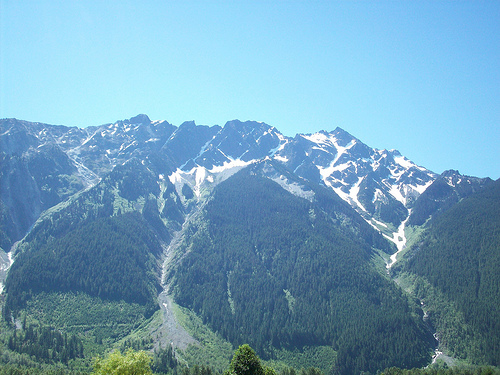
Big Sky Resort, nestled in the Madison Range of the Rocky Mountains in southwestern Montana, is North America's largest skiable area, encompassing over 5,850 acres of diverse terrain across four interconnected mountains: Lone Peak, Andesite, Moonlight Basin, and Spanish Peaks. Located in Gallatin National Forest just 45 miles south of Bozeman and about an hour's drive from Bozeman Yellowstone International Airport (BZN) via the scenic U.S. Highway 191 through Gallatin Canyon, the resort is ideally positioned as a gateway to Yellowstone National Park (only 18 miles from the West Entrance). The resort's base elevation sits at 7,500 feet in the vibrant Mountain Village, rising to a summit of 11,166 feet on Lone Peak, offering a vertical drop of 4,350 feet and an average annual snowfall of 400 inches—creating a playground for winter sports enthusiasts and summer adventurers alike. Known for its "no lines, big sky" ethos—referring to uncrowded slopes under vast Montana skies—Big Sky attracts over 500,000 visitors annually, blending high-adrenaline pursuits with luxury amenities in a setting that feels both remote and accessible, with direct flights from 20 major U.S. cities to BZN. The resort operates year-round, transitioning from powder-filled winters to wildflower-strewn summers, and is undergoing a transformative "Big Sky 2025" 10-year vision to enhance connectivity, infrastructure, and multi-season appeal.
Top Highlight: Kircliff Glass Observatory
Don't miss Kircliff, a
stunning two-story glass observation deck at 11,166 feet atop Lone Peak.
Accessible via gondola and tram (open in both seasons), it offers
360-degree panoramic views of dramatic peaks, multiple mountain ranges,
two national parks, and three states. A glass floor adds thrill. It's a
signature experience for all ages and abilities.
Winter
Activities (Typically November–April)
Big Sky boasts "The Biggest
Skiing in America" with over 5,800 skiable acres, 4,350+ vertical feet,
and 300+ runs across Big Sky Resort and neighboring Moonlight Basin.
Terrain ranges from beginner to extreme (including the famed Big
Couloir).
Other highlights:
Nordic skiing, snowshoe tours, and
fat-tire/Sno-Go biking.
Enchanted Forest lighted trail.
Dog
sledding, snowmobiling, and scenic rides to Kircliff.
Après-ski,
dining, and spa options.
Summer Activities (Typically
June–September)
Summer transforms the resort into a hub for hiking,
biking, and family fun (open roughly mid-June to mid-September).
Key options:
Hiking & Guided Hikes — Miles of trails with wildflowers
and views.
Mountain Biking — Lift-serviced flow trails to expert tech
terrain.
Ziplining, archery, disc golf, and Adventure Mountain
(bungee trampoline, mini-golf, gem mining for kids).
Golf on the
Arnold Palmer-designed course.
Paddleboarding/kayaking at Lake
Levinski.
Nearby: Whitewater rafting, fly fishing, horseback riding,
and ATV tours.
Nearby Must-See Attractions
Ousel Falls Trail —
Easy 1.6-mile round-trip hike to a beautiful waterfall (great
year-round, icy in winter).
Yellowstone National Park — About 1 hour
away via West Yellowstone; ideal for geysers, wildlife, and day trips.
Other day trips: Bozeman, Earthquake Lake, and Gallatin Canyon.
Tips: Check the official Big Sky Resort site for current openings, lift
tickets, and packages. Summer (June–September) offers milder crowds and
vibrant scenery, while winter delivers world-class powder. Big Sky works
well for families, adventurers, and luxury seekers alike (with resorts
like Montage nearby).
Winter Activities (Prime Ski Season: Typically November–April)
Big
Sky boasts over 5,800 skiable acres, 300+ runs, and massive vertical
drop—famously "the biggest skiing in America." It's ideal for all
levels, with plenty of beginner/intermediate terrain alongside expert
challenges like the Big Couloir.
Downhill Skiing & Snowboarding —
Ride the Lone Peak Tram for summit access and 360-degree views.
Nordic Skiing & Snowshoeing — World-class groomed trails in Meadow
Village; guided snowshoe tours available.
Other Fun Options — Sno-Go
biking (fat bikes on snow), dog sledding (e.g., with Spirit of the
North), snowmobiling, sleigh-ride dinners, and the Enchanted Forest
lighted trail.
Relaxation — Visit Solace Spa for massages and
recovery.
Yellowstone in Winter — Snowcoach or snowmobile tours for
wildlife and geysers (a unique, less-crowded experience).
Summer
Activities (Typically June–September)
Summer transforms the resort
into a hub for hiking, biking, and family fun, with lifts operating for
access to high-alpine terrain. Kircliff, a striking glass observatory at
the summit, opened for panoramic views—no skiing experience needed.
Hiking & Guided Hikes — Popular trails include Ousel Falls (easy
waterfall hike), Beehive Basin (alpine lakes and wildflowers), and
resort trails like Cirque Loop or Moose Tracks. Longer options reach
Lone Peak.
Mountain Biking — Lift-served downhill trails (beginner
flow to expert tech) plus cross-country routes.
Golf — Play the
scenic Arnold Palmer-designed course.
Ziplining, Archery & More —
Nature zipline tours, archery range with mountain views, disc golf,
bungee trampolines, and Adventure Mountain (kid-friendly zone in
Mountain Village).
Water Activities — Kayaking/paddleboarding on Lake
Levinski; whitewater rafting or floating on the Gallatin River.
Other
Adventures — Horseback riding, fly fishing (blue-ribbon streams),
ATV/side-by-side rentals, and rock climbing.
Year-Round & Nearby
Highlights
Yellowstone National Park — Day trips for geysers,
wildlife (bison, bears, wolves), and scenery. Book guided tours from Big
Sky.
Town Center & Village — Shop, dine, attend events (music,
markets), or relax. Big Sky Town Center has family activities.
Other
Ideas — Scenic gondola/tram rides, wildlife viewing, or day trips to
Bozeman or West Yellowstone.
Pro Tips:
Check the official Big
Sky Resort site (bigskyresort.com) for current lift operations, tickets,
rentals, and weather—summer 2026 runs roughly mid-June to mid-September.
Book popular activities (ziplining, rafting, Yellowstone tours) in
advance, especially in peak seasons.
Pack for variable mountain
weather; altitude can affect plans.
For lodging, options range from
resort base properties to luxury spots like Montage Big Sky.
Pre-Resort Era: Native Lands, Homesteads, and Ranching
(Pre-1970)
For at least 9,000 years, Indigenous
peoples—including bands of Shoshone, Bannock, Nez Perce, and
Crow—used the area seasonally for hunting, gathering, and travel
along the Gallatin Crest corridor from Yellowstone National Park
northward. The Lewis and Clark Expedition (Corps of Discovery)
passed through the Gallatin Canyon in the early 1800s, guided in
part by Shoshone knowledge from Sacajawea.
European-American
settlement began in the late 1800s with mining, timbering, and
hardy homesteading in the high-elevation West Fork of the
Gallatin River basin (6,000–7,000 feet). The climate—long, snowy
winters—made dry-land farming tough, so families focused on hay
production, sheep, and cattle ranching with hardy breeds. One of
the most notable was the Crail family, who homesteaded in the
West Fork basin in 1902. Their ranch (now the site of Big Sky's
Meadow Village and an Arnold Palmer-designed golf course)
operated actively into the resort era; surviving log buildings
and family archives preserve stories of frontier life.
Other
early operations included the 1898 Taylor Fork cattle ranch
(later summer range for the 320 Ranch) and sheep grazing by
families like the McBrides. Dude ranching boomed in the early
20th century as Eastern tourists sought "authentic" Western
experiences—trail rides, rodeos, and dances—at places like the
320 Ranch (still operating today) and Lone Mountain Ranch. The
area remained a quiet, unincorporated ranching community along
the Gallatin Canyon until the late 1960s, with scattered
homesteads, a few dude ranches, and minimal development.
The
resort's name "Big Sky" comes indirectly from Montana native
author A.B. "Bud" Guthrie's 1947 novel The Big Sky. Guthrie
granted usage rights to the state, which adopted "Big Sky
Country" as its nickname; Governor Forrest Anderson later
approved it for the new development.
Founding by Chet
Huntley (1968–1974)
Montana native and NBC news anchor Chet
Huntley (of the famous Huntley-Brinkley Report) retired in 1970
after nearly 15 years on air. In 1968, while still at NBC, he
returned to his roots and conceived a four-season mountain
resort on Lone Mountain to boost Montana's economy. He formed
Big Sky, Inc., partnering with investors including Chrysler
Realty Corporation. They acquired roughly 11,000 acres through
private purchases (including the historic Crail Ranch) and
complex land exchanges involving the U.S. Forest Service and
Burlington Northern Railroad.
Huntley used his celebrity and
connections to promote the project, flying around the state to
sell the vision. French Olympic skier Jean-Claude Killy even
helicoptered in to assess the terrain and declared it
"magnifique!" The resort opened for its first winter season in
late 1973 (December) with the Huntley Lodge, Mountain Mall, and
just four lifts: Andesite (double chair), Explorer (novice
double), Lone Peak (triple), and the pioneering Gondola One (one
of the first enclosed gondolas in Western skiing). Early runs
included Huntley's Hollow and Tippy's Tumble, named for Huntley
and his wife, Tippy.
Tragically, Huntley died of lung cancer
on March 20, 1974—just days before the official dedication and
grand opening ceremonies. He never fully saw his dream realized,
though his legacy endures in the Huntley Lodge and the resort's
founding narrative.
Boyne Resorts Era Begins (1976
Onward)
After Huntley's death and Chrysler's decision to
divest real estate assets, Michigan-based Boyne Resorts (founded
by visionary ski pioneer Everett Kircher) purchased Big Sky in
1976 for approximately $8.5 million. The Kircher family focused
intensely on ski operations and infrastructure while the
surrounding private land developed separately. Boyne's expertise
in snowmaking and lift innovation transformed the resort from a
modest operation into a major destination.
Major
Expansions and Innovations (1970s–2000s)
Boyne oversaw steady
growth that more than tripled the terrain:
1978: Mad Wolf
double chair on Andesite Mountain dramatically increased
intermediate/expert acres.
1981: First major snowmaking
system installed (Boyne was an industry leader).
1984–1990s:
Gondola II (later replaced by Swift Current high-speed quad in
1996); Challenger lift (1988) for expert steeps; Southern
Comfort and Ramcharger lifts (1990–1991) adding hundreds of
acres on Andesite.
1995: The Lone Peak Tram—a massive
engineering feat—reached the 11,166-foot summit, unlocking
extreme terrain and boosting the vertical drop. The Shedhorn
double added south-side access. This put Big Sky "on the map"
for big-mountain skiing.
1999–2007: Lone Moose triple (100+
acres); Dakota lift (2007) for glades and powder on the south
face; Iron Horse quad (1994) for additional runs.
Accommodations & Village: Yellowstone Conference Center and
Shoshone Condominium Hotel (1990); Snowcrest Lodge (1997);
Summit Hotel (2000, a 222-room slopeside project); Mountain
Lodge purchased for workforce housing (1993).
Gondola One
was retired in 2008 due to maintenance costs. By the early
2000s, Big Sky had grown into a true village with conferences,
summer activities, and real estate.
The 2013 Mega-Merger
and Modern Growth
In 2013, Boyne Resorts (in partnership with
CrossHarbor Capital Partners) acquired the neighboring bankrupt
Moonlight Basin (opened 2003, ~1,900 acres on Lone Mountain's
northern exposure) and 200 acres from Spanish Peaks (Spirit
Mountain terrain). The merger combined everything under Big Sky
Resort, creating one of the largest ski areas in the U.S. with
unified lift access, shared terrain, and over 5,850 acres.
Subsequent developments include mountain biking trails (40+
miles by the mid-2010s), lift upgrades (e.g., Ramcharger 8,
North America's first eight-person chair in 2018), and the Big
Sky 2025 Vision plan (announced 2016)—a multi-year,
hundreds-of-millions investment in new lifts, on-mountain
restaurants, a high-alpine zip line, hotels, and infrastructure.
The resort has also addressed sustainability through its
ForeverProject, aiming for net-zero carbon emissions by 2030,
amid its large operational footprint.
Today and the
Broader Community
What began as a small ranching outpost is
now a thriving, unincorporated community (Big Sky, Montana) with
year-round residents, luxury real estate, golf, hiking, biking,
and events. The resort draws skiers and riders from around the
world for its "big sky" scale—320+ trails (15% beginner, 25%
intermediate, 60% advanced), 40 lifts, and epic terrain from
groomers to double-black-diamond chutes off the tram.
Location and Regional Context
Big Sky sits along U.S. Highway
191 in the Gallatin Canyon corridor, roughly midway between
Bozeman (about 45–50 miles/72–80 km north) and the west entrance
to Yellowstone National Park (about 45 miles/72 km south). Its
coordinates center around 45°16′N 111°19′W to 45°17′N 111°28′W.
The broader CDP covers approximately 120 square miles (311 km²),
with elevations ranging from about 5,900 feet (1,800 m) in the
Gallatin Canyon lowlands to over 11,000 feet (3,350+ m) at the
peaks. The resort itself operates primarily in the “Mountain”
and “Meadow” sub-areas at higher elevations, while the “Canyon”
area hugs the Gallatin River below. It is embedded in Gallatin
National Forest (now part of Custer-Gallatin) and adjacent to
the Lee Metcalf Wilderness and Spanish Peaks subrange, making it
a true gateway to vast wilderness and Yellowstone’s volcanic
plateau.
Topography and Mountain Features
The
topography is classic high-relief Rocky Mountain terrain:
rugged, glacially sculpted peaks, steep cirques, expansive
bowls, deep canyons, rolling subalpine hills, and open alpine
meadows. Elevations at the resort include:
Lone Peak Summit
(the iconic central peak): 11,166 feet (3,403 m).
Mountain
Village base area: 7,500 feet (2,286 m).
Madison Base area:
7,400 feet (2,256 m).
Lowest base (Lone Moose area): around
6,800 feet (2,073 m).
This creates a massive 4,350-foot
(1,326 m) vertical drop—one of the largest in North America—with
the longest run stretching about 6 miles (10 km). The resort’s
skiable terrain spans 5,850 acres (23.7 km²) across multiple
mountains, including Lone Mountain proper, Andesite Mountain,
and expansions into former Moonlight Basin and Spanish Peaks
areas (acquired post-2013 merger). Terrain aspects face all four
cardinal directions (roughly 37% north, 36% east, 25% south, 2%
west), producing varied snow conditions and microclimates across
pods of beginner groomers, intermediate cruisers, advanced
moguls, expert chutes, and extreme couloirs.
The landscape
features broad, wind-sculpted ridges, steep headwalls, and open
bowls at the highest elevations, transitioning downslope into
forested glades and wider valleys. The “Meadow” area (base
~6,200 feet/1,900 m) occupies a broad alpine valley braided by
small streams and ponds, while the “Canyon” section follows the
dramatic, river-cut Gallatin Canyon with steeper walls and
riparian zones.
Geology
Lone Mountain dominates as a
textbook example of a laccolith—an igneous intrusion that never
reached the surface as a volcano. Formed roughly 49–68 million
years ago (Eocene to Late Cretaceous) during Laramide
orogeny-related magmatism, dacite magma rose along faults and
spread laterally between layers of older sedimentary rock
(primarily sandstone and shale), creating a “Christmas tree”
pattern of sills and dikes when viewed in cross-section. The
resistant dacite core weathers more slowly than surrounding
rock, forming the prominent, pyramid-like summit. Nearby Spanish
Peaks consist of much older (Precambrian, ~1.6 billion years)
metamorphic gneiss and schist. Glacial activity during the
Pleistocene carved cirques and U-shaped valleys; today, small
permanent snowfields and rock glaciers (lobes of rock debris
with interstitial ice) persist on Lone Mountain’s northeast
slopes, slowly creeping downslope. The area also includes
landslide-prone zones with bentonite clays in some sedimentary
layers.
Hydrology and Drainage
Big Sky straddles the
Continental Divide’s influence but lies entirely in the upper
Missouri River watershed. Most of the CDP drains eastward via
numerous small streams and the Middle Fork into the Gallatin
River (a renowned Blue Ribbon trout stream popular for
fly-fishing and whitewater rafting). The westernmost portions
flow westward through Jack Creek and Cedar Creek into the
Madison River. Both the Gallatin and Madison eventually join to
form the Missouri River farther north. The Meadow area’s braided
streams and ponds are fed by snowmelt and support cold, clear
fisheries, with groundwater systems in alluvial fans, glacial
deposits, and fractured dacite bedrock sustaining the area’s
water supply.
Climate
Big Sky exhibits a borderline
humid continental (Dfb) / alpine subarctic (Dfc) climate (Köppen
classification), with extreme seasonal swings moderated by
elevation. Lower canyon areas lean drier and more continental;
higher mountain zones are colder and snowier. Key averages
(1991–2020 normals at lower CDP sites):
Annual precipitation:
~23 inches (592 mm), peaking in June.
Annual snowfall: ~163
inches (413 cm) at lower elevations, but the resort proper
averages ~400 inches (1,016 cm) thanks to orographic lift and
high-elevation trapping.
Temperatures: January lows average
~8.5°F (−13°C), with record lows to −42°F (−41°C); July highs
average ~78°F (25°C), with record highs to 95°F (35°C).
Snow
persists well into spring at upper elevations due to cold
temperatures and varied aspects; wind redistribution often
creates deep deposits in bowls and couloirs while scouring
ridges.
The resort’s vast acreage and multiple exposures
mean skiers can usually find good conditions somewhere
regardless of weather. Summers are mild and sunny, ideal for
hiking, mountain biking, and golf, with vibrant wildflower
meadows.
Ecological and Scenic Highlights
The resort
sits within the Greater Yellowstone Ecosystem, supporting
subalpine forests (lodgepole pine dominant) grading into alpine
tundra above treeline. Wildlife is abundant: elk, deer, moose,
black and grizzly bears, wolves, and various birds. Surrounding
national forests and wilderness areas offer extensive hiking and
backcountry access. From the 11,166-foot Lone Peak summit
(accessible via tram in summer/winter), panoramic 360° views
encompass the Madison Range (including Spanish Peaks to the
north), Gallatin Range across the river to the east, Bridger and
Absaroka ranges, and on clear days the Tetons far to the
south—plus glimpses into Yellowstone and Grand Teton National
Parks.
Big Sky thrives as a four-season destination, with winter dominating but summer gaining momentum under the 2025 vision. Winter activities center on skiing and snowboarding across its massive terrain, with options for all levels: 20% beginner, 25% intermediate, 55% advanced/expert, including 4,000+ acres of above-treeline bowls and 1,000 acres of tree skiing. Nordic skiing spans 30+ km of groomed trails, while snowshoeing, dog sledding, sleigh rides, and snowmobiling add variety. Summer shifts to adventure: 30+ miles of hiking/biking trails, ziplining over canyons, whitewater rafting on the Gallatin River (Class II-V rapids), fly fishing in blue-ribbon trout streams, horseback riding, ATV tours, rock climbing, disc golf, and water sports at Lake Levinski Marina (kayaking, paddleboarding). Guided options like the Alpine Cirque Tour explore glacial cirques, and scenic lift rides provide easy access to high-country views. Yellowstone tours depart from the resort, offering wildlife safaris just minutes away.
Big Sky's 2025 calendar buzzes with community-driven festivals blending music, food, and adventure. Highlights include the free Music in the Mountains concert series (Thursdays, June 26–Aug 28) featuring local and national acts at Town Center Plaza; Savor Big Sky Food, Wine & Spirits Festival (June 26–29) with tastings, hikes, and seminars; Big Sky PBR Rodeo (July 17–19) for bull riding thrills; Big Sky Emerging Artist Series (summer art exhibits); and Wildlands Music Festival (August). Winter kicks off with Opening Day (Nov 26, 2025), followed by Big Sky Skijoring (Feb 7–9, 2026—dog-pulled skiing races) and Big Sky Winter Pride (Mar 24–30, 2026). The Big Sky Farmers Market runs weekly through fall, and Community Week (summer) offers volunteer-led cleanups and workshops. Events emphasize local culture, with many free or low-cost, held at Mountain Village or Town Center.
Best Time to Visit
Winter (late November to mid/late April)
is the highlight for most visitors. The resort typically opens
around Thanksgiving (sometimes the day before) and averages ~400
inches of snowfall annually.
Peak season (Christmas/New
Year's, Presidents' Day, and March school breaks) brings the
most energy but higher prices and more people.
Shoulder
periods (early December or especially April) often provide
excellent snow, milder temps for outdoor après-ski, fewer
crowds, and better deals.
Summer (June–September) shifts
focus to hiking, mountain biking, golf, scenic gondola/tram
rides (e.g., to Kircliff observatory at 11,166 ft), and access
to nearby Yellowstone. Resort activities run roughly mid-June to
mid-September.
Shoulder seasons (May, October–early November)
are quieter with transitional weather—good for lower rates but
variable conditions.
Aim for at least 3–4 nights, ideally
more, to fully explore the terrain or activities.
Getting
There & Around
Fly into Bozeman Yellowstone International
Airport (BZN) — it has direct flights from many major U.S.
cities, making same-day skiing feasible.
Ground transport:
Rent a car at the airport for maximum flexibility (highly
recommended, especially if staying off-mountain). Winter driving
requires 4WD/AWD and winter tires; conditions in Gallatin Canyon
can be tricky. Shuttles and private transfers (e.g., Karst Stage
or local providers) are available but book ahead—Uber/Lyft are
unreliable, with no cell service in parts of the canyon.
Driving: ~1 hour from Bozeman via MT-191. Watch for wildlife
(deer, elk, bighorn sheep).
On-site: Free shuttles connect
parking lots (which fill up on busy days—check real-time
status). Skyline Bus provides free rides between Mountain
Village, Town Center, etc. Big Sky Resort offers free transport
for guests to dinners/off-mountain activities (book via bell
staff).
Base areas include Mountain Village (main hub),
Madison Base, and Montage—each with tickets, rentals, dining,
and lifts.
Lodging Tips
Options range from slopeside
convenience to luxury or value rentals:
Mountain
Village/Slopeside (e.g., Summit at Big Sky, Huntley Lodge,
Montage Big Sky) for ski-in/ski-out ease and proximity to
lifts/dining.
Town Center/Meadow Village for walkable shops,
restaurants, and a community vibe.
Canyon area or vacation
rentals for seclusion and potentially lower costs (but requires
a car).
Luxury standouts: Montage Big Sky, One&Only Moonlight
Basin. Book early, especially for peak times—concierge services
(for resort-booked lodging) can help with reservations and
planning.
Groceries are available but pricier
on-mountain; stock up in Bozeman or Town Center for condos.
On the Mountain: Winter Skiing & Riding
Big Sky boasts a
50/50 split of beginner-intermediate vs. advanced terrain across
four peaks, with minimal crowds thanks to its size and location.
Lone Peak Tram (included with lift tickets since 2024-25) offers
jaw-dropping access; reachable via green runs for all levels.
Tips for first-timers: Book a private lesson/guide to navigate
efficiently. Download the Big Sky app for maps, real-time
lift/trail status, and snow reports. Rent gear the afternoon
before to beat morning lines (delivery available). Use Sky Card
Express boxes for tickets.
Lunch strategy: Mid-mountain spots
like Everett's 8800 fill up—eat early (by 11) or make
reservations. On-mountain options range from casual (Vista Hall)
to upscale.
Après & off-slope: Sleigh rides, snowshoeing,
Nordic skiing, ice skating, Solace Spa, or Yellowstone snowcoach
tours.
Summer & Shoulder Activities
Scenic
tram/gondola to high-alpine views, mountain biking (lift-served
trails), hiking, golf (Arnold Palmer-designed course),
zip-lining, and more.
Easy access to Gallatin River for
rafting/fly fishing and Yellowstone (wildlife, geysers—book
tours/guides).
What to Pack & What to Expect
Winter
demands function-first layering due to cold, wind, and variable
conditions (daytime teens–30s°F, colder nights):
Waterproof
insulated jacket & snow pants.
Base layers, fleece
mid-layers, neck gaiter/buff, beanie, waterproof gloves/mittens,
helmet (required/recommended), goggles, sturdy boots with
traction.
Sunscreen (high altitude), lip balm, reusable water
bottle.
Summer: Layers for big temperature swings (40s
mornings to 80s afternoons), rain jacket, sturdy hiking shoes,
bug spray, binoculars for wildlife.
General: Altitude
(~7,000–11,000+ ft) means thinner air—stay hydrated, ease into
activity. Wildlife is abundant (bears, etc.)—follow Leave No
Trace and recreate responsibly. Medical center in Town Center.
Dining & Nightlife
On-mountain: Casual to fine dining
(reservations advised for spots like Everett's).
Village/Town: Diverse options from steakhouses to Italian,
casual spots, and groceries. Book popular places ahead,
especially peaks.
Après scene is lively but not
overwhelming—decks with views are highlights.
Practical
Tips for a Smooth Trip
Book early: Lift tickets, lessons,
lodging, rentals, and special activities (e.g., Yellowstone
tours) sell out or rise in price.
Budget: Lift tickets are
premium (~$200+ peak); packages help. Groceries/dining add
up—plan accordingly.
Apps & resources: Big Sky app, snow
reports, parking status, VisitBigSky.com for broader area info.
Health/Safety: Helmet use, avalanche awareness for experts, sun
protection. Check current conditions daily.
Sustainability:
Follow responsible recreation guidelines—Big Sky emphasizes
preserving the wild character.