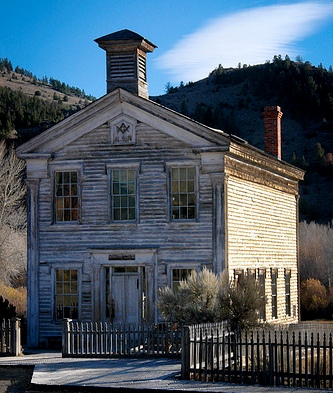
Location: Beaverhead Country, Montana
Found: 1862
Bannack Ghost Town is a historic abandoned
settlement located in Beaverhead Country, Montana near modern day
town of Dillon. Bannack was originally found in 1862. At a height it
reached a population that numbered in thousands. It was finally
abandoned in 1970's. Today Bannack Ghost Town is a popular destination for history
buffs and ghost hunters who believe Bannack is haunted by spirits of
people that didn't quiet move on beyond their physical death.
Bannock, Montana was originally found in 1862 after a
discovery of a major gold deposit in Grasshopper Creek and
surrounding lands. The city takes its name form the local Bannock
Indians that once lived here. The city quickly swelled with new
settlers who tried to get rich quickly. Within few years it reached
a population of ten thousand residents. In fact in 1865 it became
the capital of Montana Territory until it gave its title to another
current ghost town of
Virginia City. Bannock had its own grocery store, four saloons,
three hotels, three bakeries, three blacksmith shops, two meat
markets, two stables, billiard hall, restaurant and even its own
brewery. However as the gold rush subsided so did the population of
Bannock. In the 20th century it was a small settlement until the
last resident that left the city in 1970's.
Bannack Historic District was declared a National
Historic Landmark in 1961 and later Bannack State Park. Many people
come here to catch evidence of alleged ghostly activity in the
abandoned ghost town.
Pre-Founding and the 1862 Gold Discovery
The area was already
known to explorers: the Lewis and Clark Expedition named the stream
Willard Creek in 1805. Local Bannock (or Bannack) Indians had long
inhabited the region, and the town took its name from them (a
Washington, D.C., clerk later misspelled it “Bannack”).
The story
truly begins on July 28, 1862, when a group of prospectors known as
the “Pikes Peakers” (many from Colorado’s earlier gold fields) led
by John White discovered gold in Grasshopper Creek. The creek earned
its new name from the massive grasshopper swarms that year. The gold
here was exceptionally pure—99–99.5%—far higher than the typical 95%
found elsewhere, which fueled rapid excitement.
News spread like
wildfire, triggering Montana’s first major gold rush and drawing
miners from Idaho’s crowded Salmon River diggings across the
Continental Divide. By October 1862, more than 400 prospectors had
arrived; by spring 1863, the population swelled to around 3,000
(some estimates put the peak, including scattered camps along the
creek, at 5,000–10,000). The “fourteen-mile city” emerged as mining
camps dotted the creek banks.
Early Bannack was a rough,
makeshift camp: tents, caves, dugouts, shanties, and wagons. It
quickly gained businesses—three hotels, three bakeries, three
blacksmith shops, two stables, two meat markets, a grocery store,
restaurant, brewery, billiard hall, and four saloons—most built of
logs, some with decorative false fronts. It was connected to the
outside world only by the remote Montana Trail.
Boom Years,
Daily Life, and Early Development (1862–1864)
Bannack became
known as the “New Eldorado of the North.” Miners worked placer
claims in the creek, while hard-rock quartz mining began as early as
1862, followed by stamp mills. The town was overwhelmingly male,
with women mostly limited to saloon workers or a handful of wives;
dances provided rare social relief.
Education and religion
arrived early but informally. In September 1863, Sidney Edgerton
(appointed Chief Justice of Idaho Territory) arrived with his
family; his niece Lucia Darling taught the first school classes in
their living room to about a dozen children. By fall 1864, a crude
log schoolhouse was built.
Lawlessness, Vigilantes, and the
Henry Plummer Saga (1863–1864)
Bannack quickly earned a
reputation for violence. Roads in and out were plagued by road
agents (highwaymen), and dozens of killings were reported. In 1863,
Henry Plummer—a handsome, well-spoken man with a criminal past from
California—arrived and was elected sheriff. He was also appointed
U.S. Deputy Marshal.
Controversy surrounds Plummer. Contemporary
accounts accused him of secretly leading a gang of over 100
“Innocents” who robbed stagecoaches, gold shipments, and
travelers—allegedly responsible for 100+ murders (though historians
document only about eight). Plummer’s position supposedly gave him
inside knowledge of shipments. Some modern scholars debate the scale
of the conspiracy, suggesting it may have been exaggerated or even
fabricated to justify vigilante actions.
By late 1863, citizens
in Bannack, Virginia City, and Nevada City had enough. They formed
the Montana Vigilantes, issuing warnings with skull-and-crossbones
posters or the cryptic numbers “3-7-77” (possibly symbolizing grave
dimensions: 3 feet wide, 7 feet long, 77 inches deep; the symbol is
still on Montana Highway Patrol patches today). The vigilantes
hanged about 22–24 men.
The climax came on January 10, 1864.
Vigilantes arrested Plummer and his deputies, Buck Stinson and Ned
Ray, in Bannack. The deputies were hanged first; Plummer reportedly
pleaded, “Give me a high drop, boys,” before his execution on a
makeshift gallows (some accounts say he offered to reveal buried
gold worth $100,000). Their bodies were left hanging overnight in
sub-zero temperatures. The vigilante campaign continued briefly but
waned after leading citizens protested.
Brief Territorial
Capital (1864)
In May 1864, President Lincoln created Montana
Territory (carved from Idaho Territory), with Sidney Edgerton as
governor. Bannack was designated the first capital; the territorial
legislature convened in a crude log cabin (Edgerton’s). However,
richer strikes at Alder Gulch (Virginia City, 80 miles east) soon
eclipsed Bannack. The capital moved to Virginia City in 1865.
Decline, Revivals, and Slow Fade (1865–1940s)
Gold production
dwindled as easy placer deposits were exhausted. By 1866–1870, most
residents had left for richer fields; population dropped to a few
hundred. The railroad bypassed Bannack in the 1880s (building a spur
to Dillon instead), sealing its isolation.
Later revivals
kept it alive:
1870s: Rebounded as Beaverhead County seat (until
1881). Key buildings constructed: Masonic Lodge No. 16 / School
(1874, $1,500, first floor school, second floor lodge), Beaverhead
County Courthouse (1875, later remodeled), and Methodist Church
(1877, built after a 1877 scare from Chief Joseph’s Nez Perce after
the Battle of the Big Hole; locals feared attack and hid children in
courthouse safes).
1890s: Electric dredges operated on
Grasshopper Creek for about a decade, reviving mining but destroying
many 1860s structures.
Early 1900s–1930s: Sporadic hard-rock
mining and mills; electrification reached the town in 1930. The
Hotel Meade (the former courthouse) served travelers and hosted
social events.
1940s: Businesses and the school closed due to low
enrollment. Bannack became a true ghost town.
A 1895 fire and
occasional Native American threats added to its hardships, though
the town endured longer than most boom camps.
Preservation as
a State Park and National Historic Landmark (1954–Present)
In
1954, the Beaverhead County Museum Association donated the townsite
to Montana; it became Bannack State Park on August 15, 1954. The
state preserves rather than restores the buildings, allowing
visitors to explore most structures. It was designated a National
Historic Landmark in 1961 (and added to the National Register in
1966). A few residents lingered until the early 1970s.
Today,
Bannack State Park (1,154–1,529 acres, elevation ~5,800–5,837 feet)
features a visitor center (seasonal), campground, and events like
Bannack Days (third weekend in July), with reenactors, parades, and
old-fashioned breakfasts at the Hotel Meade. Winter ice skating on
the dredge pond is also popular. The Bannack Association supports
ongoing preservation.
Location and Regional Context
Bannack sits at coordinates
45°09′40″N 112°59′44″W (approximately 45.161°N, 112.996°W) on the
banks of Grasshopper Creek, about 11 miles (18 km) upstream from
where the creek joins the Beaverhead River south of Dillon. The park
entrance is roughly 25 miles west of Dillon via Interstate 15 (Exit
59), Highway 278, and Bannack Road.
It lies in a structural
valley within the Beaverhead Mountains region, part of the greater
northern Rockies. To the north rise the East and West Pioneer
Mountains (peaks up to 11,154 feet at Tweedy Mountain, about 15
miles away, with Grasshopper Creek’s headwaters near Elkhorn Hot
Springs). Southward, views extend 20 miles to the Tendoy Mountains.
Southwestward lie the 10,000+-foot peaks of the Beaverhead Range and
Continental Divide (visible 30 miles away). Westward stands the Big
Hole Divide and Baldy Mountain area, crossed by Highway 278 at
Badger Pass.
From the 7,287-foot summit of Bannack Peak (a
1,507-foot climb directly above town), the landscape reveals a
dramatic contrast: sloping “lowlands” at ~6,000 feet versus high,
rocky crags and timbered ridges.
Topography and Landforms
The immediate terrain around Bannack features a north-trending ridge
(Badger Ridge) of folded and thrust-faulted strata that Grasshopper
Creek cuts through in a narrow gorge or canyon on the town’s eastern
edge. The townsite occupies a relatively flat valley floor with
incised side gulches (e.g., Hangman’s Gulch, usually dry except
during spring runoff). Mines and placer workings line both sides of
the creek, leaving historic tailings and disturbances.
The
broader setting mixes broad, open valleys used for ranching with
sagebrush-covered hills and rising ridges. Higher slopes transition
to timbered foothills and alpine zones. The area is semi-arid and
open, with minimal modern development—roads and buildings remain
dwarfed by the scale of the mountains.
Hydrology
Grasshopper Creek is the dominant feature. It originates ~25 miles
north in the Pioneer Mountains from springs and tributaries, flows
south through ranchlands and sage hills, enters the narrow canyon
near Bannack, and continues southeastward to join the Beaverhead
River ~12 miles downstream. It supplied water for historic placer
mining (ditches diverted flow for sluicing). Seasonal flow is
highest in spring runoff; the creek supports riparian zones with
cottonwoods that turn brilliant yellow in fall. A historic dredge
pond (now used for winter skating) adds a small water body. Nearby
features include intermittent gulches and minor springs.
Geology
The area features complex thrust-faulted Paleozoic and
Mesozoic sedimentary rocks (e.g., Mississippian limestones, Quadrant
Quartzite) intruded by Cretaceous granodiorites and associated with
Upper Cretaceous volcanics and tuffs (Grasshopper Creek and Cold
Spring Creek units). Gold mineralization (placer and lode) resulted
from erosion of these lode sources into the creek gravels.
Downstream exposures include the Beaverhead Conglomerate in
spectacular canyon walls. Quaternary alluvium and colluvium fill the
valley, with some Miocene basin-fill deposits (e.g., Bannack Pass
beds) in structural sub-basins related to Cenozoic extension.
Climate
Bannack has a cold semi-arid climate (BSk Köppen
classification), with harsh temperature swings and low precipitation
due to its high elevation and rain-shadow position in the Rockies.
Data from the nearby Dillon 18 WSW station (5,971 ft, 1991–2020
normals) are representative:
Annual precipitation: ~10.09
inches (256 mm), mostly May–June (1.59–1.84 inches/month); driest in
winter (0.34–0.56 inches/month).
Temperatures: January mean daily
max 28.1°F / min 7.8°F; July max 80.9°F / min 44.0°F. Record high
95°F; record low –42°F.
Winters are long and cold with snow;
summers are short, warm, and dry. Strong winds and diurnal
temperature swings are common.
Vegetation and Ecosystems
Lowland valleys and hills support sagebrush steppe: big sagebrush
(Artemisia tridentata), bunchgrasses (bluebunch wheatgrass,
needle-and-thread), prickly pear cactus, and wildflowers. Riparian
corridors along Grasshopper Creek feature cottonwoods, willows, and
grasses. Higher ridges and nearby mountains transition to coniferous
forests (Douglas-fir, lodgepole pine, subalpine fir) and high
meadows. The area falls primarily in the Montana Valley and Foothill
Grasslands ecoregion with influences from Middle Rockies conifer
zones. Wildlife includes elk, deer, and smaller mammals; the open
landscape supports raptors and sagebrush-obligate species.
The Legend of Sheriff Henry Plummer and the Montana Vigilantes
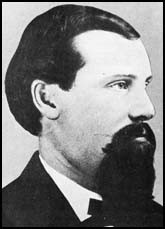
The most prominent local legend centers on Henry Plummer (pictured
below), a charismatic, well-dressed man elected sheriff of Bannack
in 1863. According to the dominant folklore, Plummer secretly led a
ruthless gang of road agents known as “The Innocents,” who robbed
and murdered over 100 travelers along the trails between Bannack and
Virginia City. The gang allegedly included deputies and used
roadhouse signs for coordination.
In December 1863, miners formed
the Montana Vigilantes in response to the lawlessness. Over the next
42 days, they hanged 24 suspected gang members—including Plummer and
two deputies—often from the very gallows Plummer had built for
“official” justice. Plummer reportedly begged for a “high drop” (a
quick, clean hanging) before his execution on January 10, 1864. Some
versions add dramatic post-mortem desecration: a doctor allegedly
severed Plummer’s arm for study, and later his head was reportedly
cut off and displayed in a local saloon.
Historians debate the
story—some argue Plummer was innocent and the vigilantes used
exaggerated (or fabricated) accusations as a cover for their own
ruthless power grab and political maneuvering. Regardless, the tale
has become central to Bannack’s haunted reputation. Plummer’s ghost
is frequently reported patrolling the town’s streets, lingering near
the Skinner Saloon (where he may have had ties), Chrisman’s Store,
and especially the original gallows/hangman’s post. Some sightings
describe a one-armed or even headless figure, tying into the
desecration legends, as if he’s still seeking revenge or justice for
his fate. His apparition is sometimes linked to shadow figures or a
lingering male presence that feels watchful or uneasy.
A
secondary legend tied to Plummer claims he buried stolen gold or
treasure somewhere near Bannack before his death—an unsolved mystery
that still draws occasional treasure hunters.
The Meade Hotel: Bannack’s Most Haunted Building
The Hotel Meade
(originally built in 1875 as the Beaverhead County Courthouse) ranks
as the epicenter of paranormal activity. After the county seat moved
to Dillon in 1881, the brick building sat vacant before Dr. John
Singleton Meade bought and renovated it into an elegant hotel in the
1890s. It also served sporadically as a hospital before closing for
good in the 1940s.
The most famous resident spirit is Dorothy
Dunn, a 16-year-old who drowned in August 1916. Dorothy, her cousin
Fern, and a friend waded into a dredge pond (now called “Dorothy’s
Hole”) and stepped off a underwater shelf into deep water. None
could swim. A passerby rescued Fern and the other girl, but Dorothy
perished. Her best friend, Bertie Mathews (whose family operated the
hotel at the time), was devastated. Shortly after the tragedy,
Bertie reported seeing Dorothy’s apparition upstairs in the
hotel—recognizable in her long blue dress.
Since then,
visitors (including children) have repeatedly reported:
The
apparition of a teenage girl in a flowing blue dress standing in an
upstairs window or on the second floor.
Dorothy appearing to
interact with kids—her mouth moving as if speaking, but no sound
comes out.
An older woman (sometimes speculated to be Dorothy’s
mother) peering out of the hotel windows at passersby.
Cold
spots, especially downstairs or in certain rooms.
Sounds of
crying children echoing through the building (possibly tied to its
hospital days).
Doors creaking open on their own (one 2009
visitor described the front door swinging open “as if welcoming”
them with no breeze).
Orbs, EMF fluctuations, and an overall
sense of being watched or an impending “jump scare” on the upper
floors.
Other ghostly women in period finery have also been
seen throughout the hotel and town, adding to the sense of lingering
Victorian-era elegance amid the decay.
Other Notable Haunted
Spots
Chrisman’s Store (the general store): Apparitions and
shadow figures are commonly reported, along with whispering
disembodied voices. Some link these to members of Plummer’s gang.
The store area also overlaps with Plummer sighting reports.
Bessette House (sometimes called the “Crying Baby House”):
Originally used as a quarantine station during epidemics (influenza,
scarlet fever, diphtheria, whooping cough), many children died here.
Reports include disembodied children’s voices, the sounds of crying
babies coming from inside, cold spots, and strange anomalies in
photographs.
The rest of the town: With 60+ buildings, many
visitors and investigators claim nearly every structure has some
activity—apparitions of miners and families “going about daily
business” as if the town were still thriving, doors slamming or
swinging open without cause (some inviting entry, others seeming to
warn visitors away), shadow people, anomalous photos/videos, and
general feelings of a “forlorn pall” or unseen presence. Baby cries,
disembodied voices, and orbs appear across multiple sites.
Modern Experiences and Ghost Tours
Bannack’s hauntings gained
wider attention when it was featured on shows like Ghost Adventures.
The park leans into the lore with its annual Bannack Ghost Walks in
late October—lantern tours where costumed reenactors portray
specific ghosts (Plummer, gang members like Cyrus Skinner, Doctor
Glick, and others) recounting scandals, violence, and daily frontier
life. Visitor reports continue to trickle in: strange lights,
shadowy figures in doorways, whispers, and an overall sense that the
town’s violent and tragic past hasn’t fully faded.
Bannack State Park in southwestern Montana is one of the
best-preserved ghost towns in the American West and a National Historic
Landmark. It marks the site of Montana’s first major gold discovery on
July 28, 1862, which sparked a rush that swelled the population to over
3,000 by 1863. Bannack briefly served as Montana’s first territorial
capital in 1864 before declining as gold dwindled and people moved to
richer strikes like Alder Gulch (Virginia City).
More than 50–60
original log and frame buildings from the 1860s–1900s still stand along
Main Street, preserved (not overly restored) by Montana State Parks and
the Bannack Association. You can stroll boardwalks, enter many
structures, and imagine life in a rough-and-tumble mining town known for
outlaws like Sheriff Henry Plummer.
Getting There
From Dillon,
MT (nearest services, ~25–30 miles away): Take I-15 to Exit 59, head
west on MT-278 for ~17 miles, then south on the signed Bannack Road
(gravel/dirt, ~4–7 miles). Passenger cars handle it fine in dry
conditions; high-clearance vehicles are better for rough spots.
Scenic alternative: Big Sheep Creek Backcountry Byway (dirt road, ~50
miles from Dell) offers stunning views but adds time.
GPS note: Use
“Bannack State Park” or 721 Bannack Rd, Dillon, MT 59725. Cell service
is limited or nonexistent in the park.
Road conditions vary with
weather—check Montana DOT reports. The park sits at ~5,837 feet
elevation in remote Beaverhead County.
Hours, Fees, and Best Time
to Visit
Open year-round, but access and activities change
seasonally.
Summer (Memorial Day–early/mid-August): 8 AM–9 PM.
Shoulder (mid-August–September/October): 8 AM–sunset.
Winter/Off-season (October–May): 8 AM–5 PM (closed Dec 24–25).
Fees (as of recent data; confirm on-site):
$8 per vehicle
(non-residents); $4 per person for walk-ins/bicyclists.
Montana
residents with the $9 state parks fee on vehicle registration: free
entry.
Camping extra.
Visitor Center: Open Memorial Day–Labor
Day (10 AM–6 PM or similar); weekends in May/October. Buy a $2
self-guided tour booklet here (highly recommended for maps and building
histories).
Best time: Late spring through early fall
(June–September) for mild weather, full access, and events. Summers are
warm/dry days with cool nights; expect variable mountain weather
(possible afternoon thunderstorms). Fall brings beautiful colors but
fewer services. Winters are harsh and snowy—roads may be impassable
without 4WD, but ice skating is possible.
Special events:
Bannack Days (third weekend in July): Living history with re-enactors,
wagon rides, gold panning, crafts, music, and gunfights.
Ghost Walks
(October): Evening haunted tours.
Living History Weekend (September).
Winter ice skating on the dredge pond (Jan–early March, weather
permitting; free skates, warming hut).
What to Do
Start at the
Visitor Center — Pay entry, grab maps/booklets, watch a short video, and
talk to rangers.
Self-Guided Walking Tour — Wander ~1–1.5 miles along
Main Street. Enter dozens of buildings (saloon/barber shop,
school/Masonic Lodge, tiny jail, gallows, homes, church). Many are
furnished or have interpretive signs. Allow 1–4+ hours.
Must-See
Buildings:
Hotel Meade (brick, former courthouse): Social hub with
fine dining remnants.
Methodist Church (1877): Sole purpose-built
church; photogenic.
Masonic Lodge/School: Upstairs lodge, downstairs
desks—kids can sit in replicas.
Others: Roes/Graves House (early
frame home), saloon, jail.
Guided Tours (peak summer) — 1-hour
town tours or Hendricks Mill tour (via vintage truck; mining process).
Book at Visitor Center.
Gold Panning — Supervised weekend afternoons
in summer (free with entry; keep what you find—tiny flakes/garnets).
Hiking — Short trails like Bird’s Eye View or to Road Agent Rock;
cemetery visit.
Camping/Overnight — 28 sites (Vigilante & Road Agent
campgrounds), some first-come-first-served, plus a wall tent and
hike-in/bike-in spots. Potable water in summer; vault toilets. Reserve
via ReserveAmerica.
Practical Tips
What to Bring: Sturdy
walking shoes (uneven boardwalks/terrain), water, snacks, sunscreen,
hat, layers (temps swing), camera/phone, bug spray, flashlight (for
interiors/shadows), rain jacket. No food services in the park—stock up
in Dillon.
Photography: Excellent for interiors, details, and
atmospheric shots—golden hour or overcast works well. Respect “no touch”
areas.
Kids/Families: Very engaging—self-guided pace works well;
panning and schoolhouse are highlights.
Accessibility/Safety: Some
buildings have stairs/narrow doors; uneven ground. Watch for wildlife
(snakes possible in summer), unstable structures, and weather. Leave
artifacts untouched.
Pets: Check rules (likely leashed OK in some
areas, not buildings).
Nearby: Combine with Virginia City/Nevada City
(~1–1.5 hours), Dillon for lodging/food, hot springs, or Pioneer Scenic
Byway.