Location: Beni Department Map
Rurrenabaque (often called Rurre), a compact riverside town of
roughly 12,000–15,000 people on the Beni River in Bolivia’s Beni
Department, is the main practical gateway to the Bolivian
Amazon. It sits at about 200–270 m elevation where the last
Andean foothills meet the lowlands, roughly 400 km north of La
Paz. Most visitors come for multi-day tours into Madidi National
Park (one of Earth’s most biodiverse protected areas) or the
Pampas del Yacuma wetlands.
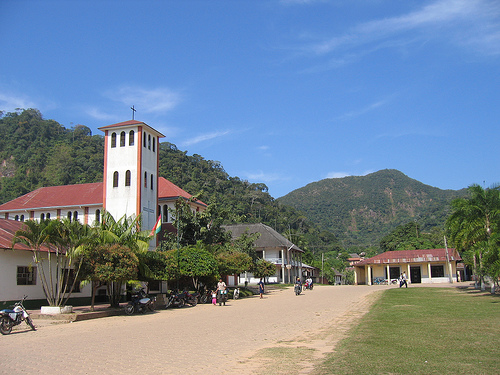
The town itself is modest: a grid
of dusty streets, tour agencies, hostels, and comedores
clustered near the waterfront. It has a relaxed, frontier feel
with motorbike taxis, river views, and limited but improving
tourist services. Plan to spend more time on tours than in town,
but allow buffer days for weather and logistics.
Getting There
Flying is strongly recommended. The short flight
from El Alto (La Paz) to Rurrenabaque Airport (RBQ) takes about 40–50
minutes on small aircraft (operators such as EcoJet or Amaszonas,
schedules often limited to a few days a week). The descent from the high
Andes into the green basin is dramatic. Expect tight baggage limits
(often around 15 kg checked), weather-related cancellations (especially
with cloud or rain), and the need for a buffer day on either end.
One-way fares commonly fall in the USD 90–160 range; book ahead in high
season and confirm directly. Morning flights are generally more
reliable.
The bus alternative from La Paz takes 14–20+ hours (longer
in the wet season) via the Yungas route. Roads have improved in sections
but remain vulnerable to landslides, washouts, and disruptions. It is
cheaper but uncomfortable and less reliable. Many travelers advise
against it for first-timers or those with fixed schedules. Local
mototaxis or tuk-tuks cover the short distance from the airstrip or bus
terminals into town.
Best Time to Visit
Dry season (roughly
May–October) is ideal. River levels drop, wildlife concentrates near
remaining water, trails are firmer, mosquitoes are somewhat reduced, and
access is more reliable. Peak months (June–August) bring the best
conditions and higher visitor numbers. Shoulder periods (May,
September–early October) often offer a good balance of weather, fewer
crowds, and potentially lower prices.
Wet season (November–April,
heaviest December–March) brings higher rivers, lusher vegetation,
muddier trails, more insects, and possible flight or road disruptions.
Some lodges scale back, and wildlife is more dispersed. It can still be
rewarding for jungle immersion but is less ideal for first-timers or
pampas wildlife viewing.
Choosing and Booking Tours: Pampas vs.
Jungle
This is the central decision. Both are typically 3-day/2-night
or longer and form the core of most visits.
Pampas tours (Yacuma
River area): Road transfer plus canoe. Open wetlands deliver high
wildlife visibility—caimans (sometimes in numbers), capybaras, pink
river dolphins, turtles, birds, and occasional anacondas. More
boat-based, sociable, and lower physical demand. Excellent for first
Amazon trips, photography, and groups. Expect insects near water.
Jungle/Madidi tours: Longer river boat into the park followed by walks
and lodge stays. Denser forest means you hear more than you see; rewards
include monkeys, birds, plants, night walks, and a stronger sense of
immersion. Many options are community-run (e.g., Chalalán by the
Uchupiamonas people, San Miguel del Bala, Mapajo). More moderate
physical effort in humidity. Better for depth and supporting indigenous
communities.
Practical booking advice:
In high season, arrive
and compare agencies in town; many pampas departures leave most
mornings. In low season, pre-book or message ahead as groups may need
minimum numbers (often around 4).
Prefer registered operators (check
Cámara de Turismo de Rurrenabaque), indigenous or local guides (Tacana,
Tsimané, etc.), and community-based lodges. Ask about group size (6–8 is
more comfortable than larger), English-speaking guides if needed,
inclusions (park fees, meals, water, nets), and wildlife ethics (avoid
feeding or handling stressed animals).
Reference prices vary widely:
pampas often USD 150–300 range for standard 3-day trips; jungle/Madidi
or premium lodges higher (Chalalán and similar can be significantly
more, all-inclusive). Cheapest quotes frequently mean corners cut on
boats, guides, or conditions. Confirm details in writing. Park entry and
community fees may be extra.
Community options such as Chalalán (boat
access up the Beni and Tuichi rivers, trails around the lake, indigenous
ownership) are frequently recommended for responsible tourism. Book
directly or via reputable agents and allow time for the multi-hour boat
ride.
Many travelers do both if time allows (pampas first for the
wildlife density, then jungle). Night walks, river trips, or short
excursions around town are available for shorter stays.
Health,
Safety, and Packing
Health preparation is essential. Yellow fever
vaccination is recommended for travel to the lowlands east of the Andes
(including Rurrenabaque, Madidi, and Beni) and may be required depending
on entry route and current rules—carry the international certificate.
Malaria prophylaxis is advised for the Amazon lowlands; consult a travel
clinic 4–6 weeks ahead. Other routine or recommended vaccines include
hepatitis A, typhoid, and tetanus. Mosquito-borne risks (dengue, etc.)
exist; use long clothing, high-DEET or equivalent repellent reapplied
frequently, and mosquito nets. Drink bottled or purified water. Medical
facilities are limited; travel insurance covering evacuation is wise.
Safety notes: Organized tours with reputable operators are generally
considered safe for visitors, though remote jungle and river travel
carry inherent risks. Choose established guides and lodges. Town is
walkable and low-key, but use normal precautions (secure valuables,
avoid isolated areas at night). Cash is king—ATMs exist but can be
unreliable or limited; withdraw in La Paz or carry sufficient
bolivianos. Connectivity is poor outside town.
Packing essentials:
Light, quick-dry long sleeves and pants (insect and sun protection),
closed quick-dry shoes or boots (operators often supply rubber boots),
sandals for lodges, headlamp, dry bags, strong repellent, sunscreen,
binoculars, basic medications, and cash. Leave excess luggage in La Paz
if flying. A light jacket can help with occasional cool “surazo” fronts
even in dry season.
In Town: Stay, Eat, and Practicalities
Accommodations range from basic hostels and hospedajes (USD 10–25 range)
near the riverfront or plaza to mid-range options and quieter lodges.
Waterfront spots offer views but more noise. Community lodges across the
river in San Buenaventura provide a quieter alternative (short boat
crossing).
Food centers on freshwater fish such as surubí and pacú
(grilled or fried), plantains, rice, and local comedores along the
waterfront. Markets and simple restaurants offer cheap meals; a few
places serve more varied or international options. Expect modest prices
overall. Mototaxis handle short trips; the town is compact and flat.
Allow at least 5 days total for one standard tour plus travel buffers,
or 7–9 days for both pampas and jungle with a night or two in town. The
altitude drop from La Paz is easy on the body; returning uphill requires
more caution if continuing to high-altitude destinations.
Rurrenabaque rewards travelers who prioritize reliable operators,
seasonal timing, and realistic expectations about insects, humidity, and
basic infrastructure. The wildlife and landscapes of the surrounding
Amazon and wetlands make the logistics worthwhile for most visitors
seeking an accessible introduction to Bolivia’s lowlands.
For the
latest flight schedules, road conditions, or operator recommendations,
check recent traveler reports and confirm directly with carriers or
agencies, as conditions can shift.
Pre-colonial and Indigenous Period
The area along the Beni
River was inhabited for centuries (or longer) by indigenous groups
including the Tacana, Araona, and related Arawak-speaking peoples,
along with Mosetén, Chimane/Tsimane, and Esse Ejja. These
communities lived by hunting, fishing, gathering, and limited
agriculture in the rainforest and riverine environment. They
maintained trade and occasional conflict with highland groups,
exchanging feathers, animal skins, and medicinal plants for highland
goods.
The name “Rurrenabaque” derives from Tacana. Common
interpretations include “Duck Creek,” “Ravine of Ducks,” or “Duck
Lagoon,” from elements such as shushe/suse (duck), ena/inambaque
(river or related), and vaque (ravine or cliff). Local accounts
describe early inhabitants naming the place after the abundance of
ducks along the waterways.
Colonial Era (from the mid-16th
century)
Spanish interest in the region began around the 1560s,
driven by exploration, potential mineral wealth, and the legend of
the lost city of Paititi. Jesuit, Franciscan, and Carmelite
missionaries, accompanied by civilians and soldiers, entered to
evangelize and settle. They encountered strong resistance from
indigenous groups defending their territory, along with difficult
climate and terrain.
Missions became centers for food production,
cattle ranching, and trade. They introduced European religious
practices that mixed with local beliefs (religious syncretism),
along with new agricultural and livestock patterns. Nearby
settlements such as Reyes (originally located near the site of
today’s Rurrenabaque airport area in the 17th century before being
moved) and other Franciscan missions (including in the Apolo,
Ixiamas, and Moxos areas) influenced the broader region. Quinine
(cascarilla or quina bark from cinchona trees), used in Europe as a
treatment for fevers and malaria, was an important early extractive
product.
By the early 19th century, the area functioned as a
small village and resting port for travelers and quinine gatherers
from the Mocetenes and Apolobamba regions.
Republican
Foundation and 19th Century
The town is traditionally dated to
February 2, 1844, linked to the feast of the Virgen de la Candelaria
(the town’s patroness). Father Giovanni (Giovani) Gianelli is
commonly cited as the founder; the settlement was initially
associated with the name “La Cruz.” Because early documentation is
limited, the February 2 date and festival became the established
tradition.
A formal legal date appears in the November 17, 1844,
decree (or related law) of President José Ballivián. It ordered that
Rurrenabaque be renamed “Ciudad Ballivián” and elevated as the
capital of the newly created Beni Department. The measure was never
fully implemented, largely due to poor communications and practical
difficulties. The original name persisted.
Some secondary sources
name other figures (Feliciano Landívar, Manuel Méndez Ábrego, or
Friar José de la Riva) as founders or key early actors; these
accounts are less consistent with the more widely referenced local
and encyclopedic traditions centered on Gianelli and the 1844
decree.
French naturalist Alcide d’Orbigny visited the broader
region around 1830, documenting flora, fauna, indigenous customs,
and landscapes that later helped publicize the area’s richness.
Rubber Boom and Early 20th Century Growth
From roughly the
1880s into the early 20th century (the Bolivian rubber boom, often
dated ~1880–1914/1920s), Rurrenabaque became an important river port
and transit point. It served as a gateway from the highlands for
rubber (goma), labor, food, and supplies heading to rubber and
Brazil-nut (castaña) centers farther downstream and into the Amazon
basin. Andean settlers arrived in larger numbers, indigenous labor
was drawn into the extractive economy, and the town expanded as a
commercial and transport node.
Quinine extraction continued
alongside rubber. After the boom faded, the economy shifted toward
timber, animal skins, Brazil nuts, agriculture, and cattle ranching.
In the 1920s the town was still small—roughly 1,000 inhabitants—and
supplied by riverboats from Riberalta and other points. Local men
volunteered for the Chaco War (1932–1935).
Mid- to Late 20th
Century
Timber extraction and processing remained a mainstay
until valuable species were depleted and protected areas were
created. An airstrip was established (with U.S. Embassy involvement
in one account of the opening of a ~700-meter strip), improving
access. Drinking water systems arrived later (around the late 1950s
in some recollections). The town retained a strong riverine,
“porteño” character.
European migrants and exiles also appeared.
Spanish anarchist Antonio García Barón (a Mauthausen survivor)
settled in the area in the early 1950s and is sometimes credited
with early tourist interest; broader regional stories mention other
post-war arrivals. Road construction in the late 1970s–1980s
(notably the Yucumo–Rurrenabaque route) opened the area to more
highland colonization and agricultural expansion, increasing
pressure on forests.
Rise of Ecotourism and Protected Areas
(1980s–Present)
Modern tourism is closely linked to the 1981
ordeal of Israeli traveler Yossi Ghinsberg (also spelled Ginsberg).
He and companions attempted to reach the area from the highlands
through what is now Madidi National Park. The group split; Ghinsberg
was separated after a raft accident on the Tuichi River and survived
alone in the forest for about three weeks before being rescued by
local hunter Abelardo “Tico” Tudela and members of the Uchupiamona
community. His book Jungle (originally Back from Tuichi) became a
bestseller, especially in Israel, and drew large numbers of
backpackers. His rescuer is credited with helping start the first
rainforest tour operations; Ghinsberg later supported community
projects including Chalalan Ecolodge.
Key conservation
milestones followed:
Early 1990s advocacy by conservationists,
including Rosa María Ruiz and organizations such as Conservation
International, documented the region’s exceptional biodiversity.
1992: Creation of the Pilón Lajas Biosphere Reserve and Indigenous
Territory (TCO).
September 21, 1995: Establishment of Madidi
National Park and Integrated Management Natural Area (roughly 18,957
km²), one of the world’s most biodiverse protected areas, spanning
elevations from lowland Amazon to Andean peaks. Rurrenabaque became
the principal access point (typically via ferry to San Buenaventura
on the opposite bank).
These protections reduced (though did
not eliminate) illegal logging and hunting and provided an
alternative to destructive extraction. Community-based ecolodges
(Chalalan and others run by Tacana, Quechua-Tacana, Mosetén, and
related groups) developed, emphasizing sustainable tourism. The town
grew rapidly—from a few thousand in the mid-20th century to roughly
13,000–15,000 in the urban area and over 19,000–21,000 in the
municipality by the 2010s–2020s.
Today Rurrenabaque is known as
“La Perla Turística del Beni.” Its economy centers on jungle and
pampas tours, cultural visits, and related services, alongside
residual agriculture, cattle, and commerce. It has received
international recognition (including National Geographic mentions
and green tourism awards). Annual celebrations on February 2 honor
the Virgen de la Candelaria with processions, music, dances
(including traditional Tacana-influenced forms), boat races
(callapos), and other events that blend Catholic and indigenous
elements.