Location: 40 mi (65 km) West of Nuequen Map
Tel. (0299) 154 048614
Open: 9am- 4pm daily
Entrance Fee: AR$40
Centro Paleontológico Lago Barreales (also known as Parque
Geopaleontológico Proyecto Dino or CePaLB) is one of the most
distinctive paleontological experiences in Argentina and a must for
anyone interested in dinosaurs or science tourism.
Located on the
northern shore of Lago Los Barreales (an artificial lake) in Neuquén
Province, about 90 km northwest of Neuquén city, it is an active,
open-air dig site and museum rather than a conventional static display.
It is affiliated with the Universidad Nacional del Comahue and is widely
described as one of the few (or the only year-round) fully functioning
dinosaur excavation sites open to the public.
The site preserves a
rich Upper Cretaceous (~90 million years old, Portezuelo Formation)
terrestrial ecosystem. More than 1,200 fossil pieces have been recovered
here, including vertebrates, plants, and invertebrates.
Guided visits (typically 2–3 hours) are the only way to enter. A
paleontologist or trained guide leads the tour, which usually
includes:
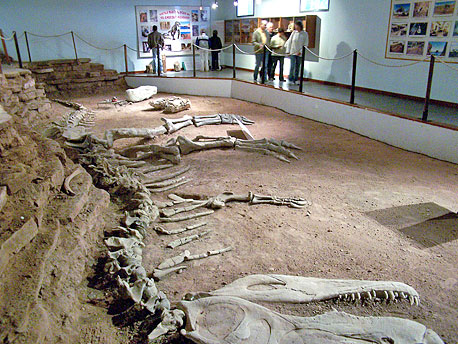
Active excavations — Watch real fossil recovery
work at sites such as the Futalognko quarry (where a major
titanosaur was found) and others like Babilonia. You can see bones
still in the ground and learn extraction and casting techniques.
Preparation lab — Observe how fossils are cleaned, stabilized, and
studied.
On-site museum and exhibits — Original fossils and
high-quality replicas. Highlights include material from
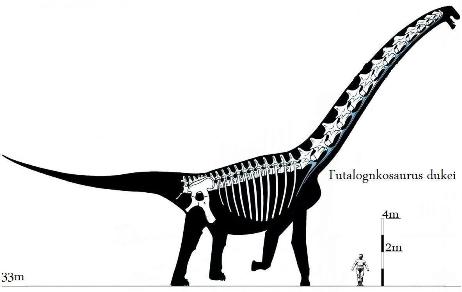
Futalognkosaurus dukei (a giant titanosaur sauropod nicknamed the
“giant chief,” one of the most complete giant dinosaurs known, with
roughly 70% of the skeleton recovered and estimated at 30–38 m
long), Megaraptor (with its impressive ~42 cm claw), Unenlagia (a
bird-like dinosaur), other sauropods such as Andesaurus and
Limaysaurus, pterosaurs (e.g., Argentinadraco), eggs, plant remains,
turtles, and more. Guides often allow visitors to touch a real
dinosaur bone.
Interpretive trails and viewpoints — Walk through
the arid landscape with panoramic views of the deep blue lake
contrasting against red mesetas and bardas. The setting also sits
near Vaca Muerta oil operations, offering a striking present-vs-past
contrast.
Multi-day “geotourism experiences” or volunteer
options (basic dorms in exchange for help with cooking/cleaning)
exist for those who want deeper involvement, though these are more
limited and arranged in advance.
Practical Visiting Tips
Reservations are essential. Contact via WhatsApp (+54 9 299 674
1597). Instagram: @geoparqueproyectodino. Email options include
proyectodino@yahoo.com.ar. English-speaking guides are sometimes
available—ask when booking.
Hours (approximate; confirm when
reserving, as they vary by season):
Autumn/winter: typically
10:00 and 15:00.
Spring/summer: typically 9:00 and 16:00.
The
site operates year-round, though some older sources mention
Tuesday–Sunday.
Entrance fees fluctuate with Argentine
inflation. Recent reported ranges (as of 2024) were roughly AR$2,500
for adults, with family packages, senior/child discounts, and higher
rates for foreigners. Always confirm the current price when booking.
Getting there:
Drive via Ruta Provincial 51 to km 65. The
final stretch is gravel (ripio). Do not rely on the wrong route
(some older advice specifically recommends RP 51).
There is no
regular public bus service. A private vehicle or arranged tour is
best.
A security checkpoint partway along the road requires
government-issued ID (bring your passport).
The area is remote
and arid; plan the roughly 1.5-hour drive from Neuquén carefully.
What to bring and expect:
Strong sun protection (hat,
sunscreen, sunglasses), plenty of water, and snacks or a picnic
lunch—there are no food services on site.
Sturdy closed-toe shoes
suitable for uneven, dusty ground. Layers for wind and temperature
swings.
Little shade exists, so summer visits can be very hot;
milder seasons (spring/fall) are often more comfortable. Winter is
quieter but colder.
Basic facilities overall. The landscape is
stark and beautiful—excellent for photography.
Nearby
combinations: Pair the visit with a stop at Bodega Malma (or other
San Patricio del Chañar wineries) for tastings, or enjoy the lake
shores in summer. Full-day tours from Neuquén sometimes combine the
paleo site with wine.
This is an educational, immersive
experience rather than a polished theme-park attraction. It rewards
curiosity and works well for families (kids are often captivated) as
well as serious enthusiasts. Because it is a working scientific site
with limited infrastructure, conditions and exact logistics can
change—always verify the latest details via the WhatsApp or
Instagram contact before traveling.
Discovery and Early Excavations (2000–2002)
Paleontological
interest intensified in February 2000. A team from the Universidad
Nacional del Comahue (UNCo), led by geologist and paleontologist Jorge
Orlando Calvo (1961–2023), was investigating reported bones near the
water intake of the Mapuche communities Paynemil and Caxipayiñ on the
northern shore of the lake. After an initial dig proved unproductive,
the group surveyed nearby. On 13 February 2000, student Paulina
Carabajal (later a doctor in paleontology) found a small bone fragment
(about 10 cm) near the wheel of a pickup truck. This led quickly to a
well-preserved cervical vertebra roughly 60 cm long of a giant sauropod.
Further work that year recovered additional vertebrae.
Excavations
continued in 2001 (around 45 days), recovering more of the giant
dinosaur and revealing its scale. In 2002, with major funding from the
Fundación Duke (Duke Energy Argentina), support from Chevron, the
Agencia Nacional de Ciencia y Tecnología (ANCyT), UNCo, and others, a
large multi-month campaign (involving Argentine, Brazilian, and Italian
participants) began. What started as the extraction of one giant
sauropod expanded dramatically: the site preserved a nearly complete
Late Cretaceous ecosystem. Mid-2002 saw the formal establishment of the
Centro Paleontológico Lago Barreales (CePaLB) under UNCo to
institutionalize the work, protect the non-renewable fossil resource,
and support research, education, and public access. Proyecto Dino became
the name of the broader research and outreach effort.
Key
Scientific Discoveries
The fossils come mainly from the Portezuelo
Formation (Río Neuquén Subgroup, Neuquén Group), dated to the
Turonian–Coniacian stages of the Late Cretaceous (roughly 90 million
years ago, with ranges cited around 93.5–85.8 Ma). The rocks record
fluvial (river) environments of low to moderate energy in a warm, humid
setting with lakes, lagoons, and varied vegetation. Angiosperms
(flowering plants) appear more common than gymnosperms in the plant
record.
The star find is Futalognkosaurus dukei (“giant chief lizard”
in Mapudungun + honorific for Duke Energy), a titanosaur sauropod
formally described in 2007. It is among the most complete giant
dinosaurs known (estimates of ~70% of the skeleton from multiple
specimens). Length estimates have varied: early figures of 32–34 m were
later revised downward by different researchers (commonly in the 24–30 m
range), with weights often estimated in the tens of tonnes. Notable
features include a very wide pelvis (cited around 2.55 m) and a long
femur (nearly 2 m). Much of the neck, dorsals, and pelvic region was
recovered; most of the tail reportedly remains in the ground. It is the
type of the clade Lognkosauria (with relatives such as Mendozasaurus).
Other notable taxa and remains include:
Megaraptor (and related
megaraptorids), large theropods with impressive claws (often cited over
40 cm).
Unenlagia paynemili, a bird-like unenlagiine theropod named
in 2004 in honor of Mapuche chief Maximino Paynemil; known from partial
postcranial material.
Additional sauropods, ornithopods, other
theropods (including possible carcharodontosaurid teeth), pterosaurs
(e.g., Argentinadraco barrealensis), turtles, crocodyliforms, fish,
dinosaur eggshells, and abundant plant remains (leaves and other
fossils).
Multiple localities exist within and near the center
(Futalognko, Maná, Baal, and others such as Canaán). Collectively, more
than 1,000–1,200 vertebrate fossil pieces and several hundred plant and
invertebrate remains have been recovered, representing an unusually
complete snapshot of a Gondwanan terrestrial ecosystem.
Institutional Development, Public Access, and Challenges
A temporary
museum opened in 2003 within the center’s facilities (while the main
university museum building was planned). The site developed interpretive
trails, an exhibition hall with real bones and replicas (including of
Futalognkosaurus), a preparation laboratory open to visitors, dig sites,
and educational programs for schools, students, and the public. It was
promoted as the only permanent public dinosaur excavation in Argentina
(and unique worldwide for continuous public access to active fieldwork).
Guided tours typically last about two hours and allow visitors to see
excavation, preparation, and the museum; some volunteer or multi-day
“geotourism” experiences have been offered. The center is reached by
road (RP 51; ID is often required at a security checkpoint) and has
operated under UNCo with support from energy companies, government
grants, and donations.
The project faced practical difficulties. In
2013, strong winds damaged buildings and infrastructure, prompting a
temporary closure for maintenance and discussions about possible
relocation due to territorial issues involving the university and the
Mapuche community. Funding has often been limited, and Calvo himself
noted reliance on personal resources and intermittent institutional
support. After Calvo’s death on 10 January 2023, the site continued
under UNCo. Recent reports (2024–2025) confirm guided tours remain
available year-round by reservation (commonly via WhatsApp +54 9 299 674
1597; Instagram @geoparqueproyectodino), with a paleontology technician
and geologist among the team. Low lake levels in late 2025 allowed
additional excavations elsewhere around the lake by other teams,
recovering more fossils (including possible crocodyliform material),
showing the broader area remains productive.
Broader Significance
The Centro Paleontológico Lago Barreales transformed a chance discovery
into a sustained research and outreach institution. It has advanced
understanding of titanosaur anatomy and diversity, megaraptorans,
unenlagiines, and the paleoecology of the Portezuelo Formation while
making active fieldwork accessible. Calvo, the first paleontologist
based long-term in Neuquén and founder of earlier regional museums, saw
the site as a way to link science, education, and tourism. It remains a
distinctive destination in Argentine Patagonia for anyone interested in
dinosaurs and the process of recovering them.