Location: La Pampa Province Map
Area: 99 km2
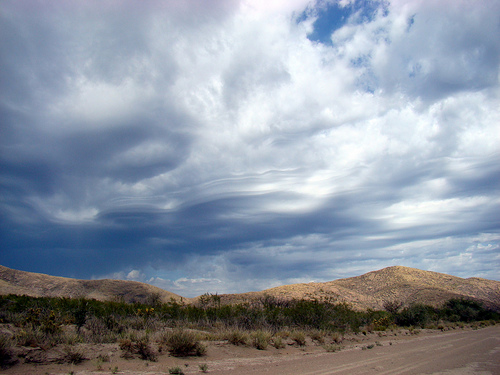
Parque Nacional Lihué Calel (Lihué Calel National Park), in southern-central La Pampa Province, Argentina (about 32,500 ha), protects a distinctive system of low volcanic hills (sierras) that rise to ~590 m (Cerro de la Sociedad Científica Argentina) within the broader Monte de Llanuras y Mesetas ecoregion, with patches of Espinal and saline environments (including Salitral Levalle). These ancient volcanic rocks create a more humid microclimate and water retention than the surrounding arid plains and steppes, supporting exceptional biodiversity: roughly 40–50% of La Pampa’s plant species, plus a mix of Monte, Espinal, and some Patagonian elements. Rainfall is ~400 mm/year (mostly winter), with hot summers (often >40°C) and frequent frosts from April to mid-October. The park is an Important Bird Area (IBA) and protects several threatened or endemic taxa.
Practical Basics
Entry and hours: Free, with
mandatory registration at the Likan Mapu Visitor/Interpretation Center
(a historic 1890 stone building) about 2 km inside the main gate. Open
daily year-round. Typical hours are roughly 8:00–20:00 in summer (around
November–April) and 9:00–17:00/18:00 in winter; confirm current times,
as they can shift with conditions or daylight. All trails require
registration before starting.
Location and access: Main entrance at
RN 152, km 147.5 (approx. 38°01′ S, 65°35′ W). Distances: ~120–123 km
southwest of General Acha, ~35 km from the small town of Puelches, and
~220–230 km from Santa Rosa. Best by private vehicle (stock fuel in
General Acha or Puelches; services inside the park are minimal). RN 152
has degraded sections with potholes—drive carefully and allow extra
time. Some long-distance buses (e.g., toward Neuquén or Bariloche) can
drop passengers at the entrance by prior arrangement; local services
from Santa Rosa or General Acha to Puelches may also stop. Excursions
can be arranged.
Camping: Free sites at Camping El Caldenal (shaded
by caldén trees), with limited plots (around 19) for tents, motorhomes,
and trailers. Facilities include picnic tables, grills/parrillas, wash
basins, bathrooms, and 24-hour hot showers. Electricity is available
only in the service area, not at individual sites. Reservations are
required in advance via the park’s site (pnlihuecalel.com) and
confirmation is checked on arrival. Maximum stay is typically 6 nights.
Vehicles must be left in the parking area. No potable water (bring all
drinking water), no WiFi, weak or no phone signal, no generators, and no
gray-water dump. Bring firewood if needed; there is no shop or
provisions inside the park.
Nearby services: Closest basic options
are in Puelches; fuller hotels, restaurants, and supplies are in General
Acha or Santa Rosa.
Best Time to Visit
The park is open
year-round, but spring (September–November) and autumn (March–May) are
ideal: mild temperatures (roughly 15–25°C), longer daylight for hiking,
fewer extreme conditions, and blooming vegetation. Summers can be very
hot (averages around 24°C, peaks over 40°C) and busier with local
visitors. Winters are cooler (averages near 7°C) with possible frosts.
Annual rainfall is low (~400 mm), but heavy rain can make dirt roads and
trails difficult or impassable. The sierras create a slightly more humid
microclimate than the surrounding plains.
Trails and Activities
Trails range from easy interpretive walks to medium hikes; many can be
done on foot, by bicycle, or (in some cases) by vehicle. Start early,
carry water, and register. Key options include:
Namuncurá Trail
(easy): Starts near the campsite through caldenal and sierra transition.
About 0.7 km round-trip (or shorter segments); ~45 minutes. Serves as
the approach to the main summit.
Cerro Alto / Cerro de la Sociedad
Científica (medium): Continues from Namuncurá to the park’s highest
point (~590 m). Round-trip options of roughly 2–3 km; 2–3 hours.
Excellent panoramic views over the sierras, plains, and distant features
like Salitral Levalle. Watch for flowering cacti among the rocks.
Valle de las Pinturas circuit (low–medium): Highlights the main cultural
attraction—rock art in an alero (shelter) dating to about 1,300 years
ago, with geometric designs and red/black symbols made by
hunter-gatherers. Accessible by vehicle/bike along access roads or on
foot (several-km options). Sub-trails: Pinturas Rupestres (~1.2 km RT,
easy), El Chenque (short circular walk about indigenous burial
practices), and La Casona (ruins of the old Santa María de Lihué Calel
estancia, occupied until the 1960s).
Piedra Movediza (medium, guided
only): Longer route to an elevated section of the main range; requires
an authorized guide. Confirm current distance and arrangements with
rangers.
Camino de las Cortaderas (easy, vehicle/bike): ~18.5 km
through one of the prettier valleys; good chance to see groups of
guanacos (the only population in La Pampa province).
Other options:
Cerro de la Cruz (historical, medium), Salitral Levalle (longer gravel
access, requires prior authorization), and various bike routes.
The Visitor Center offers interpretive exhibits on natural and cultural
history. Activities also include wildlife watching, photography,
birding, and stargazing (low light pollution). Biking is popular on
suitable roads.
Essential Visiting Tips
Water, sun, and gear:
Bring abundant drinking water (none is potable in the park). Use strong
sunscreen, a hat, sunglasses, and sturdy closed shoes. Layer for
temperature swings. Insect repellent is useful. Binoculars and a camera
enhance the experience.
Safety and regulations: Stay on marked
trails. Register for every hike. Watch for snakes, insects, and
arachnids—do not overturn rocks unnecessarily. Cell service and WiFi are
absent or minimal. Notify rangers of your plans. Some longer routes
require guides or prior permission.
Logistics: Stock all food, fuel,
and supplies before entering (no shop). Roads can deteriorate after
rain. The park is relatively quiet and off the main tourist circuit,
which is part of its appeal.
Contact: Park email
lihuecalel@apn.gob.ar; phone around 02952 416213 or WhatsApp numbers
listed on official sites. Check pnlihuecalel.com, argentina.gob.ar
Parques Nacionales pages, or local tourism sites for current trail
status, camping availability, and authorized guides.
Flora
More than 500 native plant species are
recorded. Vegetation is predominantly xerophytic (drought-adapted), with
adaptations such as small resinous leaves, reduced stomata, north-south
leaf orientation (to minimize midday sun), deep or horizontal roots,
water storage in stems, and reviviscence in some ferns. Dominant
communities include jarilla shrublands, caldén woodlands, grasslands,
rocky sierras with cacti and ferns, and saline flats.
Key vegetation
units and species include:
Jarillales (Monte shrublands):
Dominated by three Larrea species (jarillas). Larrea divaricata (jarilla
hembra) is widespread; L. cuneifolia (jarilla macho) favors hotter,
rockier sites; L. nitida (jarilla crespa) prefers cooler, moister lower
areas. Leaves are small, resinous, and oriented to reduce water loss and
frost damage. Accompanied by alpataco (Prosopis/Neltuma flexuosa var.
depressa), piquillín (Condalia microphylla), chañar (Geoffroea
decorticans), molle (Schinus spp.), chilladora (Chuquiraga erinacea),
and various grasses.
Caldén woodlands (Espinal ingressions): Small
stands of caldén (Prosopis/Neltuma caldenia), an emblematic La Pampa
tree valued for drought resistance and wood. Often with sombra de toro
(Jodina rhombifolia, a hemi-parasite) and alpatacos. These form
“islands” of Espinal vegetation within the Monte matrix; many have been
affected by fires and are recovering as shrubbier forms. Caldén fruits
attract flocks of burrowing parrots.
Sierras and inter-sierra
valleys: Highest diversity due to microclimates, slope exposure,
altitude, and moisture. Rocky areas host cacti such as Cylindropuntia
tunicata (puelchana; spines can appear hair-like), Opuntia spp.
(including chupasangre O. penicilligera), Gymnocalycium gibbosum,
Parodia/Wigginsia spp., and others (some globose or mat-forming). Ferns
grow in humid crevices, including Cheilanthes buchtienii, C. myriophylla
(notable for reviviscence—appearing dry then rehydrating), Pellaea
ternifolia, Adiantum thalictrides (culandrillo), and Blechnum
australe—several restricted to these sierras within La Pampa. Epiphytes
such as air plants (claveles del aire) and lichens (yellow, orange,
blackish circular patterns) colonize rocks. Seasonal streams support
additional moisture-loving plants.
Endemics (strict or near-strict to
the sierras): Gaillardia cabrerae (margarita pampeana; small
bluish-green shrub, yellow flower heads, blooms roughly September–March;
declared the provincial flower of La Pampa; drought- and
heat-resistant), Adesmia lihuelensis (rare herbaceous legume of rocky
mid-elevations), and Grindelia covasii (Asteraceae; forms patches on
cooler, higher rocky slopes linked to water dynamics).
Other notable
plants: Grasses and herbs (including various Stipa/Jarava, Aristida,
etc.), pichanilla (Senna aphylla; leafless green stems for
photosynthesis), and saline-adapted species in the Salitral Levalle and
other flats. Fires have been recurrent; recovery and exotic invasion
(e.g., some thistles, Diplotaxis) are ongoing management issues.
The sierras’ water retention and topography drive the diversity contrast
with the surrounding arid Monte.
Fauna
The park supports a
characteristic Monte/Espinal fauna enriched by the sierras’ habitats and
water. Vertebrate counts (SIB data ~2019) include ~183 bird species, 41
mammals, 23 reptiles, and 4 amphibians. Many are typical of open
shrublands and grasslands; some are threatened, persecuted, or rare in
the national protected-area system. Invasive species include European
wild boar (Sus scrofa) and red deer (Cervus elaphus).
Mammals:
Guanaco (Lama guanicoe; common herbivore, visible on plains and hills),
Patagonian mara (Dolichotis patagonum; fast, rabbit-like rodent of open
areas), plains viscacha (Lagostomus maximus; colonial burrower, often
near campsites), cuises/cavies (Microcavia australis, Galea
musteloides), gray/pampas fox (Lycalopex gymnocercus; omnivore,
sometimes approaches people), puma (Puma concolor; top predator),
Geoffroy’s cat (Leopardus geoffroyi), pampas cat (Leopardus pajeros),
yaguarundi (Herpailurus yagouaroundi), lesser grison/huroncito (Galictis
cuja), big hairy armadillo (Chaetophractus villosus), and the secretive
lesser fairy armadillo/pichiciego menor (Chlamyphorus truncatus;
threatened). Tuco-tucos and other burrowers use underground refuges
against heat. Camera traps and observations regularly document these,
including occasional puma sightings.
Birds (highest vertebrate
diversity; 150–180+ recorded depending on inventory; IBA status):
Greater rhea/ñandú (Rhea americana; Near Threatened), elegant crested
tinamou/martineta (Eudromia elegans), other tinamous, crested
gallito/gallito copetón (Rhinocrypta lanceolata; park emblem—robust,
olive-gray with crest, reddish flanks, runs through clearings and sings
from shrubs), yellow cardinal (Gubernatrix cristata; threatened by
trapping), crowned solitary eagle/águila coronada (Buteogallus
coronatus; Endangered), peregrine falcon, various caracaras (carancho,
chimango), hawks, vultures, burrowing parrot (Cyanoliseus patagonus;
attracted to caldén fruits), other parrots/parakeets, furnariids (e.g.,
hornero, cacholotes, canasteros), tyrant flycatchers, mockingbirds,
thrushes, finches (monteritas, yales, etc.), and occasional Andean
condor. Many are shrubland specialists; seasonal movements occur. The
park protects several high-conservation-value species.
Reptiles and
amphibians: Red tegu/lagarto colorado (Salvator rufescens), other teiids
(Teius spp.), yarará pit vipers (e.g., Bothrops diporus or related;
venomous—caution around rocks), Patagonian/Chaco tortoise (Chelonoidis
chilensis; threatened; sex determination temperature-dependent), various
lizards (including salt-flat specialists), and a few amphibians (e.g.,
Pleurodema nebulosum).
Other: Notable arthropods include large
tarantulas (Grammostola spp.), orb-weaving spiders, and the odoriferous
chinchimolle (Agathemera).
The park’s combination of sierras (refuge,
water, diversity), Monte shrublands, Espinal woodlands, and saline
wetlands creates a biodiversity oasis in an otherwise harsh landscape.
Conservation focuses on threatened species monitoring (guanacos, rheas,
yellow cardinals, tortoises, etc.), fire management, invasive control,
and cultural values (including rock art). Spring and early autumn are
ideal visiting periods for flowering plants and milder temperatures.
Official sources include Argentina’s Administración de Parques
Nacionales and the Sistema de Información de Biodiversidad (SIB).