Location: Mani, Laconia Map
Cost: €15
Open: Nov- Mar 8:30am- 3pm daily
Apr- Oct 8:30am- 5:30pm
The Pyrgos Dirou Caves, commonly known as the Diros Caves or Vlychada Caves, are a stunning natural wonder located in the rugged Mani Peninsula of the Peloponnese region in southern Greece. These caves form part of an extensive underground river system, offering visitors a captivating blend of geological beauty, prehistoric significance, and adventurous exploration. Nestled near the village of Pyrgos Dirou, the caves have been a popular destination for decades, drawing travelers with their mesmerizing stalactites, stalagmites, and crystal-clear subterranean waters. Often described as "nature's underground cathedral," they provide a journey through time, revealing layers of Earth's history etched into limestone formations.
By Car (Recommended Option)
Renting a car provides the most
flexibility, as public transport in this rural area is limited. The
roads are generally well-maintained but can be narrow and winding, with
beautiful coastal scenery.
From Athens: The drive is
approximately 4 hours (around 300 km). Head southwest via the E94
highway through Corinth, then continue toward Tripoli and Kalamata. From
Kalamata, proceed south toward Areopoli, and then follow signs to Pyrgos
Dirou and the caves.
From Kalamata: It's about 1.5–2 hours (95 km).
Drive south toward Areopoli, then continue 20 km further to Pyrgos
Dirou.
From other points: If coming from Gythio (near Sparta), it's
roughly 1 hour south. Use GPS or apps like Google Maps for real-time
navigation, as signage is clear but the final stretch is rural.
By Public Transport
Options are sparse, so plan ahead and confirm
schedules, as they can change seasonally.
From Athens: Take a
KTEL bus from Kifissos Bus Station to Areopoli (1–2 departures daily,
about 4–5 hours, €25–30). From Areopoli, hire a taxi for the remaining
20 km (20 minutes, €20–30). No direct buses run to the caves themselves.
From Kalamata: KTEL buses go to Areopoli (limited frequency), then taxi
as above. Total time: 2–3 hours.
Check the KTEL Lakonias website
(ktel-lakonias.gr) for current timetables and fares.
By Air
The nearest airport is Kalamata International Airport (KLX), with
flights from major European cities and Athens. From there:
Rent a
car at the airport for the 95 km drive (1.5–2 hours).
Alternatively,
take a taxi directly (€100–150) or a bus to Kalamata city center, then
transfer to Areopoli.
Organized Tours
If you prefer not to
drive, join a guided day trip or multi-day tour from Athens, Kalamata,
or nearby areas. These often include transport, cave entry, and
commentary on the region's history.
Visitor Tips
Arrival and
Entry: Drive to the site, buy tickets (€15 per person) at the booth, and
park nearby. The entrance is right by a small beach.
Best Time:
Arrive early (opens around 9 AM; check diroscave.gr for hours),
especially in summer to beat crowds and heat. Off-season hours may be
shorter.
What to Expect: The tour lasts 30–40 minutes, mostly by boat
on an underground lake (wear non-slip shoes and a light jacket—the cave
is a constant 16–18°C/60–65°F). It's family-friendly but may not suit
those with severe claustrophobia.
Other Advice: Combine with nearby
attractions like Areopoli or beaches. Fuel up in larger towns, as
services are limited in Pyrgos Dirou.
The Diros Caves hold immense archaeological value, having been inhabited since the Neolithic era (around 6000–3000 BCE), making them one of the oldest known human settlements in Greece. Excavations have uncovered pottery shards, bone tools, and even ancient garbage, providing insights into prehistoric life. Fossils of extinct animals such as lions, hyenas, panthers, deer, and martens have also been discovered, painting a picture of a diverse ecosystem in the Paleolithic period. The Alepotrypa Cave, one of the three main caves in the complex (alongside Glyfada/Vlychada and Katafygi), served as a burial site and shelter for early humans. Artifacts from these finds are displayed at the nearby Neolithic Museum of Diros, which offers context on the caves' role in human history. The broader area around Pyrgos Dirou has its own storied past, including battles during the Greek War of Independence in 1821–1829, such as the Battle of Vergas and a clash with Egyptian forces in 1826.
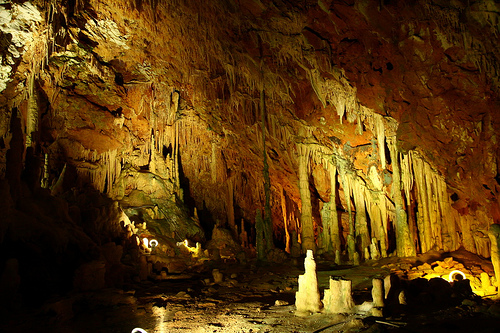
Geologically, the caves are a marvel formed over hundreds of thousands of years through the erosive action of underground rivers on limestone bedrock. The total explored length spans about 14 km, though only a fraction is open to the public. The flooded sections create a labyrinth of chambers filled with turquoise waters, where stalactites hang from ceilings like intricate chandeliers and stalagmites rise from the depths in fantastical shapes. Unique formations include drapery-like curtains of rock, columns where stalactites and stalagmites have merged, and reflective pools that mirror the overhead wonders. The water temperature hovers around a cool 12–14°C (54–57°F), and the air inside drops noticeably upon entry, adding to the eerie, otherworldly atmosphere. The caves' subterranean waterways connect to the sea, contributing to their crystal-clear quality and subtle salinity.
Tours are the only way to explore the caves, and they are guided to ensure safety and preservation. The main attraction is the boat tour through the Glyfada (Vlychada) Cave, lasting about 25–40 minutes and covering roughly 1,500 meters—1,300 meters by boat and 300 meters on foot. Visitors board small punts poled by guides, gliding silently through narrow passages where you might need to duck under low-hanging stalactites. The experience is often called magical and atmospheric, with subtle lighting highlighting the geological features and knowledgeable guides sharing insights on the caves' formation and history. It's family-friendly, suitable for children (even toddlers, according to some reviews), though not ideal for those with claustrophobia due to the enclosed spaces. Operating hours vary seasonally: 8:30 AM–3:30 PM in winter and until 6:30 PM in summer. Admission is €12 for adults and €8 reduced, with the Neolithic Museum included or available separately. Advance tickets aren't always necessary, but queues can form in peak season.
Beyond the caves, explore the Mani Peninsula's tower houses, hiking trails, and beaches like Dirou Bay for swimming. Combine a visit with a trip to Areopoli for its historic square or the Neolithic Museum for deeper archaeological context. For the best experience, visit in shoulder seasons (spring or fall) to avoid crowds and enjoy milder weather. Wear comfortable shoes for the walking portion, and bring a light jacket for the chill. The caves are a testament to Greece's hidden gems, blending adventure, education, and natural splendor into an unforgettable outing.