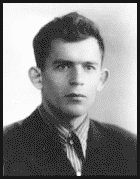
Nicolai Thibeaux-Brignolle was one of the nine hikers who perished in the Dyatlov Pass Incident in February 1959, a mysterious tragedy in the Ural Mountains that remains one of the most enigmatic events in modern history. Known for his technical skills, cheerful personality, and distinctive heritage, Thibeaux-Brignolle was a valued member of Igor Dyatlov’s expedition team.
Background and Early Life
Nicolai Vladimirovich Thibeaux-Brignolle was born on July 5, 1935,
in Chelyabinsk, Soviet Union. His family background was unusual for
the time, blending French and Russian heritage. His father, Vladimir
Thibeaux-Brignolle, was a descendant of French immigrants who had
settled in Russia generations earlier, and his mother was Russian.
This mixed heritage gave Nicolai a distinctive surname, which stood
out in the predominantly Slavic Soviet Union. Tragically, his father
was arrested and executed during Stalin’s Great Purge in the late
1930s, a fate shared by many intellectuals and perceived enemies of
the state. Nicolai, still a young child, grew up with his mother and
siblings under the shadow of this loss, which likely instilled
resilience and adaptability.
Raised in Chelyabinsk, an
industrial city in the Ural region, Nicolai showed an early aptitude
for technical subjects. He enrolled at the Ural Polytechnical
Institute in Sverdlovsk (now Yekaterinburg), where he studied civil
engineering, specializing in construction. By 1959, he had graduated
and was working as an engineer, a testament to his intelligence and
determination. At the time of the expedition, Nicolai was 23 years
old, slightly older than some of his fellow hikers, and was known
for his professional competence and enthusiasm for outdoor
activities.
Nicolai was an active member of the institute’s
hiking and skiing club, where he met Igor Dyatlov and other members
of the expedition. His experience in the Ural Mountains, combined
with his physical fitness, made him a natural fit for the
challenging Category III trek to Otorten Mountain. His technical
background also meant he could contribute to the group’s logistical
needs, such as maintaining equipment or assessing terrain.
Personality and Relationships
Nicolai Thibeaux-Brignolle was described by friends and fellow
hikers as cheerful, dependable, and intellectually curious. He had a
reputation for being optimistic, often lightening the mood with his
humor and positive outlook. Diaries and accounts from the expedition
highlight his role as a unifying figure, someone who fostered
camaraderie through storytelling and practical support. His
nickname, “Kolya,” reflected the affection his peers felt for him, a
common practice in Russian culture for close friends.
Physically, Nicolai was of average build but strong and agile,
well-suited for the demands of backcountry skiing and hiking. He was
known for his meticulous nature, particularly when it came to
equipment and safety, likely a product of his engineering training.
Photos from the expedition show him smiling and engaged, often with
a camera in hand, as he was an avid photographer. His images,
recovered from the group’s cameras, provide critical insights into
the expedition’s early days, capturing moments of joy and teamwork.
Nicolai was particularly close to Igor Dyatlov, the group’s
leader, and shared a professional kinship with Alexander Kolevatov,
another engineer in the group. His interactions with the two women,
Zinaida Kolmogorova and Lyudmila Dubinina, were marked by respect
and friendliness, as seen in the group’s playful exchanges
documented in their diaries. Nicolai’s ability to connect with
diverse personalities made him a vital part of the group’s dynamic.
Role in the 1959 Expedition
Nicolai joined the Dyatlov group’s expedition, which began on
January 25, 1959, with the goal of skiing 300 kilometers (186 miles)
to Otorten Mountain in the northern Ural Mountains. The team
consisted of ten members initially, including eight men (Igor
Dyatlov, Yuri Yudin, Yuri Doroshenko, Alexander Kolevatov, Georgy
Krivonischenko, Rustem Slobodin, Nicolai Thibeaux-Brignolle, and
Semyon Zolotaryov) and two women (Zinaida Kolmogorova and Lyudmila
Dubinina). Yuri Yudin turned back on January 28 due to illness,
leaving nine hikers to continue.
As an engineer, Nicolai
likely contributed to technical tasks, such as setting up the tent,
maintaining the group’s stove, or assessing the stability of
snow-covered slopes. His photography skills were also valuable, as
the group documented their journey extensively through photos and
diaries. Nicolai’s images capture the team’s progress through snowy
forests, their campsites, and candid moments of rest and laughter,
suggesting he was actively engaged in recording the expedition’s
story.
On February 1, 1959, the group set up camp on the
slopes of Kholat Syakhl (“Dead Mountain”), an exposed location that
has since been debated for its vulnerability to weather and
potential avalanches. Nicolai, with his engineering background,
would have been involved in ensuring the tent was properly secured,
a task the group executed with precision, as evidenced by the tent’s
condition when found by rescuers. That night, a catastrophic event
occurred, leading to the deaths of all nine hikers.
Circumstances of His Death
When the group failed to return as scheduled, a search and rescue
operation began in mid-February 1959. On February 26, rescuers found
the group’s tent, torn open from the inside, with most of their
belongings, including shoes and warm clothing, left behind.
Footprints led to a cedar tree 1.5 kilometers away, where two bodies
(Yuri Doroshenko and Georgy Krivonischenko) were found, partially
clothed and near a small fire. Over the following weeks, additional
bodies were discovered, revealing a grim and puzzling scene.
Nicolai Thibeaux-Brignolle’s body was found on May 4, 1959, in a
ravine about 75 meters from the cedar tree, alongside Alexander
Kolevatov, Lyudmila Dubinina, and Semyon Zolotaryov. The ravine
group, as they are often called, suffered the most severe injuries.
Nicolai had sustained a massive skull fracture, described in the
autopsy as a “depressed fracture of the skull base” measuring 6x8
cm, which caused fatal brain trauma. The injury was likened to the
impact of a high-speed collision, yet there were no external wounds
or bruising on his scalp, suggesting the force was applied with
precision or through a mechanism that did not break the skin.
Nicolai was found lying face-up, partially covered by snow, and
wearing more clothing than the cedar tree group, including a
sweater, pants, and socks, but no shoes. His watch, stopped at 8:45,
has been a point of interest, though it’s unclear whether it
indicates the time of death or when the watch malfunctioned due to
cold or damage. The severity of his injuries, combined with the lack
of external trauma, has fueled speculation about the cause of the
incident, from avalanches to military tests or other unnatural
forces.
The official Soviet investigation concluded that the
hikers died due to a “compelling natural force,” but the vague
explanation left many questions unanswered. Nicolai’s injuries, in
particular, have been central to debates about the incident. A 2021
study using computer modeling supported the avalanche theory,
suggesting a small slab avalanche could have caused the group to
flee the tent, with Nicolai and the ravine group falling into the
ravine during their escape, leading to their traumatic injuries.
However, skeptics argue that the skull fracture’s precision and the
absence of avalanche debris in 1959 challenge this explanation.
Theories and Speculation
Nicolai’s death, with its specific and severe injury, has been a
focal point for theories about the Dyatlov Pass Incident. Some key
hypotheses include:
Avalanche: The 2020 Russian investigation
and 2021 studies propose a slab avalanche caused the group to cut
open the tent and flee. Nicolai’s skull fracture could have resulted
from falling into the ravine or being struck by compacted snow.
Critics note the slope’s low angle (15–20 degrees) and the lack of
avalanche traces.
Military Involvement: The precision of
Nicolai’s injury, likened to a blunt force trauma, has led to
theories of a military test, such as a low-yield explosion or
shockwave from a secret weapon. Trace radiation on some clothing,
including Nicolai’s, supports this idea, though it could be
explained by his work in engineering or environmental factors.
Infrasound or Panic: Some propose that infrasound from wind patterns
caused disorientation, leading the group to flee irrationally.
Nicolai’s injury could have occurred during a chaotic escape, though
this theory doesn’t fully explain the trauma.
Foul Play or
Paranormal: Less credible theories suggest an attack by locals,
Soviet agents, or even extraterrestrial forces, often citing the
strange condition of the bodies and reports of orange lights in the
sky. These lack substantive evidence.
Nicolai’s stopped watch and
the radiation traces on his clothing have been particularly
intriguing for researchers, though no definitive conclusions have
been drawn. His engineering expertise has also prompted speculation
that he might have noticed or documented something unusual before
the incident, but no such evidence has surfaced.
Legacy and Impact
Nicolai Thibeaux-Brignolle is remembered as a bright,
kind-hearted young man whose life was cut short in a tragedy that
continues to captivate the world. His photographs, recovered from
the expedition, are among the most poignant artifacts of the Dyatlov
Pass Incident, offering a glimpse into the group’s final days. The
images show Nicolai and his companions in moments of joy,
underscoring the human toll of the mystery.
The Dyatlov
Foundation, established by survivors’ families and the Ural
Polytechnical Institute, preserves Nicolai’s memory alongside his
teammates’. His distinctive name and heritage have made him a
memorable figure in the narrative, often highlighted in books,
documentaries, and podcasts about the incident. The 2013 film
Devil’s Pass, while fictional, draws loosely on the group’s story,
with characters inspired by hikers like Nicolai.
Nicolai’s
skull fracture remains a key piece of evidence in ongoing
investigations. Advances in forensic science and computer modeling
continue to revisit his injuries, seeking to reconcile the physical
evidence with the group’s behavior. The 2019 Russian reopening of
the case and the 2020 conclusion favoring an avalanche have kept
Nicolai’s story in the public eye, though many, including
researchers and the Dyatlov Foundation, remain unsatisfied with the
explanation.
Personal Details and Anecdotes
Photography Passion: Nicolai’s love for photography was evident in
the expedition’s photos, many of which he likely took. His camera,
recovered from the tent, contained images that have become iconic in
the Dyatlov narrative.
Engineering Mindset: As a civil engineer,
Nicolai was detail-oriented, likely contributing to tasks like tent
setup or equipment maintenance. His skills complemented Dyatlov’s
leadership and Kolevatov’s technical expertise.
Cultural
Heritage: Nicolai’s French-Russian background was a point of pride,
and he reportedly enjoyed sharing stories about his family’s
history, adding a unique perspective to the group.
Physical
Resilience: Despite the harsh conditions, Nicolai showed no signs of
faltering before the incident, as seen in photos of him skiing and
smiling in deep snow.