Ulitsa Moskvina 12
Tel. +7 (862) 262 5939
Service: weekdays 8am, 5pm
weekends: 6:30am, 8:30am, 5pm
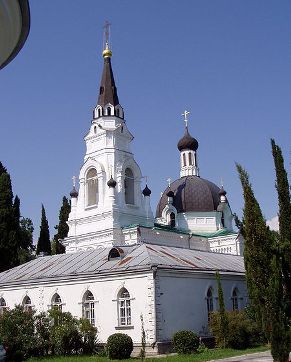
The Cathedral of St. Michael the Archangel, often referred to as the Michael Archangel Cathedral, is a significant Russian Orthodox church located in Sochi, Russia. It holds the distinction of being the oldest Orthodox church in the city and the broader Black Sea region of the former Russian Empire. This modest yet historically rich structure serves as a spiritual landmark, commemorating key events in Russian history and embodying traditional Orthodox architecture.
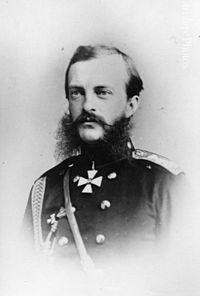
The cathedral's origins trace back to a decree issued by Grand Duke
Michael Nikolaevich of Russia in the aftermath of the Caucasian War,
which concluded victoriously for the Russian Empire in 1864. The church
was intended as a tribute to this event, with Archangel Michael
symbolizing spiritual protection for the military feats. Construction
began on the site of the former Navaginsky fortification in what was
then Dakhovsky Posad (now part of Sochi). The foundation stone was laid
on May 26, 1874, under the supervision of architect Alexander S.
Kaminsky.
Funding for the project came from prominent figures,
starting with Black Sea landowner N. N. Mamontov, and later supported by
philanthropist Savva Mamontov and Count Felix Felixovich
Sumarokov-Elston. The stone walls and refectory, topped with an iron
roof, were completed within four years, but delays extended the overall
timeline. The building was finally finished on October 25, 1890, and
solemnly consecrated on September 24, 1891.
By the early 20th
century, the cathedral had evolved into a vibrant spiritual center,
encompassing a parochial school, a parochial house with outbuildings, a
chapel, and a garden-park complex with a plant nursery—collectively
known as the Church Quarter. However, the Soviet era brought challenges:
a campaign to close the church began in 1929, leading to its shutdown by
1931 and repurposing as a warehouse until the onset of World War II. It
was returned to the Orthodox community in 1944, though without
compensation for lost property.
Post-war reconstruction altered some
of Kaminsky's original design elements. The cathedral was long neglected
under Soviet rule but was officially designated a state-protected
monument of religious architecture in 1981. A major restoration effort
from 1992 to 1994, led by Sochi architect F. I. Afuksenidi, restored it
to its historical appearance. In the 1990s, additional structures were
added, including a domed baptistery (the Iberian Icon of the Mother of
God Baptismal Church) and a Sunday school named after Saints Cyril and
Methodius, which was founded on December 19, 1995. Today, it functions
as the primary temple for Sochi's Central District and the city as a
whole.
The cathedral exemplifies traditional Russian Orthodox design, shaped
in the form of a four-pointed cross with an elongated facade branch. The
cross branches are covered with vaults, and the central intersection is
topped by a prominent dome, symbolizing the heavens in Orthodox
symbolism. The structure measures 25.6 meters in length, 17.1 meters in
width, and reaches a height of 34 meters, including the cross atop the
bell tower.
The exterior features modest yet elegant detailing
typical of late 19th-century Russian ecclesiastical architecture, with
white stone walls that give it a clean, timeless appearance. The bell
tower and dome add vertical emphasis, making it a visible landmark in
its urban setting. During the 1990s restoration, both the interior and
exterior were meticulously reconstructed to align with Kaminsky's
original vision, reversing Soviet-era modifications. The adjacent
baptistery is domed, enhancing the complex's cohesive Orthodox
aesthetic, while the Sunday school building complements the main
structure without overpowering it.
While specific details on the interior decor are limited in available
sources, the cathedral's restoration in the 1990s focused on reviving
its historical elements, likely including traditional Orthodox
iconography, frescoes, and altars dedicated to Archangel Michael. The
space is designed for worship, with a refectory area that would have
historically supported communal activities. The overall interior
atmosphere is described as peaceful and reverent, contrasting with the
bustling city outside.
The temple complex includes the aforementioned
baptismal church and Sunday school, forming an integrated spiritual and
educational hub. Historically, the surrounding Church Quarter featured
gardens and a nursery, contributing to a serene environment with
greenery that persists today.
As of the current date (November 30, 2025), the cathedral remains an
active place of worship, holding services on weekdays at 8:00 AM and
5:00 PM, and on weekends at 6:30 AM, 8:30 AM, and 5:00 PM. It attracts
visitors for its historical value, architectural beauty, and tranquil
grounds, which provide a respite from central Sochi's activity. Its
significance extends beyond religion, as it represents the integration
of Russian imperial history with the region's development, particularly
post-Caucasian War settlement.
The cathedral's location near Sochi's
marina makes it accessible for tourists, and it is often included in
walking tours of the city's religious and architectural sites.
Coordinates: 43°34′46″N 39°43′20″E, at Ulitsa Moskvina 12. It continues
to stand as a testament to resilience, having survived closure,
repurposing, and restoration, while serving as a cultural monument under
state protection.