Open: 8am- 5pm
Entrance Fee: 16 Rubles
The Aksai Military History Museum (State Budgetary Cultural Institution of the Rostov Region "Aksai Military History Museum") is a large museum complex in the city of Aksai in the Rostov Region, Russia, dedicated to military history, Cossack culture, and regional heritage. The museum is located in the picturesque Mukhina Balka nature reserve, on the grounds of a former Soviet military command post. It is a branch of the Victory Museum in Moscow and actively participates in patriotic projects such as "Territory of Victory" and "Without Statute of Limitations." The museum attracts visitors with a variety of exhibits, combining underground structures, open-air military equipment displays, and historical reenactments. Founded in 1948, the collection began to take shape earlier, and the official opening of the modern complex took place in 1998. Today, the museum's collection contains over 70,000 exhibits related to archeology, paleontology, weapons, and art.
Founding and Early Years (1948–1980s): From School Museum to People's
Museum
The museum traces its origins to October 28, 1948, when
history teacher Alexander Nikolaevich Skripov (later a member of the
Union of Writers of the USSR) opened the first exhibition at Aksay
Secondary School No. 1. It began as a modest school local-history
(kraevedchesky) museum. The earliest exhibits were archaeological
artifacts collected by students and Skripov during expeditions to the
Kobyakovo hillfort—one of the oldest and largest ancient settlements in
the district. Local residents from the old Cossack stanitsa of Aksay
contributed generously: household items, antique coins and banknotes,
weapons, old documents and photographs, ceramics, glassware, wooden
objects, icons, and awards. These donations formed the core of the
collections.
Teachers and students actively expanded the museum
through new exhibitions and research, particularly on the Great
Patriotic War and the liberation of Aksay from Nazi occupation. This
work highlighted local soldiers, liberators, and Heroes of the Soviet
Union from the area. In 1984, under local historian and educator
Vladimir Dmitrievich Gladchenko, the school museum earned the
prestigious title of “People’s Museum” in recognition of its
community-driven growth and educational impact.
On March 30, 1987, it
became a branch of the Starocherkassky Historical-Architectural
Museum-Reserve. By October 1992, it gained independence as the “Museum
of the History of the City of Aksay.” Since 2004, it has operated as the
State Budgetary Cultural Institution of Rostov Oblast “Aksay
Military-Historical Museum” (GBUK RO), reflecting its expanded focus on
military and strategic history tied to the region’s role in Russia’s
defenses.
Current Structure: Four Interconnected Museum Complexes
Today the museum comprises four distinct complexes, each dedicated to a
different historical period. These sites are scattered across Aksay and
its surroundings, blending indoor exhibitions with outdoor and
underground elements. The museum also serves as a public branch of the
central Museum of Victory in Moscow and emphasizes patriotic education
through lectures, guided tours, events, and collaboration with local
schools and organizations.
“Suvorov’s House” (Kuren of the
Wealthy Cossack Rudukhin, early 18th century)
This is the oldest
surviving building in Aksay and houses the museum’s administration. The
two-story Cossack-style kuren (stone lower floor, wooden upper floor
with columned northern facade) was where Russian military commander
Alexander Suvorov spent the winter of 1783–1784. It is one of six
architectural monuments under the museum’s care.
Customs Outpost /
Customs Checkpoint (mid-18th century, part of the Dmitry Rostovsky
fortress complex)
Located at the mouth of the Maly Log ravine (now
Mukhina Balka), this is an underground fortification with stone rooms
and passages totaling about 350 m². The exhibition (opened in 1991 and
re-registered in 2004) covers the history of customs service on the
Lower Don in the second half of the 18th century. Displays include
period weapons (cold and firearms), maps, documents, household items of
customs officers, and information on the site’s ecology and
nature-reserve status. The complex features extensive underground
tunnels and halls, some linked to the broader Aksay catacombs/dungeons.
Postal Station of the 19th Century
This architectural complex
recreates a typical 19th-century postal station with four buildings
(including the postmaster’s house, inn, well, carriage shed, and
gazebo). It sits near a former ford and bridge across the Don River.
Exhibitions detail Cossack postal operations, horse-drawn transport
(plyoshkas, sleighs, carriages, britchkas from the late 19th–early 20th
centuries), and Cossack daily life (furniture, icons, utensils, tools).
Prominent Russian figures who stopped here include Alexander Pushkin
(visits in 1820 and 1829), Mikhail Lermontov, Leo Tolstoy, Pyotr
Tchaikovsky, Decembrists, and tsars. The site hosts an annual Pushkin
Festival on the first Saturday in June. It has been open to visitors
since 1992 and is a protected cultural heritage object.
Military-Historical Complex named after N.D. Gulaev (opened 1998)
Located in the Mukhina Balka nature reserve (Maly Log), this is the
youngest and most visited complex. It centers on a deep underground
command post of the North Caucasian Military District, built in the
1960s as a two-level nuclear-war bunker with labyrinthine corridors,
hermetic doors, rooms, and large halls. Abandoned during perestroika, it
was cleared and museumified through community efforts led by V.D.
Gladchenko and WWII veteran Pyotr Andreyevich Rybalkin (deputy
director). The first “Bomb Shelter” exhibition opened quickly, followed
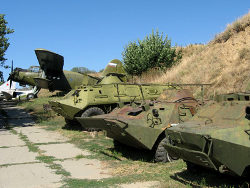
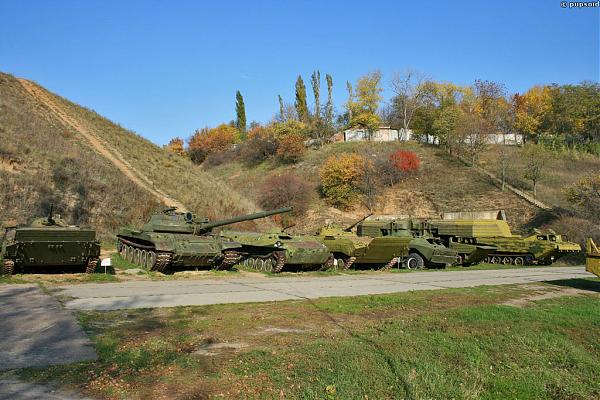
by a decade of expansion.Outdoors, nearly 50 units of demilitarized
Soviet and Russian 20th-century military equipment are displayed
(updated annually), including tanks (e.g., T-72), armored personnel
carriers, infantry fighting vehicles (BMP-2), aircraft (MiG-23 fighter,
An-2 transport), artillery and anti-aircraft guns (including a 1909
howitzer-gun and ZIS-3 anti-tank guns), rocket models, floating
engineering vehicles (PTS-M), and armored tractors. Exhibits cover
conflicts from the Russo-Japanese War era through WWII (“Infantry of the
Red Army and the Wehrmacht” with small arms and uniforms) to later
operations in Chechnya. The complex is named after local hero Nikolai
Dmitrievich Gulaev (twice Hero of the Soviet Union, top Soviet fighter
ace, lieutenant general of aviation, born in Aksay). It aims to become
one of southern Russia’s largest displays of domestic military hardware.
Significance and Activities
The museum’s evolution from a
grassroots school project to a multifaceted military-historical
institution reflects Aksay’s strategic location at the confluence of the
Aksay and Don rivers—as a Cossack, trade, postal, customs, and military
hub. It preserves not only artifacts but also living memory through
research, publications, and events. All complexes operate daily from
9:00 to 17:00 without days off.
The museum consists of three main complexes, each representing a
distinct historical period and type of exhibition. They are located in
different parts of Aksay but share a common theme.
Military
History Complex (120 Gulaeva Street): This is the heart of the museum,
located on the site of a former underground command post of the North
Caucasus Military District (NCMD), built in the 1960s during the Cold
War. The complex includes a two-story underground bunker with a network
of corridors, halls, and rooms for command shelters. Above ground is an
open area with an exhibition of military equipment. This unique
combination of underground labyrinths and above-ground exhibits allows
visitors to descend into the bunker and examine the equipment.
18th-Century Customs Outpost (Mouth of Malaya Logaya Balka): An earthen
fortress built in the second half of the 18th century as part of Dmitry
Rostovsky's fortress. The complex includes underground stone structures,
brick walls up to 10 meters thick, ventilation ducts, and casemates.
This authentic site is associated with the customs service on the Don
during the Russo-Turkish Wars. The estate of the Don nobles Bobrikov and
Leonov has been recreated here, complete with underground cellars and
passageways.
19th-century post station (3 Budyonnovsky Spusk
Street): A reconstruction of a typical post station with a complex of
buildings, including a station house, stables, and a coachman's yard.
The exhibition immerses visitors in the atmosphere of 19th-century
transport and everyday life, highlighting the role of the postal service
in the region.
The museum also includes the Aksay Dungeons—a
network of underground structures known since the time of Peter the
Great, with catacombs, tunnels, and caves. Some of these structures are
open to tourists as an exhibition, including the underground
headquarters and customs dungeons.
The museum's exhibits cover a wide range of topics, from ancient
history to the present day. Main Sections:
Open-Air Military
Equipment Exhibition: The only collection of Soviet and Russian military
equipment in the Rostov Region, including tanks (T-62, T-72), armored
personnel carriers, artillery pieces, anti-aircraft guns, aircraft
(MiG-21, Su-25), missiles, and watercraft. Visitors can touch, climb,
and sometimes even go inside the exhibits—a favorite among children.
About 80% of the exhibits are from the Soviet era after WWII, but there
are also earlier examples.
"Weapons of Victory": Examples of small
arms, uniforms, and personal belongings of WWII veterans.
"Customs
Service on the Don in the 18th Century": Customs artifacts, documents,
and household items.
"Cossack House": A reconstruction of a Cossack
dwelling with furniture, utensils, and exhibits about traditions,
upbringing, and household life. Temporary exhibitions: From other
museums' collections, original and commercial. The museum hosts master
classes, lectures, and events, including night tours.
The
exhibits are generally modest, but interesting for lovers of local
history. Some reviews note that the equipment may appear rusty and
unkempt, but this adds to the authenticity.
Underground Structures: The North Caucasus Military District bunker
and customs dungeons are rare examples of military architecture,
appealing to all ages.
Interactivity: Interact with the equipment.
Patriotic Focus: Sections on veterans, the North Caucasus Military
District, and Nazi crimes.
Digital Services: Online tickets, lecture
streams, and the "#STAYHOME" news project.
Current Events:
Participation in cultural grants, volunteer programs, and exhibitions on
Victory Day themes. Latest news on the website.
Opening Hours: Daily from 8:00 AM to 5:00 PM (recommended to check
the website, as hours may vary by complex).
Ticket Prices (according
to the 2025 price list):
Museum Exhibitions: Adults - 60 rubles,
Children 7-18 - 40 rubles, Children 5-7 - 20 rubles, Concessions - 20
rubles, Children under 5 - Free.
Tours: 100-150 rubles per group.
Workshops and events: 60-350 rubles depending on the type.
Discounts:
For disabled people, veterans, pensioners (last Thursday of the month),
SVO participants and families, large families, children in camps, etc.
Free admission for Heroes of the USSR/Russian Federation, WWII veterans,
children under 5, and others.
Contacts: Administration - 110
Gulaeva St., Aksay, 346720. Tel.: +7 (86350) 5-28-13. Email:
avim06@mail.ru. Official website: https://www.aksay-museum.ru/. Social
media: VK (vk.com/aksaymuseum), Telegram (t.me/museumaksay).
Getting
there: The museum is located on the outskirts of Aksay, not far from
Rostov-on-Don. A car or public transportation is recommended. A visit
takes 1-2 hours, but a full day is required for a complete tour.
The museum is ideal for families, schoolchildren, and history
enthusiasts, offering not only exhibits but also an immersion into the
past. Advance booking is recommended, especially during peak season.