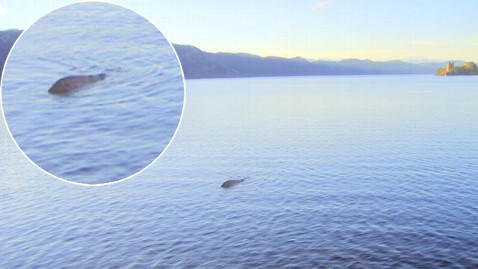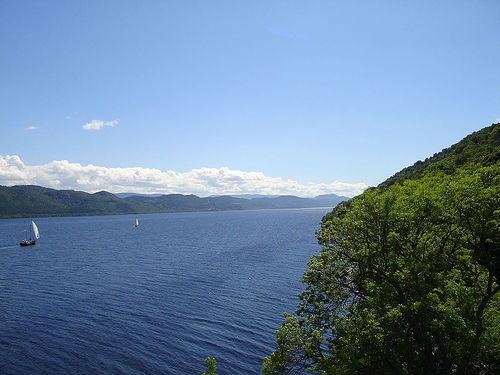
Location: Scotland Map
Loch Ness is a long, narrow, extremely deep freshwater loch in the
Scottish Highlands. It occupies the floor of the Great Glen (Glen
Mor), a major northeast-southwest valley that slices through the
Highlands from near Inverness to Fort William. The loch itself
stretches about 36-37 km (22.5-23 miles) from southwest to
northeast, lying roughly 6-23 miles southwest of Inverness depending
on the point measured.
Its surface sits at 15.8 m (52 ft) above
sea level. Coordinates are approximately 57°18′N 4°27′W. It is the
largest body of freshwater in Great Britain by volume and the
second-largest Scottish loch by surface area after Loch Lomond.
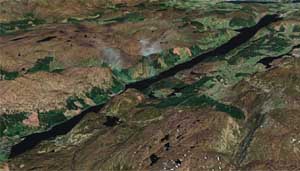
Geological backbone: a fault older than the loch
The Great Glen is a
strike-slip fault that slices Scotland southwest to northeast. It formed
during the Caledonian orogeny about 430–390 million years ago, when
Laurentia (including what is now Scotland) collided with Avalonia
(including England). The fault later saw both sinistral and dextral
movement; the rocks on either side are shattered for hundreds of metres.
That weakness is why later ice could excavate so efficiently.
The
bedrock is largely Moine and related Neoproterozoic metasediments (the
Loch Ness Supergroup and older Wester Ross units), deposited roughly
900–850 million years ago and later metamorphosed. These are not the
“floor” of a simple lake; they are the walls of a tectonic trench later
scoured by ice.
During the last Ice Age, ice filled the glen to
depths of well over a kilometre. As the ice retreated after about
18,000–10,000 years ago, meltwater and isostatic rebound left a deep,
steep-sided basin. Loch Ness itself dates from this deglaciation, around
10,000 BC. Maximum depth is commonly given as about 226–240 m (roughly
740–788 ft). Because the sides drop so steeply, the loch holds more
water than any other British freshwater body even though several
Scottish lochs are longer or deeper in spots. Peat from the surrounding
hills stains the water dark brown; visibility is often only a few
metres. Seiches (standing waves caused by wind and temperature) are
common.
There is no evidence that the basin was ever an arm of the
sea long enough to trap large marine reptiles after the last ice. The
loch is landlocked freshwater.
Name
“Loch Ness” is a partial
calque of Scottish Gaelic Loch Nis. The loch is named after the River
Ness, which flows from its northern end into the Moray Firth at
Inverness. The river name is usually derived from an old Celtic word
meaning “roaring one.” Later folklore invented stories: a neglected
sacred well overflowing until people cried “Tha loch ’nis ann” (“there
is a loch now”), or a link to the Irish Ulster Cycle figure Naois. Those
are etiological tales, not the linguistic origin.
Picts, Columba,
and the first “water beast”
The Great Glen was a political and
military corridor long before it was a tourist route. In the early
medieval period the dominant Pictish kingdom in the north was Fortriu
(Verturiones), with a power centre in the Moray Firth region. Adomnán’s
Life of St Columba (written before 704) places the court of the powerful
Pictish king Bridei son of Maelchon near the River Ness in the later
sixth century. Columba travelled up the glen around 565 to convert
Pictish elites.
The same Life contains the earliest written story
later attached to Nessie. While Columba was in Pictish territory he came
to the River Ness and found people burying a man said to have been
seized and bitten by an “aquatic monster” while swimming. When one of
Columba’s followers entered the water, the beast rushed at him. Columba
made the sign of the cross and ordered it to go back; it fled. The
episode is a hagiographic miracle story illustrating Christian power
over pagan nature, not a zoological report. Whether it refers to the
loch itself or only the river is debated; later monster literature
folded it into the Nessie canon.
Pictish symbol stones in the region
include a distinctive “Pictish beast”: an elongated, flippered creature
that is not a straightforward horse, deer, or salmon. Some writers treat
it as proto-Nessie art; more cautious archaeologists treat it as one of
several stylised animals in a complex symbolic system. Pictish
cemeteries with square and round barrows exist on both sides of the loch
(Garbeg and Whitebridge). The rocky promontory later occupied by
Urquhart Castle shows early medieval occupation and vitrified stone, and
is a plausible candidate for the residence of the Pictish noble Emchath
whom Columba baptised.
Urquhart Castle: the loch’s fortress
Urquhart sits on a sandstone
promontory on the west shore, controlling the glen. After Alexander II
crushed the last Meic Uilleim rebellion in Moray (1229), the lordship
went to Thomas de Lundin and then to Alan Durward, who began a stone
castle on the older fort site. By the late thirteenth century the Comyns
held it.
In 1296 Edward I captured Urquhart at the start of the Wars
of Scottish Independence. It changed hands repeatedly. Robert the Bruce
took it after 1306; it was one of the few Highland strongholds still
holding for the Scots after his death. From the later fourteenth century
the MacDonald Lords of the Isles raided Glen Urquhart again and again.
The 1545 raid stripped the castle of boats, guns, and stores. James IV
granted the barony to Clan Grant in 1509 with orders to repair it; they
built the five-storey Grant Tower that still dominates the ruin.
The
last garrison left after the first Jacobite rising. In 1692 government
troops slighted the gatehouse so Jacobites could not use the place. A
storm in 1715 brought down part of the Grant Tower. The ruin became one
of the most photographed views on the loch.
Fort Augustus and the
Jacobite glen
At the southern head of the loch the village of
Kilchuimein (Cille Chuimein, “church of Cumine”) sat where the River
Oich meets the water. After the 1715 rising the government built
barracks there. General Wade enlarged them from 1729 into Fort Augustus,
named for William Augustus, Duke of Cumberland. The fort commanded the
glen roads. Jacobites took it after a short siege in 1746; Cumberland
later used the area as a base. The military site was sold in 1867 to the
Lovat family and given in 1876 to English Benedictines, who built Fort
Augustus Abbey on and around the old fort. The abbey ran a school until
1993; the buildings later became holiday apartments.
Wade’s military
roads and later civilian roads opened the north shore. That change of
access, not a sudden appearance of an animal, is what made the 1930s
sightings possible for a mass newspaper audience.
The Caledonian
Canal
James Watt surveyed a coast-to-coast canal through the glen in
1773–74. Thomas Telford, with William Jessop, designed and built it
after an 1803 Act of Parliament. The aims were a safer route than the
Pentland Firth, employment after the Jacobite forfeitures and
Clearances, and Highland development. About 38 miles of the 60-mile
navigation use natural lochs (Dochfour, Ness, Oich, Lochy); the rest is
cut channel with 29 locks, including Neptune’s Staircase at Banavie. The
canal opened, still incomplete, in October 1822 and was finished later
in the 1840s. Cost overran badly. Loch Ness became a working waterway as
well as a scenic one.
The modern monster: 1933 onward
Folklore
of water horses (each-uisge) and kelpies existed across the Highlands.
Scattered nineteenth-century notes mention odd objects in the loch. The
global legend begins in 1933, after the new A82-style road gave clear
views of the water. In April, hotel manager Aldie Mackay and her husband
reported a large whale-like animal near Abriachan. Correspondent Alex
Campbell wrote it up for the Inverness Courier and later used the word
“monster.” In July, George and Mrs Spicer reported a long-necked
creature crossing the road. In November Hugh Gray took the first widely
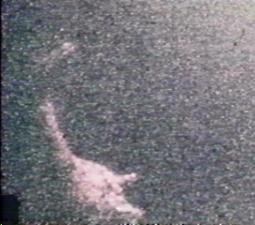
circulated photograph. In April 1934 the “Surgeon’s Photograph” (R. K.
Wilson) became the iconic long-neck image; it was later shown to be a
hoax involving a toy submarine. Marmaduke Wetherell’s “footprints,”
commissioned by the Daily Mail, were hippopotamus-foot umbrella stands.
The plesiosaur idea took hold in the press in 1933. Later expeditions
included the Loch Ness Investigation Bureau (1960s), Tim Dinsdale’s 1960
film (later judged consistent with a boat), Robert Rines’s underwater
“flipper” photos of the 1970s, Operation Deepscan (1987), Project
Urquhart (1990s), BBC sonar in 2003, and environmental DNA work that
found abundant eel DNA but no unknown large vertebrate. No carcass,
breeding population, or unambiguous high-resolution image has ever been
produced. Explanations that fit known physics and biology include boat
wakes, seals, sturgeon, large eels, floating logs (especially
waterlogged Scots pine), seiches, and expectation. The legend is now an
economic fact: the loch draws large numbers of visitors each year.
Other modern episodes
On New Year’s Eve 1939 an RAF Wellington
bomber ditched on the loch; the wreck was found decades later by
monster-hunters using side-scan sonar. In 1952 John Cobb died attempting
a water-speed record in Crusader. Swimmers and water-skiers have since
completed the length of the loch. Core samples from the bed record
industrial soot and mid-twentieth-century fallout, a 12,000-year mud
archive rather than a dinosaur graveyard.
Physical dimensions and bathymetry
Length: 36.2 km (22.5 miles)
Maximum width: 2.7 km (1.7 miles); average width about 1.5 km
Surface
area: 56 km² (21.8 sq mi)
Volume: 7.45-7.5 km³ - more water than all
the lakes of England and Wales combined
Maximum depth: 227-230 m
(745-755 ft); second deepest Scottish loch after Loch Morar
Mean
depth: 132 m (433 ft) - the greatest mean depth of any large Scottish
loch
Shoreline: about 86 km
Catchment area: about 1,770-1,775 km²
The basin is remarkably regular and steep-sided, dropping quickly
from the shoreline to a relatively flat deep floor. Two main deep basins
(each reaching around 220 m) are separated by a shallower rise or sill
opposite the River Foyers delta. Historical sounding surveys recorded
754 ft; later sonar work confirmed similar figures, with one claimed
deeper crevice later identified as an anomaly.
The steep nearshore
drop-off and fluctuating water levels leave little shallow littoral
zone, which limits aquatic plants.
Geological origin
Loch Ness
is a glaciated tectonic lake. It follows the Great Glen Fault, a major
strike-slip fault that formed during the Caledonian Orogeny hundreds of
millions of years ago and remains a line of crustal weakness. Successive
Pleistocene ice sheets exploited this zone, overdeepening the valley
into a classic glacial trough. The last major ice retreat left the
present freshwater basin about 10,000-12,000 years ago.
Surrounding
bedrock is mostly Precambrian Moine schists and gneisses, with some Old
Red Sandstone on the southeast side. The fault juxtaposes different rock
types across the glen. Glacial scouring produced the steep walls and the
absence of islands except for Cherry Island (a small crannog) near Fort
Augustus.
The loch floor lies well below present sea level over most
of its length.
Surrounding topography
The glen sides rise
steeply from the water. On the southeast they average 800-1,000 ft
(240-300 m), on the northwest 1,200-1,500 ft (365-457 m), with higher
summits nearby. Notable heights include Meall Fuar-mhonaidh
(Mealfourvonie, 2,284 ft / 696 m) on the northwest side and Beinn a’
Bhacaidh (1,812 ft) on the southeast. The landscape character is a
broad, steep-sided V-shaped glen with limited flat ground except at bay
mouths such as Urquhart Bay and Invermoriston Bay.
Lower slopes carry
conifer plantations and mixed woodland; higher ground is open moorland
and peat. Burns and small rivers cut rapid, often waterfall-bearing
courses down the sides and build small alluvial fans or deltas where
they enter the loch.
Settlements cluster at these flatter points and
at the ends: Fort Augustus at the southwest head, Invermoriston,
Drumnadrochit (Urquhart Bay), Foyers, Dores, Abriachan, and Lochend
toward the northeast.
Hydrology
Primary inflows include the
River Oich (and Caledonian Canal) from Loch Oich at the southwest end,
plus the Rivers Moriston, Foyers, Enrick, Coiltie, Tarff, and numerous
burns. The single main outflow is the River Ness (and canal) at the
northeast end, which passes through the Bona Narrows and Loch Dochfour
before reaching the Moray Firth at Inverness.
The loch is
oligotrophic (nutrient-poor) because the hard-rock catchment yields few
nutrients. Water is peaty and has low visibility. It is dimictic, mixing
twice a year. Residence time is about 2.8 years. Seiches (standing waves
caused by wind or differential heating) are common. Water level is
partly regulated by the Caledonian Canal (opened 1822) and later
hydroelectric schemes such as Glendoe.
The Caledonian Canal links
Loch Ness with Loch Oich and Loch Lochy, creating a through-route from
the North Sea to the Atlantic across the Great Glen.
Climate and
environment
The Highland climate is cool and wet, with frequent
cloud, rain, and limited sunshine. Snow can occur on surrounding hills.
The large water mass moderates local temperatures but the steep-sided
glen can channel winds. Sparse aquatic vegetation and limited abyssal
fauna result from the combination of steep sides, depth, peat staining,
and water-level changes.
The drainage basin remains relatively
low-density, with woodland, grassland, and moorland dominating. Tourism
focused on the loch and its folklore is the main human pressure.
This
combination of tectonic setting, glacial overdeepening, extreme
depth-to-width ratio, and peat-stained oligotrophic water makes Loch
Ness one of the most distinctive large lakes in the British Isles.
The loch that makes the story work
Loch Ness sits in the Great
Glen fault, a long, straight trench that slices the Highlands from
Fort William to Inverness. The loch is about 36 km long and only
1.5-2.7 km wide, yet it holds more fresh water than all the lakes of
England and Wales combined. Maximum depth is around 227-230 m (about
750 ft); mean depth is roughly 132 m. The water never freezes. Peat
from the surrounding hills stains it tea-brown, so visibility
underwater is often only a metre or two. Steep sides drop quickly to
a relatively flat floor. Seiches (standing waves), boat wakes that
persist for minutes, and floating logs or mats of vegetation all
look like "something large" from the A82 road that hugs the
north-west shore.
Urquhart Bay, next to the ruined castle, is the
deepest trench and historically the busiest "sighting" zone. That
combination of depth, murk, and a tourist road is why the legend
never quite dies.
From saint to newspaper monster
The
oldest written story is in Adomnán’s Life of St Columba (late 7th
century). Around 565 CE the saint is said to have confronted a water
beast in the River Ness that had just killed a man; Columba ordered
it back and it fled. Whether that was a real animal, a later
hagiographic flourish, or a memory of something else is unknown.
Pictish stones from the region show long-bodied aquatic beasts, but
they are not uniquely "Nessie." For more than a thousand years the
loch was simply a deep Highland lake.
The modern monster begins
in 1933. A new road along the loch opened views that had been hidden
by trees. On 14 April 1933, hotel managers John and Aldie Mackay
reported a whale-like animal near Abriachan. In August, George
Spicer and his wife described a long-necked "prehistoric" creature
crossing the road. Local journalist Alex Campbell helped coin and
spread the phrase "Loch Ness Monster." Newspapers, still hungry
after the Depression, ran with it. The plesiosaur idea - a surviving
marine reptile from 65 million years ago - was already in print by
October 1933. That is a biological non-starter: the loch itself only
formed after the last ice age, about 10,000 years ago, long after
plesiosaurs were gone, and it is fresh water.
The images that
built the brand
The single most famous picture is the "Surgeon’s
Photograph" of April 1934, published by the Daily Mail and credited
to London gynaecologist R. K. Wilson. It shows a small head and long
neck rising from rippled water. In 1994 researchers published a
deathbed account by Christian Spurling: the "monster" was a toy
submarine with a sculpted plastic-wood head, built as revenge after
the same newspaper had humiliated Spurling’s stepfather, big-game
hunter Marmaduke Wetherell, over fake "monster footprints" made with
a hippopotamus-foot umbrella stand. Most historians now treat the
photo as a hoax.
Other well-known pieces of "evidence" have
similar problems:
Tim Dinsdale’s 1960 film shows a dark hump
leaving a wake. Dinsdale believed it was an animal. Later analysis
has argued it is consistent with a boat, and no independent
confirmation followed.
Peter MacNab’s 1955 two-hump photo near
Urquhart Castle is often cited; critics point to timing, possible
double exposure, or a boat wake.
Robert Rines and the Academy of
Applied Science (1972-1975) produced underwater "flipper" and "body"
photos plus sonar contacts. The images were heavily processed; later
examination found they do not show a living animal of the claimed
size. Rines later suggested the creature might have died from
warming water.
Countless later photos and videos resolve into
waves, birds, deer, seals, logs, or inflatable toys.
Sonar
has repeatedly picked up large or fast-moving contacts. Operation
Deepscan (1987) lined 24 boats across the loch; three unexplained
contacts appeared near Urquhart Castle and then vanished. A 2003 BBC
survey using hundreds of sonar beams found nothing the size of a
large unknown animal. Contacts can be fish shoals, temperature
layers, debris, or equipment artefacts. They are not a carcass.
What science actually found in the water
The most decisive
modern study is the 2018 environmental DNA (eDNA) survey led by Neil
Gemmell of the University of Otago. Researchers took about 250 water
samples from many sites and depths and sequenced DNA shed by
organisms living in or near the loch. They recovered roughly 3,000
species: the known fish of the loch, amphibians, birds, mammals from
the surrounding land, and a great deal of European eel DNA at almost
every station. They found no reptile DNA, no sturgeon, no catfish,
no shark, and nothing that would sit between crocodilians and birds
(the expected neighbourhood of a plesiosaur).
Gemmell left one
door ajar: eels are abundant, and a very large eel could look
serpentine from a distance. A later look at catch data suggested
that eels over about a metre are already rare in the loch, and a
6-metre eel is statistically near-impossible. So giant eels might
explain some "long dark shape" reports. They do not explain a 20-50
ft long-necked reptile.
Other mundane sources of sightings are
well documented: boat wakes that look like a string of humps,
standing waves, otters or deer swimming, cormorants or divers in a
line, floating peat or logs, and expectation. After 1933, people
arrived primed to see a monster. The same loch that hid ordinary
objects in peat-stained water also hid the fact that those objects
were ordinary.
Why the hunt continues
Nessie is now an
economic animal. Drumnadrochit has the Loch Ness Centre. Urquhart
Castle (Historic Environment Scotland) sits on the classic
viewpoint; adult tickets are around £14 online / £16 at the gate,
parking must be booked with the ticket, and summer last entry is
late. Jacobite and other operators run cruises with sonar displays.
Sightings registers still add reports every year - including claims
in 2026 of a "seven-metre" eel-like shape. Researchers still talk
about follow-up eDNA work. An autonomous underwater vehicle even
snagged a 1970s camera trap left by monster hunters, still intact
after decades on the bottom. None of that has produced a type
specimen.
Before 1800
The first known mention of the sea monster dates back to the year
565. In the Vita Columbae of Abbot Adamnan, a description of the
life of Columbanus of Iona, it is related how the saint saved the
life of a Pict attacked in the River Ness. “Columbanus made the sign
of the cross in the air and called on the name of God while
commanding the wild beast: 'No more! Don't touch him! Back off
immediately!’ Hearing the words of the saint, the animal fled in
fear, as if being pulled from there by ropes, even though it had
been only a short distance from the man.”
1527: Duncan Campbell
claims to have seen a terrible monster on the banks of Loch Ness.
16th Century: According to an old chronicle, a huge beast rose from
Loch Ness and killed three men.
Around 1650, an English
chronicler reported that the famous Loch Ness was known for its
"floating islands".
On August 12, 1661, a sturgeon estimated to
be 12 feet long was observed near Inverness.
Sightings after 1800
There were other sightings in 1872 and 1903, among others. However,
the creature only became famous on May 2, 1933, when regional
newspapers first reported the sighting of a monster. The Inverness
Courier newspaper ran an article about locals seeing "a huge animal
diving in the hole". The report of the 'monster' (a term chosen by
the Courier editor) became a media sensation: London newspapers sent
reporters to Scotland and a circus even offered £20,000 to capture
the monster.
In the fall of 1933, A. H. Palmer, who allegedly
observed Nessie at seven o'clock on August 11, 1933, described the
creature holding its head, which they saw from the front, low in the
water. Its mouth was between twelve and eighteen inches long and
opened and closed. He estimated the maximum jaw opening to be about
six inches.
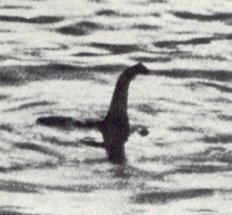
A photo allegedly taken by surgeon R.K. Wilson on
April 19, 1934 sparked renewed interest in the Loch Ness Monster. It
appears to depict a large animal with a long neck gliding through
the water. Decades later, on March 12, 1994, Marmaduke Wetherell
claimed to have faked the photo after he was hired by the Daily Mail
newspaper to hunt down Nessie (the photo was then printed as "final
proof"). Wetherell also stated that Wilson did not take the photo.
His name was only used to increase the credibility of the photo. As
early as 1993, another man claimed to have been involved in such a
forgery.
Frank Searle is not the only “Nessie hoaxer” to be
mentioned, but he is the most well-known: Frank Searle, a former
soldier, appeared at Loch Ness in June 1969 and at first seriously
engaged in the search for Nessie. In his later years, when he ran a
houseboat and a monster exhibition at Lower Foyers, he frequently
presented rather dubious evidence of the monster's existence. His
photographs showed z. B. floating tree trunks or were even kept for
photomontages. From 1977 to 1979 Searle was assisted by a Belgian
admirer as "assistant monster huntress". In 1985, Searle temporarily
disappeared. Paralyzed by a stroke from 1998, Searle, unmarried from
1986, lived alone with his cats in Fleetwood, Lancashire until his
death on March 26, 2005.
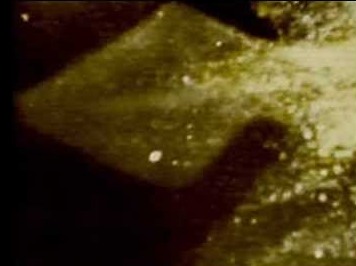
In 1972, a group led by US patent judge
Robert Rines took some underwater photos. One was an inaccurate
image, perhaps a rhombic fin (some saw air bubbles or a fish fin in
it). Based on this photograph, photographer and conservationist Sir
Peter Scott announced in 1975 that the scientific name of the
monster under which Nessie would be included in the British register
of officially protected wildlife should be Nessiteras rhombopteryx.
However, the name is an anagram of monster hoax by Sir Peter S.,
possibly due to Sir Peter's skepticism.
On 28 May 2007 Gordon
Holmes from Yorkshire recorded new video of the alleged Loch Ness
Monster. It shows an eel-like object that is about 15 meters long
and has a speed of about ten kilometers per hour.
According to a
newspaper report in the English tabloid The Sun dated August 26,
2009, Jason Cooke claims to have discovered the monster in Google
Earth at the coordinates ♁57° 13′ N, 4° 34′ W. However, when you
zoom in a lot, you immediately notice that it is the outline of a
small boat and its wake.
In April 2014, it was announced that the
Loch Ness Monster was visible on Apple's map service. According to
the Daily Mail, two men independently came across the suspicious
satellite image and forwarded the information to the Official Loch
Ness Monster Fan Club.
Truth or fiction, Loch Ness still draws curious onlookers for a chance to see a monster. There seems no shortage of new films, videos and witness testimonies of this elusive creature.
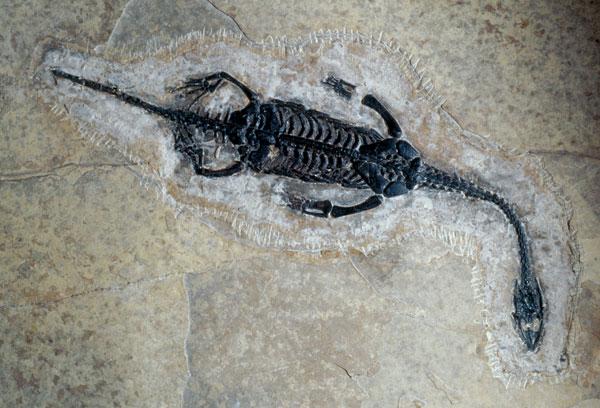
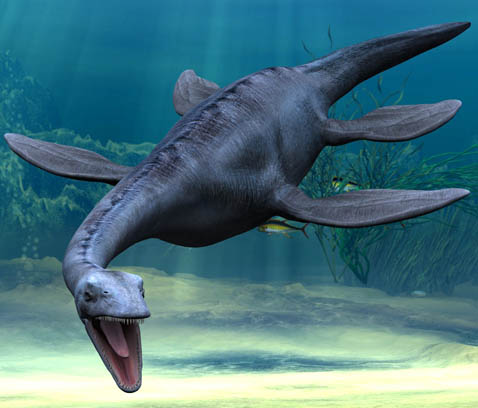
Some accounts of the monster's appearance, including historical
accounts, indicate a resemblance to the extinct Plesiosaurus. From the
available material of this Mesozoic creature, a large, long-necked,
small-headed animal that propels itself with fins can be constructed.
The supposed connection between Plesiosaurus and the Loch Ness monster
has become a well-known topic in cryptozoology. But most scientists, as
well as the vast majority of serious cryptozoologists, consider the idea
that the Loch Ness monster is a Mesozoic remnant to be very unlikely: a
large colony of such animals would have to exist to ensure long-term
existence. Since plesiosaurs, being reptiles, have to come to the
surface to breathe, this would result in far more frequent sightings
than is actually the case. Many biologists also believe that Loch Ness
is not large or productive enough to support even a small family of
these animals. Many other reasons, such as the geological formation of
Loch Ness after the last glacial period, clearly speak against a large
reptile in the lake.
Other sightings do not match the appearance
of the plesiosaurs or any other aquatic animal: In April 1923, Alfred
Cruickshank claimed to have seen a ten-foot-long animal with a curved
back and four elephant-like feet crossing the road in front of his
vehicle. Other putative sightings are more indicative of camel- or
horse-like animals.
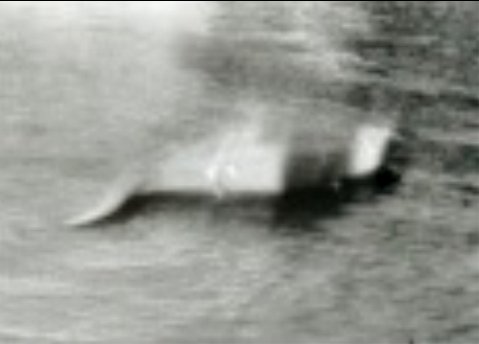
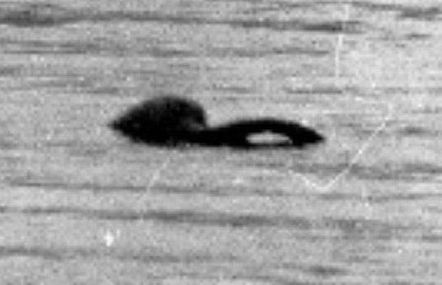
Scientific attempts to explain the sightings
of monsters vary widely: misidentifications of seals, fish jumping or
swimming close to the water surface, waterfowl, logs, mirages or unusual
wave patterns, the latter because Loch Ness is predestined for standing
waves (so-called seiches) due to its symmetrical topography ) is.
Swimming deer could also account for some sightings of the monster with
its neck sticking out of the water. It is likely that each of these
explanations has contributed to the monster myth that has long since
become a mass phenomenon.
In rivers near Loch Ness there are very
large sturgeons that could easily be mistaken for monsters because of
their size and unusual appearance. A new theory says the monster is just
a hallucination caused by gushing water caused by minor volcanic
activity at the bottom of the hole. This argument is supported - to a
small extent - by the fact that there appears to be a connection between
the sightings and tectonic movements.
More recent extensive DNA
analyzes of the organic material from the lake confirm the assumption
made in research circles as early as 1933 that the sightings were most
likely larger eels.
Arguments against the existence of the monster
A typical case of an
alleged sighting with unsatisfactory "facts" about Nessie is the case of
October 1871: In this event, D. Mackenzie described something that was
first moving slowly and then receding at a faster speed. Witnesses said
the monster has a (sometimes not just one) hump that looks like an
upside down boat. This story is repeated many times, but no original
source from 1871 is ever cited, which puts the articles in a bad light.
In July 2003, the BBC reported that an extensive survey of Loch Ness
carried out by a BBC team using 600 sonar beams found no sign of a "sea
monster". The BBC team concluded their report by saying Nessie didn't
exist.
The famous 1934 photo is believed by some to be a fake,
based on testimony given by photographer Marmaduke Wetherell shortly
before his death. Wetherell claimed the photo, which garnered the
monster a lot of attention, was all clay taped to a toy submarine. Even
before Wetherell's statements, some had speculated that the photo did
not show a monster at all, but rather several otters following one
another or a diving bird. However, there are two photos from 1934 that
show slightly different poses, leading to the argument that the photos
were not faked in this way. On the other hand, it should also be
considered here that the pose of a model made of clay or plasticine can
be slightly modified very easily, giving the impression of a series of
movements.
The latest explanation for the 1933 and 1934 photos
comes from Scottish paleontologist Neil Clark. In his opinion, the
animal depicted in the photos was nothing more than a swimming elephant
from the Olympia circus. The circus director at the time, Bertram Mills,
even put up a £20,000 bounty on his head, knowing full well that the
"monster" was in his circus.
The sometimes very different
depictions of Nessie also speak for deceptions or falsifications in many
sightings and photographs. Sometimes the popular long-necked
'Plesiosaurus' type is 'seen', sometimes also the no less popular
vertical-coiling 'humped sea snake' type, both of which are entirely
different. Of all vertebrates, only a few mammals, such as whales and
otters, move with vertical motion, but not a single species, living or
extinct, would be able to create multiple consecutive humps above the
water surface like the "humpback sea snake" when swimming.
In
this context it is worth mentioning that the first reports that Nessie
resembled a Plesiosaurus date back to 1933. It wasn't until this year
that Nessie really got famous. This year's sighting was made shortly
after the release of the film The Fable of King Kong. The resemblance of
the figure of Nessie described later is striking with a creature that
attacks the main characters of the film at a lake in the jungle. Given
that alien creatures were a lot easier to impress viewers then than they
are now, it's easy to see how a little-known rumor about a creature that
lives in Loch Ness could be compared to the creature depicted in the
film connected and thus created an extremely effective and lucrative
legend.
Arguments for the existence of the monster
The
sightings and video footage (see #History of Alleged Sightings) are
indicative of the existence of a large creature in Loch Ness, however
most photographs and footage have been identified as forgeries or
misinterpretations.