Location: Gorski kotar Map
Area: 63,5 km2
Tel. (051) 836 133
(051) 836 246
Open: summer: 7am- 10pm daily
winter: 7am- 9pm daily
Price:
Adults- 30Kn (5 Euro)
Children 7-19- 15Kn (2.5 Euro)
Mountain climbers with membership- 15 Kn (2.5 Euro)
Children
under 7- free
Tel: +38551836133 +38551836246
fax: +38551836116
E-mail:
np-risnjak@ri.t-com.hr
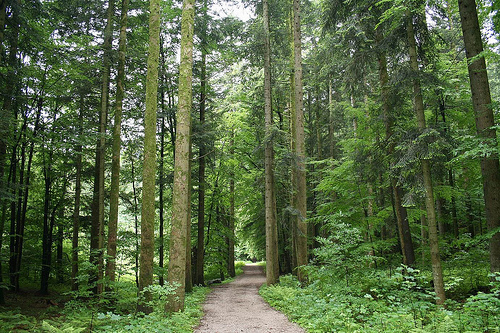
Risnjak National Park (Nacionalni park Risnjak), nestled in the rugged heart of Gorski Kotar—the most mountainous and forested region of Croatia—spans 63.5 square kilometers of pristine wilderness in Primorje-Gorski Kotar County, near the Slovenian border. Established as a beacon of conservation, it encompasses the imposing massifs of Risnjak (1,528 meters) and Snježnik (1,506 meters), often called "mountain twins" due to their proximity and stark, rocky profiles rising dramatically above dense beech-fir forests. This "forest kingdom" is a karst wonderland where the Adriatic and Black Sea watersheds divide, featuring turquoise rivers like the source of the Kupa—the "most beautiful Croatian river"—lush valleys, abysses, and subalpine meadows. Home to Croatia's "Big Three" predators (lynx, bear, and wolf), it protects 1,148 vascular plant species and diverse wildlife, while offering hikers, nature observers, and cultural explorers a serene escape from coastal crowds. Administered from the village of Crni Lug on its eastern edge, the park attracts around 20,000 visitors annually, blending untouched nature with subtle human history like ancient caravan routes.
The story of Risnjak weaves together botanical research, early
mountaineering, and a long campaign to keep Gorski Kotar’s forests
intact. Scientific attention began in 1825, when Budapest botanist
Joseph Standler (often recorded as Josip Sadler) came to study the
massif’s plants and opened the door for later naturalists. In the
second half of the nineteenth century Josip Schlosser Klekovski,
founder of Croatian botany and first president of the Croatian
Mountaineering Association, mapped the flora in detail and published
widely on the mountain’s richness. Other pioneers followed, among
them Ljudevit Farkaš Vukotinović and Dragutin Hirc. Organized
climbing took shape around the Rijeka Alpine Club; in 1899 the
Moravec Trail was cut toward Mali Risnjak, and in 1932 the first
mountain refuge, Schlosserov dom (Šloserov dom), rose on the saddle
between Veliki Risnjak and Južni Mali Risnjak at about 1,418-1,420
m.
After World War II, phytogeographer Ivo Horvat pressed for
legal protection of the beech-fir forests, karst peaks, and alpine
meadows. He first proposed a park in 1949. On 15 September 1953 the
Croatian parliament proclaimed the Risnjak forest a national park on
about 36 km² (3,600 ha), making it the country’s fourth national
park. In 1956 the boundary was trimmed to 30.14 km², with 21.06 km²
placed under stricter protection. In 1997 the park was enlarged to
about 63.5 km² (roughly 6,350-6,400 ha). The new limits added the
Snježnik massif (1,506 m), the karst spring of the Kupa and its
upper canyon, and inhabited hamlets such as Razloge, Razloški Okrug,
and Krašćevica, so that nature protection and local life could be
managed together.
That expansion matches a wider Croatian turn
from postwar recovery toward sustainable mountain tourism. The park
now sits only about 15 km inland from the Adriatic, yet it holds a
full Dinaric altitude stack: from the Kupa source at about 290 m up
to Veliki Risnjak at 1,528 m, the second-highest summit in Gorski
Kotar after Bjelolasica. More than 1,148 plant taxa have been
recorded. Beech-fir forest dominates the mid-slopes; subalpine beech
and spruce take over higher up; the rocky summit carries edelweiss,
black vanilla orchid, alpine snowbell, and hairy alpenrose. The same
compact area is home to all three large European carnivores - brown
bear, wolf, and Eurasian lynx. The native lynx vanished in the
nineteenth century; animals from a Slovenian reintroduction program
returned in the mid-1970s (often dated from 1974 at the Lazac
meadow) and have since recolonized the massif that likely takes its
name from ris, the Croatian word for lynx.
Today the visitor
center and administration stand in Crni Lug (Bijela Vodica). Classic
approaches include Horvatova staza from the main gate, the old
forest road via Markovo Brlog, the easier Vilje route from Gornje
Jelenje, and the Lazac approach from Gerovo. Schlosserov dom, long
the base just below the summit, has been closed for a major
reconstruction. The upper Kupa valley is promoted as a “valley of
butterflies,” and the park’s work now balances rewilding, forest
protection, and the living Gorski Kotar traditions of the villages
that were brought inside the boundary in 1997.
At the Dinaric Alps' northwestern fringe, Risnjak straddles limestone and dolomite karst, creating a mosaic of dramatic landscapes: barren peaks scarred by erosion, deep dolines (sinkholes up to 200 meters), fragmented rocks, karrens (fluted surfaces), and abysses. The park's elevation ranges from 313 meters at the Kupa's spring—a karst ponor where water gushes from a 154-meter-deep abyss at a constant 7°C—to Risnjak's summit, offering vistas of Kvarner Bay, Istria, and Slovenia's Julian Alps. Forests blanket 70% of the area, with 14 forest communities dominated by mixed beech-fir (Abieti-Fagetum dinaricum) on slopes between 600-1,200 meters; higher up (1,200-1,400 meters), subalpine beech with lettuce grass yields to impenetrable shrub thickets (Fagetum croaticum subalpinum fruticosum) and crooked pines. The Kupa's "Miracle Valley of Butterflies" (Čudesna dolina leptira) features dual channels (86m and 57m deep), while microclimates foster soil inversions in dolines, with brown forest humus supporting unique vegetation gradients.
Risnjak's biodiversity thrives at ecotones where coastal, continental, Dinaric, and Alpine zones converge, hosting 30 plant communities and 1,148 vascular species—potentially more, as surveys continue. Forests teem with sycamore maple, elm, ash, and yew at lower elevations, transitioning to rare alpine gems like edelweiss, black vanilla orchid, mountain milfoil, alpine yellow violet, livelong saxifrage, alpine snowbell, mountain avens, and hairy alpine rose—all protected. Fauna mirrors this richness: the park safeguards Croatia's 40-60 Eurasian lynxes (Lynx lynx, its namesake, reintroduced successfully), alongside brown bears (Ursus arctos), wolves (Canis lupus), chamois (Rupicapra rupicapra), red deer, roe deer, wild boar, pine martens, badgers, and dormice. Birds number 114 species (78 nesting), including capercaillie, hazel grouse, goshawks, eagle owls, and woodpeckers; reptiles, amphibians, and nearly 500 insects thrive, with 89 butterfly species (60% of Croatia's total) fluttering in meadows. Programs spotlight chamois (the "mountain ballerina") and deer mating roars in late summer, emphasizing non-invasive observation.
Risnjak rewards adventurers with accessible yet immersive paths, emphasizing education and minimal impact. The flagship Leska Educational Trail—a 4.2-4.5 km circular loop from Crni Lug's visitor center—winds through Leska Valley, showcasing 15 forest types, karst phenomena, and cultural markers like historic routes, ideal for families (2-3 hours, moderate). Summit hikes include Veliki Risnjak (3 hours from Crni Lug or 1 hour from Gornje Jelenje, 1,528m panoramic peak) and Snježnik (1.5 hours from Platak ski area, 1,506m with year-round snow patches); Guslica (1,490m, 1 hour from Snježnik) reveals an abandoned Yugoslav army complex. The Kupa source trail (30 minutes from Razloge) explores the ponor and fishing spots (catch-and-release with license). Other pursuits: mountain biking on designated routes, overnight wildlife watching at Lazac Meadow (deer, bears), chamois observation programs, and winter skiing at Platak. Historic trails follow Roman and Frankopan caravan paths like Srebrna vrata (Silver Gate), blending nature with Illyrian-Japod heritage.
As Gorski Kotar's "green lungs," Risnjak holds ecological primacy for preserving Dinaric karst biodiversity and watershed integrity, serving as a lynx stronghold and carbon sink amid climate pressures. Culturally, it safeguards Gorski Kotar ethnography: post-1945 stone-wood houses with steep roofs, decorated gables, veža (fireplace entries), izba (attics), and kender (basements) in hamlets like Dolari and Podgrič, housing ~20 residents who maintain traditions. Its 70% strict protection zone underscores Croatia's commitment to EU Natura 2000 networks, while ancient routes evoke Illyrian Japods and Roman trade. Less crowded than Plitvice or Krka, it promotes sustainable tourism, fostering community ties in villages like Razloge and hosting events like Furmans Day (traditional games, August).
Risnjak welcomes explorers year-round, best in sunny spring-fall for hikes (avoid heavy rain flooding the Kupa); winter suits snowshoers and skiers. Entry tickets (€5-10/adult, reduced for kids/seniors/groups; free for Croats under 18) cover trails and exhibits—buy at entrances (Bijela Vodica, Kupari, Razloge, Vilje) or points like Crni Lug center, Bijela Vodica restaurant, Risnjak lodge, or Platak GSC. Parking is free at all four gates; a map is at parkovihrvatske.hr/karta. From Zagreb/Rijeka, drive A1 to Ravna Gora/Delnice exits (1-1.5 hours), then follow signs to Crni Lug; buses via Arriva (arriva.com.hr) link Rijeka-Delnice-Crni Lug (timetables online). Top draws: Risnjak/Snježnik peaks, Kupa source, Leska trail. Visitor centers in Crni Lug offer maps/guides (€2-5); book chamois/deer watches (€10-20) via np-risnjak.hr. As of September 17, 2025, all accesses open post-summer maintenance; no major alerts, but check np-risnjak.hr for weather/events. Accessibility varies (some trails steep; no full wheelchair paths), with ~2-4 hour visits ideal—pack water, layers for microclimates.