Location: Lika-Senj County Map
Area: 109 km²
Official site
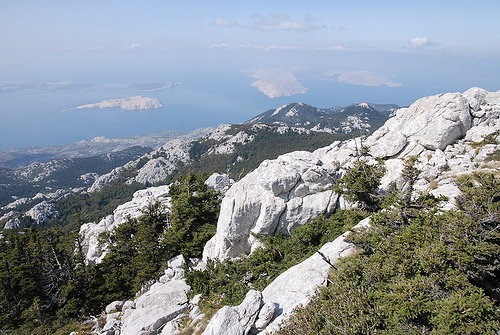
Sjeverni Velebit National Park (Nacionalni park Sjeverni Velebit), Croatia's eighth and youngest national park, sprawls across 109 square kilometers in the rugged northern reaches of the Velebit mountain range—the longest continuous mountain chain in Croatia, stretching 145 kilometers along the Adriatic coast in Lika-Senj County. Established on June 17, 1999, and opened to the public in September of that year, the park safeguards a pristine karst wilderness of jagged peaks, deep chasms, ancient beech forests, and alpine meadows, with elevations climbing from 518 meters at its coastal fringes to 1,676 meters at Veliki Zavižan, Croatia's highest meteorological station. As part of the broader Velebit Nature Park (designated in 1981) and the UNESCO Man and the Biosphere (MAB) Reserve since 1978, Sjeverni Velebit embodies the untamed spirit of the Dinaric Alps, offering solitude for hikers, botanists, and wildlife enthusiasts amid a mosaic of habitats that harbor over 1,500 plant and fungal species. Accessible via unpaved roads from Krasno or Jablanac, it contrasts sharply with Croatia's coastal glamour, drawing intrepid souls to its fog-shrouded summits and echoing caves, where the roar of the Adriatic below meets the whisper of wind through dwarf pines. In a nation dotted with 18 UNESCO sites, this park stands as a bastion of biodiversity and geological drama, inviting reflection on humanity's fleeting footprint in an ancient landscape.
The human story of Sjeverni Velebit is written in limestone,
dry-stone walls, and empty shepherds' hollows. For thousands of years
people used this isolated ridge as a refuge, a crossing, and a summer
pasture rather than as a place of permanent towns.
Paleolithic
hunter-gatherers already knew the caves and high plateaus during the
last Ice Age, around 20,000 BCE. Systematic traces become clearer in the
Iron Age, from about 1000 BCE, when Illyrian groups - especially
Liburnian communities on the coastal side - treated the mountain as both
fortress and corridor. Archaeologists have recorded dozens of hillforts
on the seaward slopes, usually placed near passes that linked the
Adriatic to the Lika hinterland. Settlement activity on those hillforts
is often modest; the sites functioned more as lookouts and gathering
points than as dense villages.
Rome reached the range in the late 1st
century BCE after Octavian's campaigns against the Iapodes and
neighboring peoples. The mountain itself stayed sparsely occupied, but
the foothills were reorganized. Senia (today's Senj, about 20 km
northwest of the park) became the main coastal hub. Nearby Liburnian
centers such as Lopsica (Sveti Juraj), Ortopla (near Stinica), and
Vegium (Karlobag) grew at the mouths of the old mountain passes. A Latin
boundary inscription near the Begovača spring records an agreement
between the Parentini and Ortoplini communities over access to water, a
rare written snapshot of how Rome regulated indigenous territories on
the Velebit slopes.
From the 10th century onward the high pastures
belonged mainly to seasonal herders. They built staništa - clusters of
stone summer lodges, dry-stone walls, and cisterns (šterne) that still
scatter the coastal flanks and the karst hollow of Veliki Lubenovac. In
the Middle Ages parts of northern and central Velebit fell under the
Frankopan (Krk) princes, who also drew wealth from timber. That pastoral
world thinned in the 19th century through emigration and later through
wartime displacements in the 20th century. What remains are ruins of
lodges, walls, and water tanks rather than living hamlets.
Modern
protection grew out of early-20th-century mountaineering and forestry.
Ivan Krajač, then a minister in the Kingdom of Yugoslavia and a devoted
climber, secured funds and helped open Zavižan. Forestry engineer Ante
Premužić surveyed the ridge from 1926 and, between 1930 and 1933, built
the Premužić Trail. The original line ran 57 km from Oltari to Baške
Oštarije. The section most hikers use today is about 42.6 km from
Zavižan to Baške Oštarije, of which roughly 16 km lie inside the
national park. Laid almost entirely in dry stone with a gentle average
grade, the trail threads the Hajdučki and Rožanski Kukovi without
blasting a road through them. In 2009 the entire route was listed as a
cultural asset of national importance.
After World War II the
ecological value of Velebit became official policy. In 1978 UNESCO
included the whole mountain in the Man and the Biosphere Programme.
Velebit Nature Park followed, wrapping both Northern Velebit and
Paklenica. On 9 June 1999 the Croatian Parliament declared Sjeverni
Velebit a national park - the youngest of the country's eight - covering
109 km² between about 518 m and 1,676 m (Veliki Zavižan and neighboring
peaks). The core of Hajdučki and Rožanski Kukovi, already a strict
reserve, holds more than 200 pit entrances in only 12 km², including
Lukina Jama at 1,431 m, one of the world's deepest caves.
The
1991-1995 Croatian War of Independence left the remote north relatively
intact, though mine clearance lasted until 2010. In 2017 the primeval
beech stands inside Hajdučki and Rožanski Kukovi were added to UNESCO's
World Heritage serial site "Ancient and Primeval Beech Forests of the
Carpathians and Other Regions of Europe," recognized as forests that
recolonized after the Ice Age with little later interruption.
Today
the park sits inside both Natura 2000 and the Rewilding Europe /
Rewilding Velebit landscape. Brown bear, wolf, lynx, chamois, and red
deer still use the ridge as a corridor between Northern Velebit and
Paklenica. Griffon vulture reintroduction work in the wider Velebit area
has been part of that stewardship since around 2020. The same stones
that once marked Illyrian passes and shepherds' lodges now mark a high
trail and a protected forest that Europe has decided to keep wild.
Sjeverni Velebit's geology is a karstic symphony, sculpted over 200
million years from Triassic and Jurassic limestones in the Dinaric
orogeny—the tectonic clash that birthed the Alps. Rainwater's acidic
dissolution has fashioned a labyrinth of chasms, sinkholes (doline), and
poljes (karst fields), with elevations creating microclimates from
Mediterranean maquis at sea level to subalpine tundra above 1,500
meters. The park's core, the Hajdučki and Rožanski Kukovi strict reserve
(spanning 12.1 km²), is a moonscape of razor-sharp ridges and towers
(kukovi), where dolomitic pinnacles soar like petrified waves, eroded by
glacial melt and Adriatic gales.
Caves dominate the subterranean
realm: Lukina Jama, discovered in 1992, plunges 1,392 meters—Southeast
Europe's deepest pit cave—harboring ice chambers and blind fish, while
Patkovina Cave (831m deep) yields fossils from Permian eras. The Zavižan
plateau, at 1,596 meters, features fossil-rich beds from Eocene seas,
exposed by uplift. Primeval beech forests cloak the slopes, their
gnarled, wind-sheared forms (dwarfed by nutrient-poor dolines) a product
of periglacial processes since the Pleistocene. Seismic activity along
the Velebit fault adds dynamism, with minor quakes shaping scree fields.
This karst diversity—unique in the Mediterranean—fosters endemic
habitats, from gypsum outcrops in Visibaba to siliceous screes in
Balinovac, underscoring the park's role in studying climate-driven
erosion.
Sjeverni Velebit pulses with life, its isolation nurturing a hotspot
of endemism within the Natura 2000 network, protecting 13 habitats and
12 species. Flora boasts 1,500 vascular plants and fungi, with 78
endemics like the Croatian sibirea (Sibiria croatica) in the Visibaba
botanical reserve—a relict shrub from Tertiary forests—and the alpine
eryngo (Eryngium alpinum), a spiky blue sentinel of wet meadows.
Subalpine beech forests, inscribed on UNESCO's list, harbor Illyric
relics like sycamore maple (Acer pseudoplatanus) and buttercup meadows,
genetically vital for resilience studies. Mountain pines (Pinus mugo)
fringe summits, while edelweiss (Leontopodium alpinum) carpets rocky
ledges.
Fauna thrives in this mosaic: the Eurasian lynx (Lynx lynx),
a stealthy predator with fewer than 20 individuals, prowls beech groves,
tracked via camera traps since 2015. Brown bears (Ursus arctos) forage
berries in 40% forest cover, alongside chamois (Rupicapra rupicapra) on
cliffs and golden eagles (Aquila chrysaetos) soaring thermals.
Micro-worlds teem: the barbastelle bat (Barbastella barbastellus) in
caves, Rosalia alpina beetles in deadwood, and capercaillie (Tetrao
urogallus) lekking in clearings. The Velebit Botanical Garden, founded
in 1967 by botanist Fran Kušan at Zavižan, spans 2 hectares with 500
labeled species, a living lab amid dwarf pines. Key features include the
karst "sea" of Rožanski Kukovi—40 peaks over 1,600 meters like Gromovača
(1,675m)—and atmospheric phenomena like Zavižan's "white desert"
snowfields, persisting into July.
Sjeverni Velebit's allure lies in its 30+ marked trails, weaving
through untamed terrain for all levels, though most demand fitness and
navigation (red-white blazes). The crown jewel is Premužić's Trail
(Premužićeva staza), a 57-kilometer engineered path built 1933–1935,
snaking along ridges from Zavižan to Rosa (accessible in sections: 4–6
days full traverse, moderate-strenuous, with chain-assisted scrambles).
It offers vertigo-inducing views of Kvarner Bay, passing stone "dragon
lairs" and bivouac sites. Day hikes include the 5.5 km Babić Siča loop
(easy, 2 hours) through meadows to viewpoints, or the 12 km Zavižan
ascent (moderate, 4–5 hours, 800m gain) to the meteorological hut.
Adventurous souls tackle Hajdučki Kukovi (strict reserve, permits
required for non-guided, 8 km circuit, strenuous) amid lunar kukovi, or
caving in Lukina Jama (expert-led only). Winter snowshoeing and ski
touring thrive above 1,200 meters, while birdwatching peaks in spring
migrations. Maps via AllTrails or official apps detail 8 running/hiking
routes, like the 18 km Northern Velebit Traverse. Activities emphasize
Leave No Trace, with no facilities beyond huts like Aljapićeva (bivouac,
basic shelter).
Sjeverni Velebit transcends conservation—it's a crucible of ecological and cultural narratives. As a MAB reserve, it models sustainable tourism, earning EDEN's 2009 "Tourism and Protected Areas" award for balancing 15,000 annual visitors (2010 peak) with wilderness integrity. Its beech forests, survivors of Ice Age refugia, inform global climate models, while rewilding efforts (e.g., lynx monitoring) combat fragmentation. Culturally, it evokes Velebit's "shepherd poets" and partisan hideouts in WWII lore, with trails fostering mindfulness amid "Velebit syndrome"—a euphoric awe from its vastness. For Croatians, it's a symbol of national resilience, inspiring art like painter Miroslav Šutej's mountain abstracts. Globally, it highlights karst's fragility against warming, with projects like EU-funded erosion studies. In overtourism-weary Croatia, the park champions "slow travel," its silence a antidote to Adriatic crowds.
As of September 17, 2025, Sjeverni Velebit thrives under the Public
Institution for National Park Management, with no major disruptions from
2024's mild seismic activity or 2023 floods—full access restored
post-winter. Open May 1 to November 30 (weather-dependent; check
np-sjeverni-velebit.hr for snow closures), entry fees are €6/adult
(3-day pass), €4/discounted (children 6–18, seniors, students), free
under 6 or disabled; groups (€3/person, min. 10) require 7-day
pre-booking. The Velebit House Visitor Center in Krasno (8 AM–4 PM
daily) offers exhibits, films, and guides (€10–20 for hikes/caving).
Access via unpaved 6 km gravel from Krasno (4x4 recommended; €5 parking)
or Jablanac; nearest airport Zadar (1.5 hours drive, €50 shuttle). Allow
1–3 days: day 1 for Babić Siča and center; multi-day for Premužić
(bivouacs free, huts €10/night). Spring (May–June) blooms edelweiss;
autumn (September–October) gilds beeches, avoiding July–August heat
(25–30°C highs). Trails are moderate-strenuous (elevations 500–1,000m
gain); equip with boots, poles, GPS—bears rare but bells advised.
Wheelchair access limited to center; guided eco-tours (€15, English) aid
families. TripAdvisor (4.5/5) lauds "epic solitude" and "botanical
wonders," noting rugged roads. Pair with Plitvice Lakes (2 hours south)
or Senj's nautical museum. Sjeverni Velebit isn't spectacle—it's
immersion: crest a ridge, breathe mist-laden air, and connect to a wild
that endures.