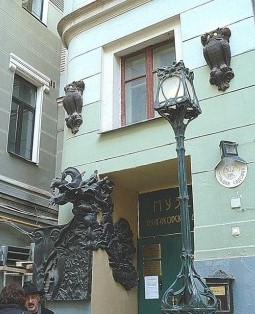
Bolshaya Sadovaya ulitsa 10, flat 52
Tel. (495) 970 0619
Subway:
Mayakovskaya
Open: 1pm- 11pm Sun- Thu
1pm- 1am Fri- Sat
The Bulgakov Flat Museum, officially known as the Mikhail
Bulgakov State Museum, is a literary house museum dedicated to the
life, works, and legacy of the renowned Russian author Mikhail
Afanasyevich Bulgakov (1891–1940). Best known for his satirical
masterpiece The Master and Margarita, Bulgakov's time in Moscow
profoundly influenced his writing, and this museum preserves one of
his key residences as a window into his world. The "Flat" in the
name refers to Apartment No. 50 at 10 Bolshaya Sadovaya Street in
central Moscow's Tverskaya District, where Bulgakov lived from 1921
to 1924 with his first wife, Tatyana Nikolaevna Lappa. This communal
apartment, often called the "Bad Apartment" or "Evil Apartment,"
directly inspired the infamous Apartment No. 50 in The Master and
Margarita, where the devil Woland and his entourage wreak havoc
during their visit to Moscow. The fictional apartment number 302-bis
is a clever cipher for the real address: 10 = (3+2) × 2, with "bis"
implying "times two" or "encore."
Established as Russia's first
official Bulgakov memorial museum on March 26, 2007, by the
Government of Moscow, it transformed the site from a rundown
communal space into a preserved historical gem. Notably, the museum
operates across multiple sites today, reflecting its expansion. The
core "unfavorable apartment" at Bolshaya Sadovaya remains the
flagship, but it also includes a Scientific and Educational Center
at Bolshoy Afanasievsky Lane, 35-37s4 (opened March 15, 2023), and
another apartment at Bolshaya Pirogovskaya Street, 35a (reopened
after renovations on October 18, 2025). This multi-site approach
allows for broader exploration of Bulgakov's Moscow life, from his
early struggles as a doctor-turned-writer to his later years under
Soviet censorship.
The building itself, constructed between 1902
and 1905 in the Russian Art Nouveau style by millionaire Ilya Pigit
(owner of the Ducat tobacco company), was originally luxury rental
apartments. Post-Revolution, it became a communal housing block,
mirroring the chaotic Soviet era that Bulgakov satirized in stories
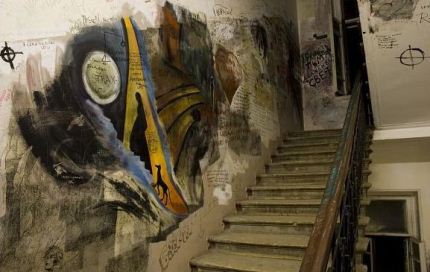
like Heart of a Dog. The courtyard and stairwell are iconic: fans
have left graffiti dedications since the 1960s, when Bulgakov's
censored works were first published posthumously, turning the site
into a pilgrimage spot. In recent years, the museum-theater
"Bulgakov House" (a separate but adjacent entity in the same
courtyard) has initiated courtyard reconstructions to enhance the
historical ambiance.
Early History of the Building and Its Significance
The Bulgakov Flat Museum, formally known as the Mikhail Bulgakov
State Museum, is housed in the infamous Apartment No. 50 at 10
Bolshaya Sadovaya Street in Moscow's Tverskaya District. The
building itself has a rich pre-revolutionary history that sets the
stage for its later cultural importance. Constructed between 1902
and 1905 in the Russian Art Nouveau style, it was commissioned by
millionaire Ilya Davidovich Pigit, owner of the Ducat tobacco
company, as a luxury rental property for affluent tenants. The
six-story structure featured modern amenities for the era, including
elevators and spacious apartments, reflecting the opulence of
tsarist Moscow. However, following the 1917 Bolshevik Revolution,
the building was nationalized and repurposed as communal housing, a
common fate for many pre-revolutionary edifices. This transformation
into a "kommunalka" (communal apartment) symbolized the chaotic
social upheavals of early Soviet life, where multiple families
shared kitchens, bathrooms, and living spaces amid poverty and
ideological fervor.
Mikhail Bulgakov's Residence (1921–1924)
The apartment's literary legacy began in September 1921, when
Mikhail Afanasyevich Bulgakov, then a struggling
doctor-turned-writer, moved into Apartment No. 50 with his first
wife, Tatyana Nikolaevna Lappa. Arriving in Moscow amid the
post-revolutionary turmoil, Bulgakov sought literary opportunities
after abandoning his medical practice in Kiev and Vladikavkaz. The
couple occupied a small room in the overcrowded communal flat,
sharing it with up to 18 other residents, including noisy neighbors
whom Bulgakov despised. He documented the squalor in his diary,
describing the place as a "hellish" environment plagued by theft,
arguments, and unsanitary conditions. This period marked Bulgakov's
early literary output; while living there, he penned works like The
White Guard (1924) and short stories that satirized Soviet
bureaucracy and communal living, such as those in Notes on the Cuff.
The apartment profoundly influenced Bulgakov's masterpiece, The
Master and Margarita (written 1928–1940, published posthumously in
1966–1967). Apartment No. 50 became the model for the novel's "bad
apartment" (No. 50, fictionally renumbered as 302-bis—a cipher for
the address: 10 = (3+2) × 2, with "bis" implying repetition). In the
book, it serves as the Moscow headquarters for the devil Woland and
his entourage, a portal to supernatural chaos that mirrors the
real-life absurdities Bulgakov endured. Elements like the endless
staircase, communal kitchen, and courtyard drew directly from his
experiences. Bulgakov left the apartment in 1924 after a brief
eviction and reinstatement, moving to other addresses in Moscow, but
the site's imprint on his satire endured.
Post-Bulgakov
Period and Emergence of Fan Culture (1924–1990s)
After Bulgakov's
departure, Apartment No. 50 reverted to ordinary communal use,
housing various families through the Stalinist era and beyond.
Bulgakov himself faced increasing censorship; his works were largely
suppressed until his death in 1940 from nephrosclerosis. The
apartment faded into obscurity until the 1960s, when The Master and
Margarita was finally published in censored form in the Soviet
Union, sparking a cult following. Fans began pilgrimages to Bolshaya
Sadovaya, treating the site as a literary shrine. By the 1970s and
1980s, the stairwell and courtyard walls became canvases for
graffiti—quotes from the novel, drawings of characters like the cat
Behemoth, and tributes to Bulgakov—turning it into an unofficial
"museum" of fan art.
Formal memorialization started in the
perestroika era. In 1983, an unofficial exposition dedicated to
Bulgakov opened in the apartment, displaying artifacts and
photographs. This grassroots effort gained momentum, leading to the
establishment of the Mikhail Bulgakov Foundation in 1990, timed for
the writer's centenary in 1991. The foundation preserved the space
and advocated for its recognition, amid growing public interest in
Bulgakov's once-banned works.
Establishment of the Museums:
Rivalry and Development (2000s)
The turn of the millennium saw
competing visions for memorializing the site, resulting in two
distinct institutions in the same building—a unique rivalry that
underscores the site's cultural pull.
First came the private
Bulgakov House Museum-Theater, opened on May 15, 2004 (Bulgakov's
birthday anniversary), as a non-profit initiative by enthusiasts and
philanthropists. Located on the ground floor (initially in a space
adjacent to Apartment No. 50, which was unavailable), it emphasized
immersive, theatrical experiences: a museum with exhibits, a theater
staging Bulgakov adaptations, a café, and events like literary
readings and tours. The Bulgakov House also incorporated Apartment
No. 51 for storage and workshops, fostering a vibrant,
community-driven atmosphere.
In response, the Moscow Government
founded the official Mikhail Bulgakov State Museum on March 26,
2007, in the actual Apartment No. 50. This marked Russia's first
state-recognized Bulgakov museum, building on the foundation's work.
It focused on authentic preservation: restoring rooms to their 1920s
appearance, displaying original artifacts like Bulgakov's desk and
manuscripts, and hosting scholarly exhibitions. Early critiques
noted its sparse setup compared to the dynamic Bulgakov House, but
it gained legitimacy through official status.
The dual museums
created tension. The Bulgakov House was seen as more innovative,
while the State Museum held the "real" apartment. A notable incident
occurred on December 22, 2006, just before the state museum's
opening, when anti-satanist protester and neighbor Alexander Morozov
vandalized Apartment No. 50, smashing exhibits in protest against
the novel's "demonic" themes. This highlighted ongoing cultural
debates about Bulgakov's work in post-Soviet Russia.
Expansions and Recent Developments (2010s–2020s)
The State Museum
evolved into a multi-site institution, reflecting growing
institutional support. By the 2010s, it incorporated multimedia
elements, such as interactive displays and audio guides, to engage
visitors. A major expansion came on March 15, 2023, with the opening
of a Scientific and Educational Center at 35-37 Bolshoy Afanasievsky
Lane, focusing on research, lectures, and temporary art exhibitions.
Another milestone was the October 18, 2025, reopening of Bulgakov's
later apartment at 35a Bolshaya Pirogovskaya Street (his home from
1927–1934, where much of The Master and Margarita was written),
after extensive renovations.
The Bulgakov House continued
parallel growth, including courtyard reconstructions to evoke the
novel's atmosphere and events like puppet animation exhibits. Both
institutions preserved the graffiti tradition, now a protected
"evolving exhibit," and collaborated loosely on projects like the
"Moscow of Mikhail Bulgakov" app, mapping over 100 related sites.
Legacy and Cultural Impact
The Bulgakov Flat Museum's history
encapsulates the transition from Soviet suppression to
post-communist celebration of Bulgakov's legacy. From a despised
communal flat to a global literary pilgrimage site, it attracts
thousands annually, blending history, literature, and theater. The
rivalry between the two museums has ultimately enriched the
experience, offering complementary perspectives: the state's
authenticity and the private sector's creativity. As of 2026,
ongoing exhibitions—like those on Bulgakov's wives and animated
adaptations—ensure the site's vitality, honoring a writer whose
satire remains timeless.
The "Bad Apartment" (Нехорошая Квартира) – Bolshaya
Sadovaya Street 10, Apt. 50
Bulgakov and his first wife Tatyana Lappa
lived here from autumn 1921 to summer 1924. This cramped communal flat
(kommunalka) in a pre-revolutionary Art Nouveau building inspired scenes
in The Master and Margarita (as Woland's residence) and other works like
"Zoyka's Apartment" and "No. 13 – The Elpit-Rabkommun House." The
museum, opened officially in 2007 (with roots in 1990s efforts by the
Bulgakov Foundation), recreates the 1920s-era communal flat with its
long narrow corridor, small rooms, shared kitchen (primus stoves,
samovars, mismatched furniture), and everyday artifacts.
The
permanent setup immerses visitors in the housing crisis of 1920s Moscow,
Bulgakov's early struggles, and the surreal atmosphere that haunted his
fiction. Exhibits include personal items, photographs, manuscripts, rare
editions, letters, and period objects from the museum's collection
(amassed from family donations and acquisitions). Multimedia elements
and interactive displays enhance the experience.
A flagship project,
"Words and Things" (Слова и вещи), systematically unveils the collection
through rotating small exhibitions in a refurbished room styled like a
stockroom (lattice walls, illuminated cabinets). It displays ~10 items
per show—typewritten texts, books, photos, family artifacts from the
1910s–1930s—interweaving "words" (manuscripts, letters) with "things"
(personal objects) to reveal Bulgakov's life and era. Themes emerge
organically without exhaustive narration.
Recent and ongoing
exhibitions in the "bad apartment" (often temporary, rotating in rooms
or the corridor) include:
"Fantastic Bulgakov" (to mark the 100th
anniversary of The Fatal Eggs, 1925): Explores Soviet sci-fi, the
cultural fascination with "death rays," and real-world influences.
Sections cover inventor Harry Mathews' 1923 "death ray" (reported in
Pravda, 1924), H.G. Wells' impact (e.g., The Food of the Gods),
cinematic adaptations like Lev Kuleshov's 1925 film Death Ray, and
Bulgakov's ironic novella (a "life ray" creates monsters that nearly
destroy Moscow). Exhibits include a 1928 first edition, foreign
translations, publisher letters, Bulgakov's photos and cigar case,
Wells-related postcards/editions, and film stills. It highlights
Bulgakov's early bestseller status and satirical take on scientific
hubris amid 1920s fears.
"Margot's Childhood" (November 2025–January
2026): A contemporary art project (with gallery murmure.space)
investigating Margarita's inner world from The Master and Margarita.
Spread across rooms for a "found object" effect, it features
installations by female artists evoking her modernist-era childhood
(~1900 birth): Lisa Artamonova's face-installation peering into rooms;
"Wardrobe of Margarita" by "Shtopka" (flying vintage dresses, a worn
teddy bear symbolizing lost innocence, fire-stained fabrics nodding to
the apartment's fate); Maria Chitaeva's intuitive drawings and video;
Maria Sokol's video "Wardrobe" with a real 1920s dress and foxtrot
music. Memorial items include a photo of Elena Sergeevna (Margarita's
prototype) and a porcelain vase from the Bulgakovs' later flat. Themes:
sacrifice, mercy, eternal femininity, symbolic objects (toys, wardrobes,
dresses), and links to Goethe's Gretchen/Faust.
"The Appearance of
the Hero: Mikhail Bulgakov in Moscow in the 1920s" and "In Moscow an
Event": Focus on Bulgakov's 1921 arrival, immersion in literary life,
and path to publication while in the communal flat.
Other recent:
Interactive "History of Puppet Animation" (tied to a short film
Bulgakovъ); online "New Acquisitions" (2024 items).
The Later
Apartment – Bolshaya Pirogovskaya Street 35A
Bulgakov lived here from
1927 to 1934 (with second wife Lyubov Belozerskaya, then third wife
Elena Sergeevna from 1932). He wrote much of The Master and Margarita
here, received Stalin's famous phone call, and endured a fire. The
museum branch opened in late 2021 (after earlier closure) with a
multidisciplinary permanent exposition (corridor, study, living room) on
his biography, plus interactive elements.
The "Guide to Bolshaya
Pirogovskaya" project includes history of the flat, interactive tables,
and a wardrobe-based exhibition with three narrative scenarios.
The
opening/current exhibition (October 2025–February 2026) is "Elena
Sergeevna: The Story of the Writer's Wife in Five Chapters":
Chapters trace her life: meeting Bulgakov (February 1929, while he lived
with Belozerskaya); marriage (1932); role as muse/prototype for
Margarita; home support during censorship and illness; post-1940
preservation of his legacy (editing/publishing The Master and Margarita,
advocacy for royalties and performances).
Exhibits: her 1933 diary
excerpts; letters, documents, memoirs; rare photos; personal items;
archival editions, film scripts, posters; autographs and items from
friends (Simonov, Nemirovich-Danchenko, Ranevskaya). Many displayed for
the first time. Curated to show their "complex but happy" life amid
1930s challenges.
The museum also runs the multimedia project
"Bulgakov's Moscow" (map, app, site) linking literary sites to real
locations.
Location and Accessibility: Main site at 10 Bolshaya
Sadovaya Street, Apartment 50 (entrance via courtyard; look for
signage). It's a 5-minute walk from Mayakovskaya Metro Station and near
Patriarch's Ponds. No elevator (stairs only), so it may not be fully
accessible for those with mobility issues. A black cat often lounges at
the entrance, nodding to Behemoth.
Opening Hours: Typically 12:00 PM
to 7:00 PM daily, but check for temporary closures (e.g., Pirogovskaya
closed briefly on February 1, 2026). Free entry during Moscow Museum
Week (specific dates vary; consult the website).
Ticket Prices:
Standard admission is around 300 RUB (approximately $3 USD), with
discounts for students (often free) and via the Pushkinskaya Karta
cultural voucher program. Tours and special events may cost extra.
Tours and Programs: Guided overview excursions (e.g., February 8, 2026,
at Pirogovskaya focusing on Bulgakov's study). Pedestrian tours like
"Once on the Patriarchal Ponds" trace novel scenes. Audio guides are
recommended for non-Russian speakers. Special events include literary
readings, theatrical performances, and holiday tie-ins like a Master and
Margarita-themed New Year tree in GUM for 2025-2026.
With a 4.6/5 rating on Tripadvisor from over 300 reviews, visitors praise the museum's atmospheric charm and historical depth, calling it a "must for Bulgakov fans." Many highlight the immersive feel, though some note crowds and occasional tour cancellations. Recent X posts mention picking up books there, enjoying the graffiti, and nearby festive spots like a "fairytale corner" in winter. Tips: Book tours in advance, use audio guides, visit at night for a spooky vibe, and combine with walks to related sites like Patriarch's Ponds or Bulgakov's grave at Novodevichy Cemetery. For updates, follow the museum's Max messenger channel.