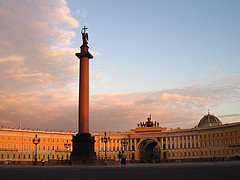
Saint Petersburg’s history provides fertile ground for its
haunted and weird reputation. Founded on marshy, flood-prone land
wrested from Sweden during the Great Northern War, the city’s
construction exacted a heavy human toll, with thousands of serfs and
prisoners dying from disease, starvation, and harsh labor. This grim
foundation, coupled with the city’s role as the epicenter of
imperial intrigue, revolutions (1917), and the devastating Siege of
Leningrad (1941–1944), has fueled tales of restless spirits and
eerie phenomena. The Romanov dynasty’s violent end, political purges
under Stalin, and the city’s literary tradition—marked by figures
like Fyodor Dostoyevsky, whose works explore psychological
torment—further amplify its macabre allure. The city’s long, dark
winters and ethereal white nights (late May to early July), when the
sun barely sets, create an otherworldly atmosphere conducive to
ghost stories and strange experiences.
Unlike Western
European cities with medieval ghost lore, Saint Petersburg’s
hauntings are tied to its relatively recent history, blending
imperial scandals, revolutionary violence, and Soviet-era
repression. Its weird attractions, meanwhile, reflect a mix of
Soviet nostalgia, avant-garde art, and Peter’s fascination with the
bizarre, as seen in his Kunstkamera collections. The city’s planned,
neoclassical layout, designed to rival Paris or Rome, contrasts with
these hidden oddities, making its haunted and weird elements feel
like secrets beneath a polished surface.
Saint Petersburg’s haunted reputation, while less documented than
that of cities like London or New Orleans, is rooted in specific
locations tied to tragedy, murder, or unresolved historical events.
Below are some of the most notable haunted sites, drawn from local lore,
historical accounts, and limited references to Russian ghost stories,
with critical analysis of their credibility.
1. Mikhailovsky
Castle
Location: Sadovaya Street 2, near the Moika River and Summer
Garden.
History and Haunting: Built in 1797–1801 for Emperor Paul I
by architects Vincenzo Brenna and Vasily Bazhenov, the Mikhailovsky
Castle was Paul’s fortified residence, reflecting his paranoia about
assassination. His fears were justified: on March 23, 1801, Paul was
murdered in his bedroom by conspirators, including his son Alexander I’s
associates, in a coup to restore pro-European policies. The castle, with
its moat and drawbridges, became a symbol of imperial intrigue. After
Paul’s death, it was abandoned by the royal family, later serving as an
engineering school and Soviet offices.
Ghostly Tales: Local legend
claims Paul’s ghost haunts the castle, with reports of his apparition
pacing the corridors, knocking on walls, or appearing in his bedroom
window. Night guards have described flickering candles, disembodied
footsteps, and cold spots, particularly near the murder site. The
castle’s eerie reputation is amplified by its blood-red facade and
isolated setting, especially during winter fogs.
Cultural Context:
The haunting aligns with Russia’s history of violent regime changes,
from Ivan the Terrible to the Romanovs. Paul’s murder, a pivotal moment
in imperial politics, left a psychic imprint, similar to the Church of
the Savior on Spilled Blood’s association with Alexander II’s 1881
assassination.
Critical Analysis: The ghost stories, while
compelling, lack primary documentation and may be fueled by the castle’s
grim history and Gothic ambiance. Russian Orthodoxy, skeptical of
ghosts, frames such tales as spiritual echoes rather than literal
spirits, suggesting cultural embellishment. The castle’s use as a museum
(part of the Russian Museum) limits paranormal investigations, but its
inclusion in local ghost tours indicates enduring public fascination.
2. The Bronze Horseman and Peter the Great’s Ghost
Location:
Senate Square, near the Neva River and Saint Isaac’s Cathedral.
History and Haunting: The Bronze Horseman, an equestrian statue of Peter
the Great unveiled in 1782, was commissioned by Catherine the Great and
sculpted by Étienne Maurice Falconet. Located in Senate Square, it
symbolizes Peter’s transformative reign but also his brutal legacy,
including the deaths of thousands during Saint Petersburg’s
construction. Legend holds that Peter’s ghost haunts the statue, tied to
his relentless drive to modernize Russia.
Ghostly Tales: Stories
dating to the 19th century claim Peter’s spirit rides through Senate
Square at night, his horse’s hooves echoing on the cobblestones. A
famous anecdote, immortalized in Alexander Pushkin’s 1833 poem The
Bronze Horseman, describes a clerk, Yevgeny, driven mad by the statue’s
pursuit after blaming Peter for a flood’s devastation. Locals and
tourists have reported seeing a shadowy figure near the statue during
storms or hearing hoofbeats in the fog.
Cultural Context: The
haunting reflects Russia’s ambivalence toward Peter’s legacy—revered as
a visionary but reviled for his authoritarianism. The statue’s massive
granite Thunder Stone, hauled from the Karelian forests, adds a mythic
quality, fueling tales of supernatural energy. Pushkin’s poem, a
cornerstone of Russian literature, elevates the ghost story to a
national allegory, akin to the Literary Café’s Pushkin connection.
Critical Analysis: The ghost tales are likely literary embellishments,
rooted in Pushkin’s work rather than verifiable accounts. The statue’s
imposing presence and Senate Square’s open, windswept expanse create a
psychological effect, amplifying perceptions of eeriness. Lack of modern
paranormal investigations limits evidence, but the legend persists in
folklore, reinforced by the city’s revolutionary history near the square
(e.g., the 1905 and 1917 uprisings).
3. Rotonda House (Rotunda at
Gorokhovaya)
Location: Gorokhovaya Street 57, near the Fontanka River
and Admiralty.
History and Haunting: The Rotonda House, built in 1828
by architect Joseph Charlemagne, is a six-story neoclassical building
with a mysterious circular atrium, featuring six columns and a spiral
staircase that seems to ascend endlessly. Originally a residential
building, it was rumored to be a meeting place for secret societies,
including Freemasons and mystics like Grigory Rasputin, who lived nearby
at Gorokhovaya 64 from 1912 until his 1916 murder. Its occult reputation
stems from its geometric design and proximity to Rasputin’s influence
during Nicholas II’s reign.
Ghostly Tales: Locals claim the Rotonda
is haunted by spirits tied to Rasputin’s dark rituals or Masonic
ceremonies. Visitors report dizziness, disorientation, or whispers in
the atrium, with some seeing shadowy figures on the staircase. Urban
legends suggest the Rotonda is a “portal” to another dimension,
amplified by its spiral geometry, and that Rasputin’s ghost occasionally
appears, his piercing eyes glowing in the dark. Soviet-era residents
reported objects moving or doors slamming inexplicably.
Cultural
Context: Rasputin’s mystique, blending charisma and scandal, fuels the
Rotonda’s haunted reputation, much like the Mikhailovsky Castle’s link
to Paul I’s murder. The building’s Masonic associations tap into
Russia’s 19th-century fascination with secret societies, suppressed by
the Orthodox Church and tsars. Its proximity to the Fontanka, like the
Chizhik-Pyzhik monument, embeds it in the city’s canal-laden mystique.
Critical Analysis: The hauntings lack concrete evidence, likely
exaggerated by the Rotonda’s unusual architecture and Rasputin’s legend.
The atrium’s acoustics and optical illusions from the spiral staircase
may explain sensory phenomena, a psychological effect seen in other
“haunted” geometries like the Winchester Mystery House. The building’s
private residential status limits access, but its inclusion in ghost
tours and local blogs suggests a persistent, if speculative, allure.
4. Obvodny Canal and the “House of the Hanged”
Location: Obvodny
Canal Embankment, near Baltiysky Railway Station.
History and
Haunting: The Obvodny Canal, dug in the early 19th century, is one of
Saint Petersburg’s oldest waterways, known for its industrial grit and
dark history. The so-called “House of the Hanged” (exact address
debated, often linked to buildings like Obvodny Canal 108) was a
tenement where suicides and executions reportedly occurred during the
19th and early 20th centuries, including during the 1905 Revolution’s
repressions. The canal itself was a site of drownings, both accidental
and intentional, due to its murky waters and lack of railings.
Ghostly Tales: Locals claim the canal and nearby buildings are haunted
by the spirits of suicide victims and executed revolutionaries.
Residents report apparitions of a woman in white, believed to be a
jilted lover who drowned herself, and shadowy figures hanging from
windows in abandoned houses. Nighttime walkers describe cold spots,
disembodied cries, or the sound of splashing water with no source. The
“House of the Hanged” is said to emit groans or flickering lights, with
some claiming to see nooses swaying in empty rooms.
Cultural Context:
The canal’s grim reputation aligns with Saint Petersburg’s history of
poverty and political violence, contrasting with the opulence of Nevsky
Prospect. The “woman in white” motif, common in global ghost lore, ties
to Russian tales of betrayed women, like the banshee-like rusalka in
Slavic mythology. The canal’s industrial decay, similar to the Vyborg
Side’s Finland Station, evokes a working-class haunting distinct from
imperial sites like the Mikhailovsky Castle.
Critical Analysis: The
hauntings are largely anecdotal, with no specific building officially
designated as the “House of the Hanged,” suggesting a composite legend.
The canal’s polluted, desolate ambiance likely fuels perceptions of
eeriness, amplified by its history of drownings. Lack of paranormal
investigations, due to the area’s residential and industrial use, limits
verification, but the stories persist in local oral tradition, akin to
the Chizhik-Pyzhik’s folklore.
Beyond its haunted sites, Saint Petersburg boasts a range of weird
and offbeat attractions that reflect its eccentric history, from Peter
the Great’s curiosity cabinets to Soviet-era relics and avant-garde art.
These sites, often overlooked by tourists focused on the Hermitage or
Peterhof, add a quirky dimension to the city’s cultural landscape, as
noted in sources like Hotels.com’s guide to quirky attractions. Below
are key examples, with historical context and critical analysis.
1. Kunstkamera’s “Cabinet of Curiosities”
Location: Universitetskaya
Embankment 3, Vasilievsky Island.
Description: The Kunstkamera,
Russia’s first museum, founded by Peter the Great in 1714, houses the
infamous “Cabinet of Curiosities,” a collection of anatomical anomalies,
preserved fetuses, and zoological oddities. Acquired from Dutch
scientists Frederik Ruysch and Albertus Seba, the collection includes
two-headed calves, Siamese twins, and malformed embryos, displayed in
glass jars to debunk superstitions about “monsters.” Other weird
exhibits include Peter’s extracted teeth, a preserved human head, and a
stuffed hermaphrodite lion.
Weird Factor: The collection’s macabre
nature, housed in a dimly lit room under the Kunstkamera’s Baroque
tower, evokes both fascination and unease, as noted in Tripadvisor
reviews calling it “creepy” yet “fascinating.” The ethical debate over
displaying human remains, especially without consent, adds a modern
layer of controversy, making it weirder than typical natural history
museums like the Zoological Museum.
Historical Context: Peter’s
obsession with science and the bizarre, driven by his European travels,
aimed to educate Russians and dispel myths, aligning with the Twelve
Colleges’ rationalist ethos. The collection’s public access, with free
vodka to attract visitors, was revolutionary for its time, contrasting
with the private cabinets of European nobility.
Critical Analysis:
The Kunstkamera’s weirdness lies in its blend of enlightenment science
and grotesque spectacle, a duality Peter embraced but which unsettles
modern sensibilities. Its ethical issues, unaddressed in early
18th-century Russia, mirror global debates in museums like the Mütter in
Philadelphia. The collection’s preservation, despite Soviet neglect, is
remarkable, but its static displays lack the interactivity of modern
science museums, limiting its appeal to non-specialists.
2.
Museum of Hygiene (Museum of Public Health)
Location: Italianskaya
Street 25, near the Russian Museum.
Description: This Soviet-era
museum, founded in the 1920s to promote public health, is a bizarre
repository of preserved human organs, anatomical models, and anti-vice
propaganda. Exhibits include blackened lungs from smoking, a bloated
liver from alcoholism, and graphic displays of STDs, alongside a stuffed
dog used in Ivan Pavlov’s conditioning experiments. The museum’s stark,
clinical aesthetic, with jars of organs in formaldehyde, feels like a
time capsule of Soviet didacticism.
Weird Factor: The visceral
displays, described as “graphic” and “disturbing” in Hotels.com’s guide,
are both educational and morbid, appealing to those with a taste for the
grotesque. The inclusion of Pavlov’s dog, a nod to Saint Petersburg’s
scientific heritage, adds an eccentric touch, contrasting with the
city’s imperial museums like the Hermitage.
Historical Context: The
museum reflects Soviet efforts to enforce hygiene and morality, using
shock value to deter behaviors like smoking, a campaign rooted in the
Twelve Colleges’ academic legacy. Its preservation of 1920s medical
artifacts, rare in modern museums, underscores Saint Petersburg’s role
as a scientific hub, akin to the Zoological Museum’s mammoth collection.
Critical Analysis: The museum’s weirdness stems from its unapologetic
Soviet approach, prioritizing propaganda over nuance, which feels dated
compared to contemporary health museums. Its ethical stance—displaying
organs to shame rather than educate—clashes with modern medical ethics,
though its historical value is undeniable. Limited English signage, a
recurring issue in Saint Petersburg attractions like the Finland
Station, restricts its accessibility, but its niche appeal draws curious
visitors.
3. Freud Museum of Dreams
Location: Bolshoy Prospekt
18A, Petrograd Side.
Description: Housed in the Eastern European
Institute of Psychoanalysis, this small museum, opened in 1999, explores
Sigmund Freud’s theories through immersive, surreal exhibits. The first
hall displays 12 panels on personality development, while the second
plunges visitors into Freud’s subconscious with dream-inspired images,
texts, and audio. Mirrors, dim lighting, and abstract installations
create a disorienting experience, described as “plunging your mind’s eye
into Freud’s dreams” by Hotels.com.
Weird Factor: The museum’s
avant-garde approach, eschewing traditional displays for a dreamlike
atmosphere, is uniquely weird, appealing to psychology enthusiasts and
art lovers. Its focus on the subconscious, with no physical artifacts,
contrasts with the tangible relics of the Menshikov Palace or Sheremetev
Palace, making it an intellectual oddity.
Historical Context: The
museum reflects Saint Petersburg’s post-Soviet embrace of Western
intellectual traditions, suppressed under communism, aligning with the
city’s literary depth seen in the Literary Café. Freud’s influence on
Russian writers like Dostoyevsky, whose Crime and Punishment explores
guilt, adds a cultural link, though the museum’s 1990s origin ties it to
perestroika’s openness.
Critical Analysis: The museum’s weirdness is
its strength, offering an experiential dive into Freud’s theories, but
its abstract nature may alienate visitors expecting conventional
exhibits. Its small size and limited hours (Tuesdays, Saturdays,
Sundays, noon–5 PM) restrict access, and its niche appeal, like the
Chizhik-Pyzhik’s folklore, requires prior interest in psychoanalysis.
The lack of primary Freud artifacts raises questions about authenticity,
but its immersive design is a bold departure from Saint Petersburg’s
historical museums.
4. Pyshechnaya Donut Shop
Location:
Bolshaya Konyushennaya 25, near Nevsky Prospect.
Description: This
Soviet-era donut shop, open since 1958, is a quirky time capsule serving
pyshki (fried donuts) sprinkled with powdered sugar for about 20 rubles
($0.20 USD). The stark decor—Formica tables, fluorescent lights, and a
hand-rolled dough machine—has barely changed since the USSR, offering a
nostalgic contrast to Saint Petersburg’s imperial grandeur. Customers
queue for cheap snacks, served by stoic staff, in a setting evoking
Soviet communal dining.
Weird Factor: The shop’s unapologetic Soviet
aesthetic, described as “unchanged since Khrushchev” by Hotels.com,
feels bizarrely out of place amid the city’s chic cafes and glitzy
malls, like a living museum of communist austerity. Its cult status
among locals and tourists, who brave long lines for donuts, adds an
eccentric charm, akin to the Chizhik-Pyzhik’s coin-tossing ritual.
Historical Context: The shop reflects Soviet efforts to provide
affordable, standardized food, a legacy of the Twelve Colleges’
administrative reforms. Its survival post-1991, unlike many Soviet
institutions, mirrors the Zoological Museum’s preservation of outdated
displays, embodying Saint Petersburg’s nostalgia for its Leningrad past,
as noted in dark tourism accounts.
Critical Analysis: The shop’s
weirdness lies in its anachronistic charm, offering a sensory link to
the USSR, but its appeal is niche, requiring appreciation for Soviet
history or quirky experiences. The lack of modernization, while
authentic, may deter tourists seeking polished venues like the Literary
Café. Its budget-friendly prices and central location ensure
accessibility, but the absence of English menus or context limits its
educational value for foreigners.
5. Street Art Museum
Location: Shosse Revolutsii 84, on the city’s outskirts.
Description:
Opened in 2012, this contemporary art museum transforms a 10-hectare
industrial complex into a canvas for street artists. Former factory
walls are covered with massive murals, while boiler houses host
mixed-media installations by local and international artists. The
sprawling site includes exhibition halls, pathways, and cafes, with
regular concerts and workshops, as noted in Hotels.com’s quirky guide.
Weird Factor: The juxtaposition of vibrant, anarchic street art with a
decaying Soviet factory creates a surreal, post-apocalyptic vibe,
contrasting with the city’s neoclassical landmarks like the Tavrichesky
Palace. Murals depicting dystopian themes or oversized animals add a
bizarre edge, appealing to fans of urban exploration, unlike the
polished Hermitage.
Historical Context: The museum reflects Saint
Petersburg’s post-Soviet cultural renaissance, embracing global street
art trends while repurposing industrial relics, a trend seen in the
Finland Station’s modern rail upgrades. Its location in a former
proletarian district ties to the city’s working-class history,
contrasting with the aristocratic Menshikov Palace.
Critical
Analysis: The museum’s weirdness is its strength, offering a raw,
contemporary contrast to Saint Petersburg’s imperial past, but its
peripheral location—30 minutes from the center—limits accessibility
compared to the Rostral Columns’ central Strelka. The lack of English
guides, noted in reviews, hinders international engagement, and its
industrial setting may feel unsafe or unpolished to some. Its vibrant
art scene, however, positions it as a forward-thinking counterpart to
the Kunstkamera’s historical oddities.
Saint Petersburg’s weirdness extends beyond specific sites to
cultural phenomena and urban legends that permeate its atmosphere, often
tied to its revolutionary and literary history.
White Nights and
Psychological Disorientation: The white nights, when the sun barely
sets, create a dreamlike state that locals call “white night fever,”
with reports of insomnia, vivid dreams, or hallucinations. This natural
phenomenon, unique to high-latitude cities like Saint Petersburg, fuels
tales of ghostly sightings and strange behavior, particularly near the
Neva River, where the Bronze Horseman’s ghost is said to roam. The
disorienting light, noted in dark tourism accounts, enhances the city’s
eerie ambiance, akin to the Rotonda’s surreal geometry.
Rasputin’s
Lingering Presence: Beyond the Rotonda, Grigory Rasputin’s influence
haunts Saint Petersburg’s collective psyche. His 1916 murder in the
Yusupov Palace (Moika Embankment 94, now a museum) is a source of urban
legends, with some claiming his ghost appears in the palace’s basement,
where he was poisoned, shot, and drowned. The palace’s wax figure
exhibit, recreating the murder, adds a macabre tourist draw, though no
verified hauntings are documented. Rasputin’s apartment at Gorokhovaya
64, a private residence, is rumored to emit strange energies, amplifying
his mystique, though access is restricted.
Soviet Nostalgia and
Kitsch: The city’s Soviet past, as Leningrad, manifests in quirky relics
like the Pyshechnaya donut shop and the Museum of Soviet Arcade Machines
(Konyushennaya Square 2/1). The latter, opened in 2007, features 50+
working arcade games from the 1970s–1980s, like Sea Battle and Sniper,
for 450 rubles ($4.50 USD). Its retro vibe, housed in a former stable
near the Spaso-Konyushenny Church, is both nostalgic and weird, evoking
a bygone era of state-controlled leisure, contrasting with the Finland
Station’s revolutionary gravitas.
Literary Macabre: Saint
Petersburg’s literary tradition, from Dostoyevsky’s Crime and Punishment
(set near Sennaya Square) to Nikolai Gogol’s The Nose (inspired by
Nevsky Prospect), infuses the city with a psychological weirdness.
Gogol’s surreal tale, where a nose escapes its owner, inspired the “Nose
of Major Kovalev” monument (Voznesensky Prospect 36), a 1995 sculpture
that vanishes and reappears, adding a quirky urban legend. The city’s
literary haunts, like the Literary Café, where Pushkin dined before his
1837 duel, carry a ghostly aura, though specific hauntings are
anecdotal.
Saint Petersburg’s haunted and weird aspects, while captivating, are
less developed than those of Western cities like Edinburgh or Savannah,
due to Russia’s Orthodox skepticism of ghosts and Soviet suppression of
folklore. The Mikhailovsky Castle and Bronze Horseman legends, rooted in
imperial tragedies, rely heavily on 19th-century literature and oral
tradition, lacking modern paranormal investigations like those at St.
Petersburg, Florida’s Melting Pot. The Rotonda and Obvodny Canal tales,
tied to Rasputin and suicides, are speculative, amplified by
architectural oddities and urban decay, but their private or industrial
settings limit verification, unlike the accessible Vinoy Hotel in
Florida.
The city’s weird attractions, like the Kunstkamera and
Freud Museum, are grounded in its scientific and intellectual history,
reflecting Peter’s curiosity and post-Soviet openness, but their niche
appeal—macabre anatomy or abstract psychoanalysis—contrasts with the
universal draw of the Hermitage or Church of the Savior on Spilled
Blood. The Pyshechnaya and Street Art Museum, while quirky, require
cultural context to appreciate, unlike the Chizhik-Pyzhik’s immediate
charm. The white nights’ psychological impact, while real, is
scientifically explained by circadian disruption, tempering supernatural
claims but enhancing the city’s eerie mystique.
Ethically, the
Kunstkamera’s human remains raise concerns about consent, unaddressed in
Russian museum narratives, unlike Western institutions’ repatriation
debates. The glorification of figures like Peter or Menshikov, tied to
serf exploitation, in sites like the Bronze Horseman or Menshikov
Palace, risks sanitizing history, a critique applicable to the
Tavrichesky Palace’s imperial focus. The lack of English resources,
noted in reviews of the Twelve Colleges and Zoological Museum, extends
to haunted and weird sites, limiting global accessibility, though guided
tours mitigate this.
Saint Petersburg’s haunted and weird sites are accessible through
various means, though they require effort to explore due to their niche
status and scattered locations:
Ghost Tours: Unlike St.
Petersburg, Florida’s structured ghost tours (e.g., US Ghost Adventures
at Mirror Lake), Russia’s offerings are less formalized. Local agencies
like Peter’s Walking Tours or Petersburg 24 offer “Myths and Legends”
walks (~3,000 rubles, $30 USD), covering sites like the Mikhailovsky
Castle, Rotonda, and Bronze Horseman, often in Russian with English
options by request. Private tours, like those for the Yusupov Palace’s
Rasputin exhibit, provide deeper context (~5,000 rubles, $50 USD).
Tripadvisor reviews note engaging guides but occasional cancellations or
Russian-only narratives, a drawback shared with the Finland Station’s
Memorial Room.
Museum Access: The Kunstkamera (open Tuesday–Sunday,
10:00 AM–6:00 PM, ~400 rubles, $4 USD) and Freud Museum (Tuesdays,
Saturdays, Sundays, noon–5 PM, ~200 rubles, $2 USD) are affordable, with
English audio guides at the former. The Museum of Hygiene, less
frequented, requires advance booking (~300 rubles, $3 USD). Tripadvisor
praises the Kunstkamera’s “freaky” exhibits but notes the Freud Museum’s
small size, recommending it for “psychology nerds.” The Street Art
Museum, on the outskirts, is open daily (~500 rubles, $5 USD), with
concerts enhancing its appeal, though its distance deters some.
Quirky Sites: The Pyshechnaya donut shop (open daily, 9:00 AM–8:00 PM)
is a quick, budget-friendly stop near Nevsky Prospect, ideal for Soviet
nostalgia. The Soviet Arcade Museum (open daily, 11:00 AM–8:00 PM, ~450
rubles, $4.50 USD) offers hands-on fun, with reviews calling it “weirdly
addictive.” Both are walkable from the Literary Café or
Spaso-Konyushenny Church, integrating with central tours.
Visitor
Tips: Exploring these sites is best during white nights for atmospheric
effect or autumn for the Kunstkamera’s uncrowded galleries and the
Twelve Colleges’ vibrant red facade. Boat tours along the Neva or
Fontanka, passing the Rotonda and Menshikov Palace, offer a spooky
perspective (~1,000 rubles, $10 USD). Check hermitage museum.org for
Kunstkamera hours, spbmu.ru for the Museum of Hygiene, and
streetartmuseum.ru for art events. Dress warmly for winter visits to
sites like the Obvodny Canal, and book tours in advance to ensure
English guides.