
Location: village Starosyanovo Map
Found: no later than 14th century
Total length: over 19 km long
Temperature: 7-10 ° C
Syani (Сьяны), also known as the Syanovskie Quarry or Syani Caves, is a vast artificial underground system located in the Moscow Oblast region of Russia. It is one of the largest man-made cave networks in the country, formed through centuries of limestone quarrying. The system spans approximately 19 kilometers of explored tunnels, though historical estimates suggest it once extended up to 90 kilometers before partial sealing. These caves are not natural formations but the result of human excavation, with some interspersed karst features from the limestone bedrock. Syani is renowned among urban explorers, spelunkers, and history enthusiasts for its role in Moscow's development, its eerie Soviet-era history, and its vibrant subculture of visitors known as "sistemshchiki" (system dwellers), who have created traditions, myths, and rituals around the site. The constant internal temperature of 7-10°C and the labyrinthine layout make it a challenging yet captivating destination, often described as a "city beneath the city."
Syani is situated near the village of Staros’yanovo in the Domodedovo district, about 30-40 kilometers south of central Moscow. Its coordinates are roughly 55.484655, 37.788404. The caves are accessed through entrances like the Kotkina hole, located in a park between the village and a nearby river. Geologically, the site is in a karstified limestone area, where mining has created rectangular passages interspersed with small natural caves—often cross-shaped where vertical cracks meet horizontal bedding planes. Tunnel heights vary from 0.4 meters (requiring crawling) to 3.5 meters, with depths reaching up to 30 meters underground. The surrounding landscape is typical of the Moscow region: forested areas with rivers, but the caves themselves are entirely subterranean, with no surface karst features like sinkholes prominently visible. To reach Syani, visitors can take bus route 439 from Moscow's Domodedovskaya metro station (about 35 minutes to the "Pochta" stop) or an electric train from Paveletsky railway station to Leninskaya station.
The history of Syani dates back at least to the 14th century, when white limestone from the quarries was used by Grand Duke Dmitri Donskoi to build the first stone Kremlin walls, earning Moscow the epithet "white-stoned" (belokamennaya). Quarrying intensified in the 17th century, supplying stone for iconic white churches, fortifications, and other structures in Moscow. Mining continued actively until the late 19th century, tapering off by the 1917 Russian Revolution, when only local peasants used it sporadically. During the Soviet era, the caves served darker purposes: as sites for executing political prisoners by the NKVD (artifacts like spent rounds and a revolver have been found), a military hospital during World War II, and later a seismic station. In 1974, authorities sealed all entrances for safety reasons, but urban explorers reopened one in 1988. Full renovation by locals and enthusiasts began in 2007, transforming it into an informal tourist spot. The white stone from Syani even contributed to modern infrastructure, such as the first runway at Domodedovo Airport. This historical significance ties Syani directly to Moscow's architectural and political evolution.
The caves feature a mix of man-made and natural elements. The primary structures are rectangular mining tunnels, some widened into chambers, with walls bearing chisel marks from historical quarrying. Natural karst cavities add variety, including small caves with unique shapes. Notable attractions include visitor-maintained "shrines" like a human skull (possibly from executed prisoners or WWII casualties) left for superstitious reasons, and a disappeared Nazi helmet. Artistic elements abound, such as graffiti depicting scenes from Mikhail Bulgakov's "The Master and Margarita" (e.g., Margarita on a broomstick). The site hosts events like underground discos, leveraging its acoustics and isolation. Temperatures remain stable year-round, and while not overly muddy, the floors can be uneven. Some passages are blocked or choked, hinting at unexplored extensions.
Exploration at Syani is entirely self-guided, with no official tours or operators. Visits typically last 1-3 hours, but dedicated explorers can spend days mapping the system. A logbook at the entrance requires visitors to sign in with their names and expected exit times for safety—overdue entries trigger checks. The "sistemshchiki" subculture, rooted in Soviet hippie movements, emphasizes community rules: respect the site, help others, and share stories. Myths include tales of lost miners or hidden treasures. Ongoing exploration reveals new passages, but many remain blocked. Photography is permitted, and techniques like freezelight (light painting) create stunning effects in the dark.
Syani is not for the faint-hearted. Primary risks include getting lost in the maze-like tunnels, claustrophobia from narrow crawls (where visitors have gotten stuck), and falls on uneven surfaces. There's no artificial lighting, so multiple torches per person are essential. Structural instability from old mining poses collapse hazards in remote areas. Paranormal reports are common: echoes mimicking screams or gunshots, ghostly sightings, and an oppressive atmosphere tied to its execution history. Psychological strain from isolation is real. Recommended gear includes helmets, gum boots, gloves, old clothes (plus spares), and at least two light sources. It's inaccessible for those with mobility issues, and visitors should go in groups. In emergencies, the logbook aids rescue efforts.
Syani is open year-round and free to enter, though it's not a formal tourist site—visits are at your own risk. Operating hours (as of 2020) are Tuesday-Wednesday 10:00-18:00, Thursday-Friday 10:00-21:00, and Saturday-Sunday 10:00-18:00. No reservations are needed, but check local updates for any changes due to weather or maintenance. It's popular among Russians and international adventurers, but English signage is minimal. For a safe experience, join online communities or local groups familiar with the site. Syani embodies Russia's rich subterranean heritage, blending history, adventure, and mystery into an unforgettable underground world.

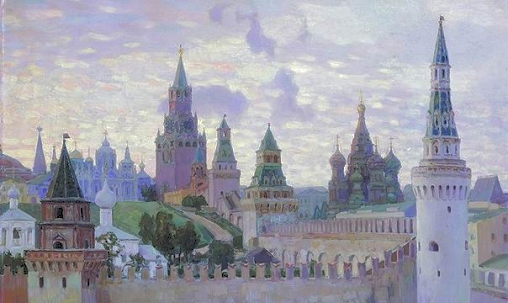
Moscow Kremlin at the Time of Grand Duke Dmitri Donskoy (14th century) above and 19th century depiction below
Kind of a local gig. Some people leave stuff out of superstitious beliefs. The skull is human and it is real. It probably once belonged to political prisoners who were executed here by the NKVD or German troops who were killed here during World War II. There was a German Nazi helmet at some point, but it disappeared.

"Eyes of the System"

Margarita flying on a broomstick from one of the best books ever "Master and Margarita".
