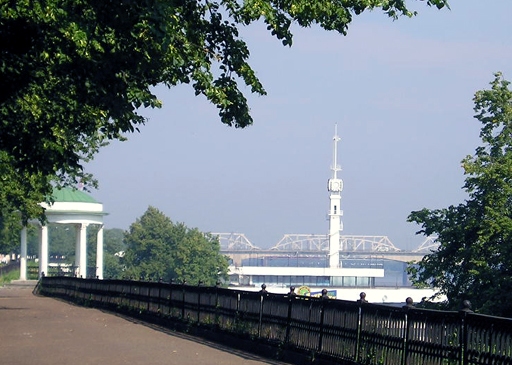
The Volzhskaya Naberezhnaya, commonly referred to as the Volga Embankment or Yaroslavl Embankment, stands as a captivating riverside walkway in Yaroslavl, Russia—a historic gem within the Golden Ring circuit and a UNESCO World Heritage Site renowned for its intact old town. Extending roughly 2.95 kilometers along the Volga River's right bank, from the dramatic merger with the Kotorosl River at the Strelka point to the vicinity of the Oktyabrsky Bridge and beyond toward Lenin Street, it functions as a vibrant focal point for residents and visitors, merging scenic vistas, architectural treasures, and deep-rooted cultural elements. Constructed on multiple tiers—a lower trail hugging the water for activities like running, biking, and serene riverside ambles, and an upper terrace shaded by century-old linden trees from the 1800s—this promenade once formed part of the Yaroslavl Kremlin's defenses and now delivers sweeping panoramas of the Volga's currents and adjacent terrain, ideal for unwinding, capturing photos, and observing daily life. During the warmer seasons, vibrant floral displays bloom, including arrangements mimicking the city's emblem of a bear wielding a halberd, and it becomes a prime venue for bridal parties and twilight promenades. The area pulses with energy, especially near the city core, transitioning to quieter stretches farther out, and its gentle curve along Russia's longest river enhances its allure as one of the most prestigious and scenic spots in Yaroslavl.
Yaroslavl's narrative is inextricably linked to this embankment, tracing back over 1,000 years. According to folklore, Prince Yaroslav the Wise established the settlement in 1010 at the Strelka after defeating a revered bear with his battle axe at the rivers' junction—a myth enshrined in the municipal coat of arms. As the city expanded from this waterfront locale, it thrived on Volga-based commerce and manufacturing. However, the contemporary embankment emerged in the 19th century, with initial reinforcements around 1830 and major enhancements by 1820, spurred by Emperor Alexander I's visit in 1823, when he provided 20,000 rubles for fortification under expert engineering oversight. This involved importing soil from across the river to stabilize the bank, installing a massive slab for docking, constructing bridges, planting extensive tree lines, equipping the upper path for foot traffic, and swapping old wooden barriers for ornate cast-iron railings—all in a neoclassical aesthetic during the 1840s to craft a sophisticated communal area. The 17th century saw the rise of the distinctive Yaroslavl architectural style with stone temples and tiled exteriors; the 18th century brought opulent trader residences; and the 19th century featured royal sojourns from Alexander I to Nicholas II. Further updates included asphalt surfacing and floral embellishments in 1944, and for the 2010 millennial celebration, a third tier was introduced along with granite tiling on pedestrian routes, modernizing it while honoring its legacy. Historically, this strip was the city's most bustling and tactical zone, buzzing with fishing enterprises, trade negotiations, and pivotal gatherings, evolving from simple marinas to a symbol of urban prestige.
In addition to its tiered structure—now including a third level for
expanded accessibility—the embankment incorporates diverse landscaped
components, positioning it as an exemplary urban green space. The lower
section, especially at Strelka, includes an expansive park with
illuminated, musical fountains that perform synchronized water dances to
tunes in summer nights, offering a enchanting display against the
river's glow.
The elevated path features intricate wrought-iron
enclosures, seating areas, and vantage spots, such as the 1840s rotunda
known variously as the Governor's Pavilion or Arbor of Love, where one
can overlook the Volga for breathtaking sights. Broad, maintained trails
accommodate walkers, bikers, and light transport, with the atmosphere
varying from lively central zones to peaceful peripheries near the
bridge. Ramps and stairways ensure connectivity between levels, though
the upper route offers richer historical immersion due to its alignment
with significant sites. The entire setup, reinforced with docks and
bridges, reflects centuries of engineering and aesthetic evolution,
making it not just a path but Yaroslavl's vibrant core.
Laden with cultural and structural highlights, primarily on the upper
tier, the embankment offers a comprehensive self-guided exploration of
Yaroslavl's past. At Strelka, the promenade's epicenter, a verdant park
hosts performing fountains, a legendary ancient boulder (believed to
grant wishes, dotted with coins), and an 18-meter pillar crowned by a
gilded eagle, its base portraying Prince Yaroslav alongside emblematic
personas like a cleric, soldier, explorer, and family figure, with
reliefs depicting pivotal eras. Progressing onward, the neoclassical
Governor's Residence, erected in 1823 at Alexander I's directive as a
royal lodging, later served provincial leaders and now functions as the
Yaroslavl Art Museum, hosting displays, performances, and a verdant
Governor's Garden.
Adjacent, the 1680s Metropolitan Quarters exhibit
medieval Russian artworks, while the Yaroslavl History Museum resides in
a 19th-century trader villa. The Vadim Orlov Collection, in a
refurbished 17th-century edifice, showcases fine porcelain, silverware,
and ironwork from esteemed Russian makers.
Sacred edifices are
plentiful: the Assumption Cathedral, originating in 1215 and
reconstructed repeatedly—burned, demolished in 1937 for a park, yet
reborn each time—shines with pale stone, gilded cupolas, and tiled
motifs, protecting venerated remains of local saints like Princes Vasily
and Konstantin, Fyodor Cherny and his offspring, plus a replica of the
Yaroslavl Mother of God icon. The Ilyinsko-Tikhonovskaya Temple mirrors
the Roman Pantheon via its Corinthian pillars and domed rotunda, erected
on the locale of Yaroslavl's inaugural shrine. Earlier gems include the
Nikola Nadein Sanctuary (Yaroslavl's premier stone church beyond the
Kremlin) and the Nativity Church, both exemplifying 17th-century tiled
aesthetics. Additional notables encompass the Volga Tower (1658-1669,
the lone surviving Kremlin relic), the Bolkonsky Residence (an
18th-century manor turned 1812 hospital, linked to Tolstoy's "War and
Peace" characters), and the 1958 Nekrasov poet sculpture gazing
riverward. The Arsenal Tower (late 17th century, now a cafe) and
multiple gazebos—four citywide, including the original 1840s "Governor's
Gazebo" for tea rituals or "Gazebo of Love" adorned with lovers'
padlocks—add romantic flair. Close by, icons like the Elijah the Prophet
Church, Savior Monastery, and "Music and Time" private collection invite
further discovery.
Beyond static sights, the embankment hosts dynamic happenings that enliven its atmosphere. Seasonal festivals and concerts celebrate the city's heritage, with boat excursions and food vendors adding vibrancy. Key annual events include City Day on the last Saturday in May, featuring parades, live music, and communal gatherings; the Yaroslavl Music Festival spotlighting regional and global performers; and potential light displays or cultural fetes, particularly in summer. Activities range from riverside strolls and cycling to photography at scenic overlooks, with the area serving as a hub for weddings, where couples affix heart-shaped locks at gazebos symbolizing enduring bonds. In warmer months, fountain shows and open-air events draw crowds, while winter offers tranquil snow-covered walks.
Enthusiastic reviews award the embankment a stellar 4.8/5 from over
1,800 TripAdvisor entries, placing it in the global top 10% of
destinations and as Yaroslavl's #4 attraction. Guests praise its
"stunning and scenic" qualities, perfect for relaxed rambles, Volga
contemplation, and soaking in the lively vibe, especially at dusk or
amid fountain performances. It's welcoming for families, with play
spaces for kids, and buzzes during celebrations.
For optimal
enjoyment, join a 2-hour guided stroll from the river station (circa
200-500 RUB), delving into tales from Prince Yaroslav's times to
imperial eras. Favor spring or summer evenings for active fountains and
blooms, but prepare for winter's frosty charm with warm attire.
Comfortable footwear is essential for varied terrain and steps. Nearby
eateries abound, offering Russian fare at Ioann Vasilyevich, seafood at
Boulevard, or pub vibes at Hopmalt—all within easy reach. Admission is
complimentary, though museums charge modestly (200-500 RUB each). Reach
via public transit or Volga cruises, and monitor weather for winds.
Ultimately, this embankment embodies Yaroslavl's essence—a timeless
blend of history and the Volga's enduring rhythm.